Pakistan Cricket Board Overhauls Central Contracts: Key Omissions and New Structure
ISLAMABAD — The Pakistan Cricket Board has drawn a sharp line under its recent past, leaving former captains Shan Masood and Mohammad Rizwan out of its new format-based central contracts in a sweeping overhaul that touches every level of the national setup.
Thirty-eight players received deals in the revamped structure announced on Saturday. Two of the most high-profile names did not.
Masood and Rizwan were the headline omissions, but they were not alone. Abdullah Shafique — a Test centurion in the current World Test Championship cycle — exciting opener Saim Ayub, seamer Hasan Ali and left-arm spinner Noman Ali also saw their contracts lapse.
This was not a tweak. It was a reset.
Babar retained, Test core thinned
Pakistan Test captain Babar Azam remains central to the red-ball and 50-over plans. He and Salman Ali Agha have been placed in both the Test and ODI categories, underlining their status as multi-format anchors.
Only four players, though, received pure Test contracts: Azan Awais, Mohammad Abbas, Sajid Khan and Saud Shakeel. All four featured in Pakistan’s 1-0 Test series win over Sri Lanka, sealed with an eight-wicket victory in Rawalpindi on Friday, alongside Babar and Agha.
The message is clear: the Test group will be lean, and heavily performance-driven.
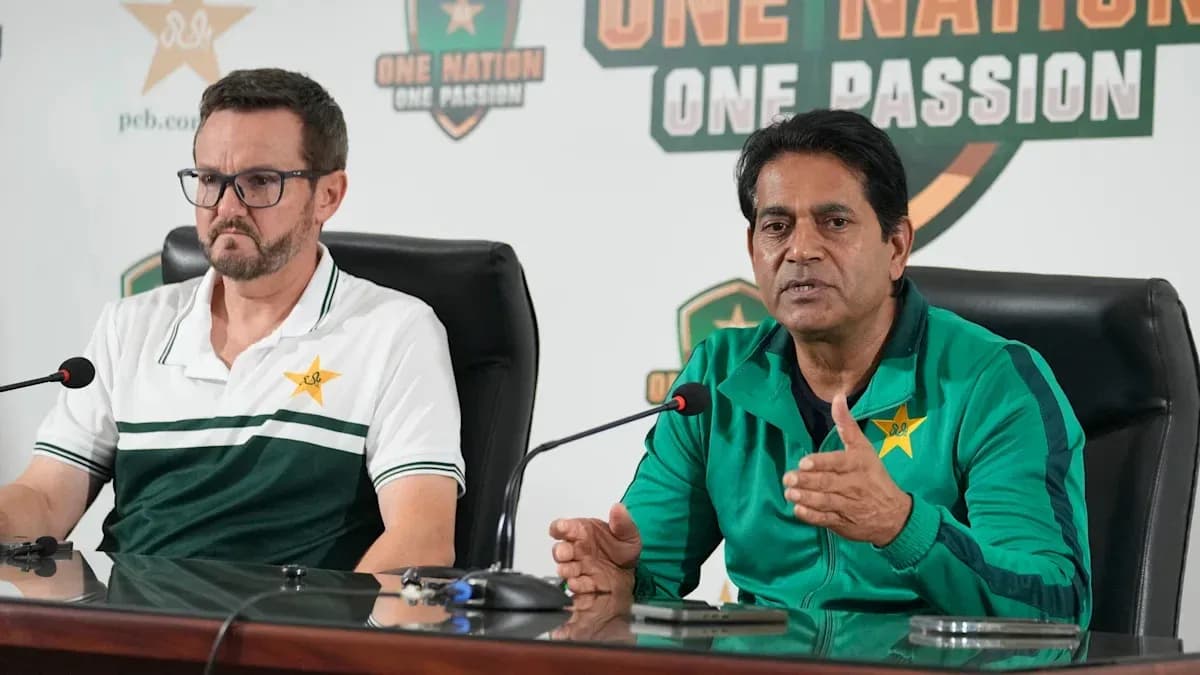
"We are going through a phase in which we are bringing in new talent," said high performance director Aqib Javed. "The idea is to award contracts to the players who have been active across formats and who the selectors and coaches foresee playing (international matches) in their respective formats."
Pakistan sits bottom of the World Test Championship table with three wins from 11 matches. Its current WTC campaign will close with a two-Test home series against New Zealand in 2027 — a long runway for this new structure to either bed in or be brutally exposed.
ODI and T20 lists show sharp specialization
Only six players were awarded ODI-specific contracts: Shaheen Afridi, Abrar Ahmed, Arafat Minhas, Fakhar Zaman, Faheem Ashraf and Haris Rauf. It is a compact group built around pace, mystery spin and power at the top of the order.
The T20 category is even more pointed. Seven cricketers have been identified for the shortest format: Hasan Nawaz, Maaz Sadaqat, Salman Mirza, Naseem Shah, Sahibzada Farhan, Shadab Khan and Usman Tariq.
White-ball roles are now clearly ring-fenced. Specialists will live or die on their returns in a single format, rather than juggling across three.
Development category carries Test future
The real volume sits in the development bracket. Nineteen players were handed deals there, including several who impressed in the Sri Lanka Test series: express quick Razaullah, Tayyab Arif, Mohammad Taha, pace bowler Saqib Khan and wicketkeeper-batter Ghazi Ghori.
Pakistan all-format coach Mike Hesson underlined why so many Test players have been placed in that tier rather than the top band.
He said most of Pakistan’s Test cricketers were in the development category "because they've just come on the scene and shown good signs."
That is both encouragement and challenge. The door is open, but it is not yet locked in anyone’s favor.
"This central contract model allows the players to remain focused on the formats they are most likely to be involved in," Hesson said. "It doesn't exclude them from the other formats, and it also doesn't exclude players who are not awarded the contracts, as they can continue to push their case for Pakistan."
The contracts run until June 30, 2027. Between now and then, Pakistan’s new generation has time — but not much patience — on its side.