Pirelli Implements New Tyre Lap Cap for Qatar Grand Prix
Pirelli tightens Qatar grip with fresh tyre lap cap – but gives drivers a little more room
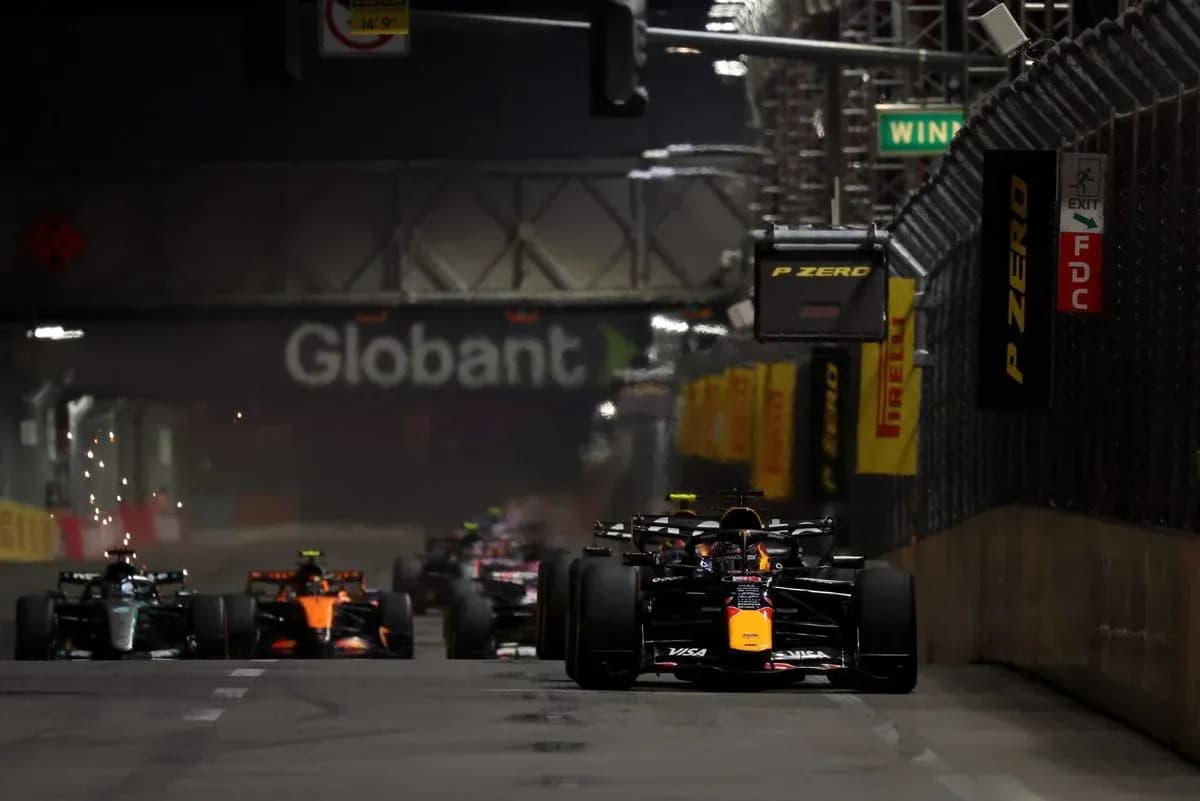
The world championship is still rolling the dice in Las Vegas this weekend, yet Pirelli’s gaze has already shifted to a very different kind of gamble: surviving Lusail.
Qatar is back on the calendar, and with it comes one of the most brutal examinations of tyres all season. The fast, loaded corners at the Lusail International Circuit tear into the rubber, piling on lateral forces and heat until the structure itself starts to feel naked. Pirelli has seen enough. The lap cap is back.
Two more laps, same hard line
As in last year’s Qatar Grand Prix, Formula 1 drivers will not be allowed to run indefinitely on a single set of tyres. Pirelli will again impose a mandatory maximum stint length, enforced by the sporting regulations. Go over it and the stewards will be waiting with penalties.
The number, though, has shifted.
Last year, the ceiling sat at 25 laps per set. For the upcoming race, that limit moves to 27. A small change on paper, but a significant tweak for strategists who count in tenths and grams.
Dario Marrafuschi, Pirelli’s motorsport director, confirmed the decision and stressed that the rule framework remains the same as what teams faced in 2023. The company’s indoor testing, he explained, showed that extending the cap by two laps stays within an acceptable safety window.
The message is clear: same philosophy, slightly longer leash.
When 100 percent wear is too much
This is not just about tyres going “off” in the traditional sense. Grip loss is only half the story.
Pirelli’s data shows that, on average, the Qatar compounds reach 100 percent wear after around 25 or 26 laps. At that point, the rubber layer has effectively vanished as a protective skin. The carcass underneath is suddenly exposed to everything Lusail can throw at it: huge lateral loads through its sweeping bends, high temperatures, and relentless stress lap after lap.
That is the scenario Pirelli wants to avoid repeating. Once the tread is gone, the risk profile changes. The tyre’s structure has to cope without the buffer of rubber on top, and the margin for error shrinks.
Interestingly, Marrafuschi notes that when the front tyres hit that 100 percent wear mark, performance doesn’t automatically fall off a cliff. Teams can often nurse fronts over long runs without seeing a dramatic drop-off in lap time. That, in pure racing terms, might tempt engineers to stretch stints deep into the danger zone.
Pirelli is stepping in before that temptation meets physics.
Strategy locked: at least two stops
The 27-lap cap brings a direct consequence: nobody is getting through the Qatar Grand Prix with a single stop. The rule effectively hardwires at least two pit stops into every race strategy.
On a track already notorious for punishing tyres, that reshapes the tactical landscape. Teams will juggle not only pace and degradation but also the hard limit on how far each set can go. Those looking to roll the dice on a bold one-stop simply won’t have the option.
Pirelli, for its part, will keep a tight count. Every session. Every set.
The Italian supplier will log the mileage on each tyre throughout the weekend. With no sprint format this year, the process becomes more straightforward than it was 12 months ago. At the end of Saturday running, Pirelli will confirm how many laps remain on every set in each driver’s allocation, leaving teams to piece together their race plans around those numbers.
In Qatar, the tyres are as much a storyline as the drivers. And with a firm lap limit back in force, the question is no longer whether someone will dare to stretch their rubber too far – it’s who can dance closest to that 27-lap line without losing their footing.