Pochettino Backs Fernandes as Manchester United Captain
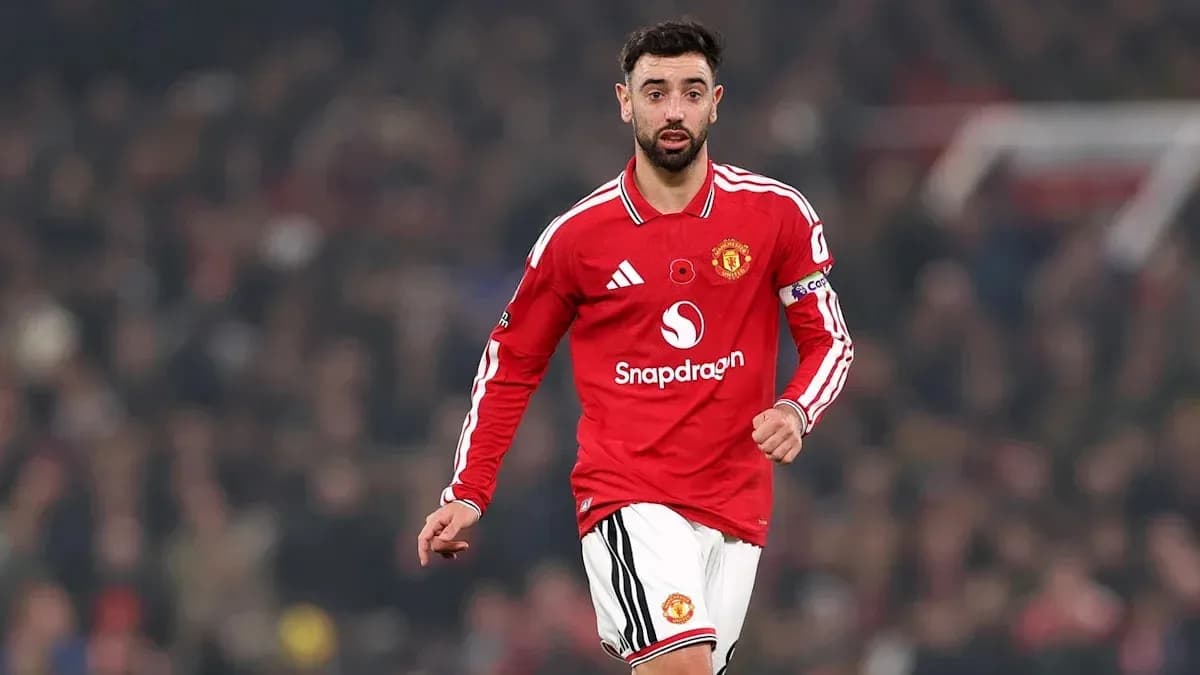
Mauricio Pochettino has walked into a club on edge and made his first big call: Bruno Fernandes stays captain.
At a time when Manchester United feel fragile, when the numbers and the noise have turned against key figures, Pochettino has chosen continuity over shock therapy. The armband remains with a player under fire.
Fernandes, who lit up last season with a historic haul of assists, has struggled to touch those heights this term. His form has dipped, his influence questioned, his leadership debated. Yet in Pochettino’s eyes, the Portuguese midfielder is non-negotiable.
“Bruno is our captain, an important player,” the new United manager said, making the point with the kind of clarity that leaves little room for argument.
Captaincy, Conversation and a Club in Crisis
Pochettino has inherited a side that has sagged badly after the downturn under Michael Carrick. Confidence has drained, intensity has dulled, and the identity that once defined Manchester United has blurred.
He is not easing himself in.
From day one, Pochettino has thrown himself into the dressing room dynamic, investing hours in conversation rather than simply rolling out drills on the training pitch. He revealed he has already spent three hours in his office speaking with players, one by one, gauging their mood, their frustrations, their needs.
“It was amazing from day one,” he said. “All the players, we were chatting… Bruno is our captain. But all the players need to think they are important, from the bottom to the top.”
This is not just about tactics. Pochettino wants to know who these players are when the cameras are off. He talked about understanding “the place they are… not only on the field, off the field, what’s going on.” Some of that will come in group meetings, some in quieter, private exchanges in the coming days.
The immediate focus, though, is brutally simple: Sunday at Anfield.
A Physical Reset Before a Cultural Rebuild
Liverpool away is no gentle introduction. It is one of the most unforgiving fixtures in English football, a match that exposes any lack of cohesion or conviction. Pochettino knows he cannot overhaul the entire club before that first whistle blows, so he is targeting something more direct: a reaction.
He wants United to look like a Pochettino team, and quickly. That means aggression, pressing, and a more physical edge to match his preferred philosophy without waiting for a grand, decade-long cultural revolution.
“We arrived with the idea to create something from scratch, our own ideas and philosophy,” he said. The support inside the club, he added, has smoothed his adaptation. But he was blunt about the scale of the wider project.
“We are not focused on culture,” he admitted. “It’s a massive work, you need to spend 10 years to focus on culture, it’s clear, a historic club.”
So the long-term reset can wait. The short-term demand cannot.
“Be Brave, Be Man United”
Pochettino’s language was striking. He spoke about bravery, about proposing a style of football and asking the players to “buy that idea” and carry it onto the pitch.
“When we arrive, we found a group of players that we propose to do the football that we feel, being brave, be Man United, you know?” he said. The message is clear: this is not about retreating into damage limitation. He wants United to step forward, not hide.
That ambition leans heavily on Fernandes. The captain will be asked to lead the press, to set the tempo, to embody the manager’s demand for courage on the ball and aggression without it. For all the criticism, Pochettino is betting on his mentality as much as his technique.
Beyond the Numbers
In an era where every performance is chopped into data points and dashboards, Pochettino cut through the numbers with a warning. He is not ignoring analytics, but he is wary of how easily they can be twisted.
“On the data without context, it’s easy to manipulate the data,” he said. “Sometimes the data can show some things.”
He wants to improve those numbers “in every single area of the field,” yet he framed that as part of a broader mission: not to “denounce things” about what came before, but to “build things, perform and win games.”
That line matters. There was no attempt to distance himself from the current squad, no public shaming, no blame game. He has chosen to own the situation and the players he has, captain included.
Now comes Anfield. A club in crisis, a manager with a clear voice, and a captain under scrutiny, still wearing the armband.
If Pochettino’s faith in Bruno Fernandes pays off there, the tone of this season – and perhaps his entire tenure – could change in a single, ferocious afternoon.