Rishabh Pant's Historic Century at Basin Reserve
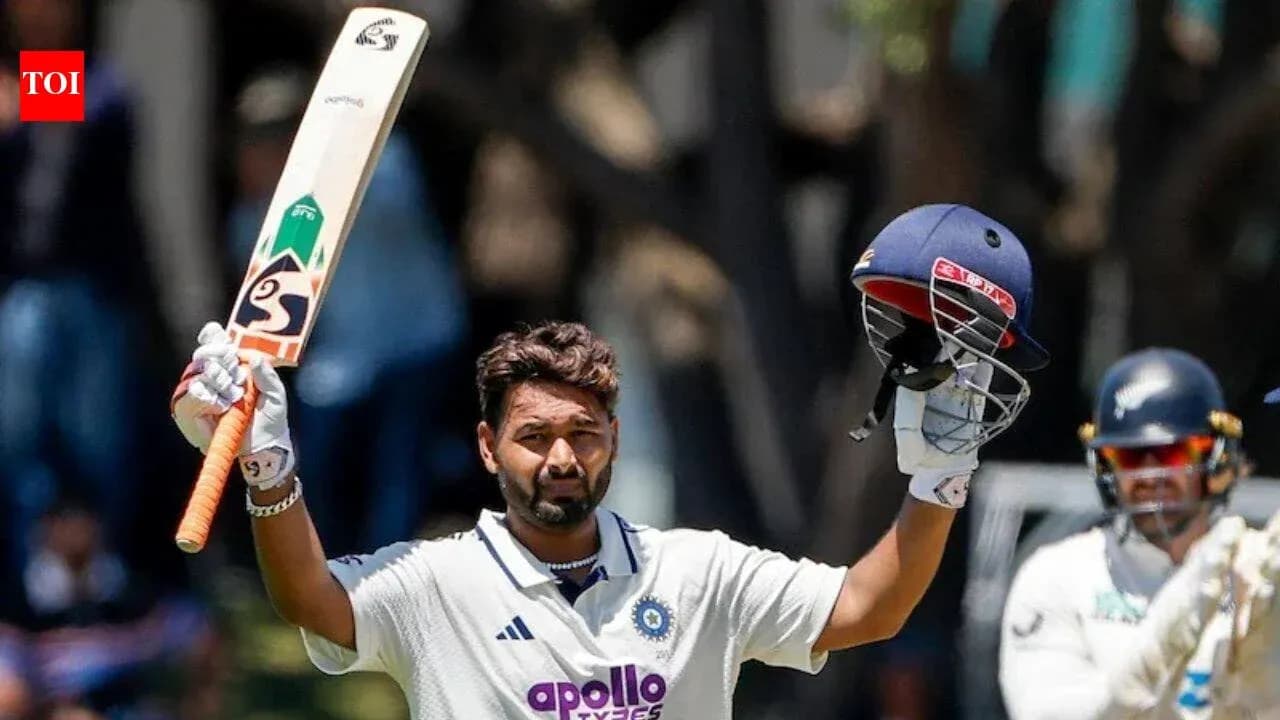
Wellington: Rishabh Pant walked off the Basin Reserve with his helmet raised and his eyes lifted to the sky, not with the swagger that usually follows one of his audacious hundreds, but with the quiet relief of a man who has just wrestled his career back under control.
The last year has dragged him through the mud. Stripped of the Test vice-captaincy, cut from the ODI squad, Pant has lived in a space where every failure was amplified and every mistake replayed. For a cricketer who lives on the edge, he suddenly looked like he was slipping off it. The bottom hand that so often flies off the bat in one of his big swings felt like a metaphor for his grip on the game itself.
Yet this is Pant. Turbulence is not the exception; it’s the soundtrack.
Even before he reached New Zealand, the noise followed. An injury in the Irani Cup meant he arrived without the ideal preparation that most of his teammates enjoyed. He landed anyway, shook off the jet lag, and went straight back into being Rishabh Pant — unpredictable, chaotic, irresistible.
He doesn’t have to try to play for the gallery. It just happens. On a sun-soaked Day 4 in Wellington, fans on the grass banks had the best seat in the house for the full Pant experience, hot chips in hand and phones ready.
At the start, though, it was anything but fluent. During his 100-run stand with Shubman Gill, Pant looked scratchy. He lost balance, his shape deserted him, the ball kept finding the thick edge rather than the sweet spot. Fifteen runs off his first 37 balls told its own story. Gill, smooth and assured at the other end, looked the part of the dominant partner.
Then came the shout.
Pant stepped away, called for a bat change, and Mohammed Siraj didn’t need a second invitation. He knew exactly which piece of willow to pull from the kit bag. What followed felt like a switch being flicked. Jacob Duffy ran in, and Pant launched him for back-to-back sixes, then threaded a boundary, the timing suddenly crisp, the hands free, the “Pantastic” note finally struck.
Gill, cruising towards his own hundred, turned into a spectator.
Pant’s half-century arrived in a blur. The journey from 15 to 50 came in a rush of strokes, 37 runs peeled off in just 18 deliveries. The crowd roared as if someone had turned the volume up on the entire ground. While Pant accelerated, Gill inched from 91 to 98, stuck in the slow lane as the left-hander seized control of the innings and, with it, India’s grip on the Test.
Day 4’s morning session always promised to be decisive. For a brief spell, the script flipped. Anshul Kamboj took over the scoring tempo, hustling the bowlers and shifting the field. Pant, momentarily quieter, watched. Then he found the strike again, and the rhythm returned. Boundaries began to flow from both ends. The scoreboard ticked harder. The innings, once laboured, now surged.
Pant moved into the 90s. The crowd sensed it: that familiar, dangerous zone where his instinct to dominate wrestles with the milestone on offer.
It looked like a two-hit job. One clean swing over the rope, one punch through the infield. But this time he held back. No blind charge, no premeditated slog. He waited. Fifteen balls of patience from a man not built for it, all for one number.
Ninety-nine.
The tension seeped into the stands. Phones were raised, conversations stalled. Everyone expected something outrageous. They got something emphatic instead. Pant picked his moment, swung hard, and made sure of the contact. The ball sailed over the boundary. History followed.
Helmet off. A glance to the heavens. No wild leap, no fist-pumping sprint. Just a simple lift of the bat, a long look around Basin Reserve, and the expression of someone who knows exactly how loud the criticism has been — and how often he has answered it.
With that stroke, Pant became the only wicketkeeper-batter in Test history to complete a century in each of the SENA countries — South Africa, England, New Zealand and Australia — his ninth Test hundred, four of them sealed in trademark style, with a six. The manner of this one fit the pattern. So did what came next.
He fell trying to go big again, aggression overriding caution near Lunch. The familiar chorus will rise: wrong shot, wrong time, same old Pant. The timing of the dismissal will be dissected, slowed down, replayed, used as ammunition by those who prefer their wicketkeepers neat and predictable.
But that’s the bargain with Rishabh Pant. The audacity that drags India out of trouble is the same instinct that sometimes drags him back to the pavilion. He will hear the noise, as he always does, and then he will do what he always has — shrug, mark his guard, and charge again, bottom hand flying off the handle as he looks to clear the ropes.
You can question the method. You can rail against the risk.
What you cannot do is ignore him.