Robin Uthappa: Mumbai Indians' New Batting Coach
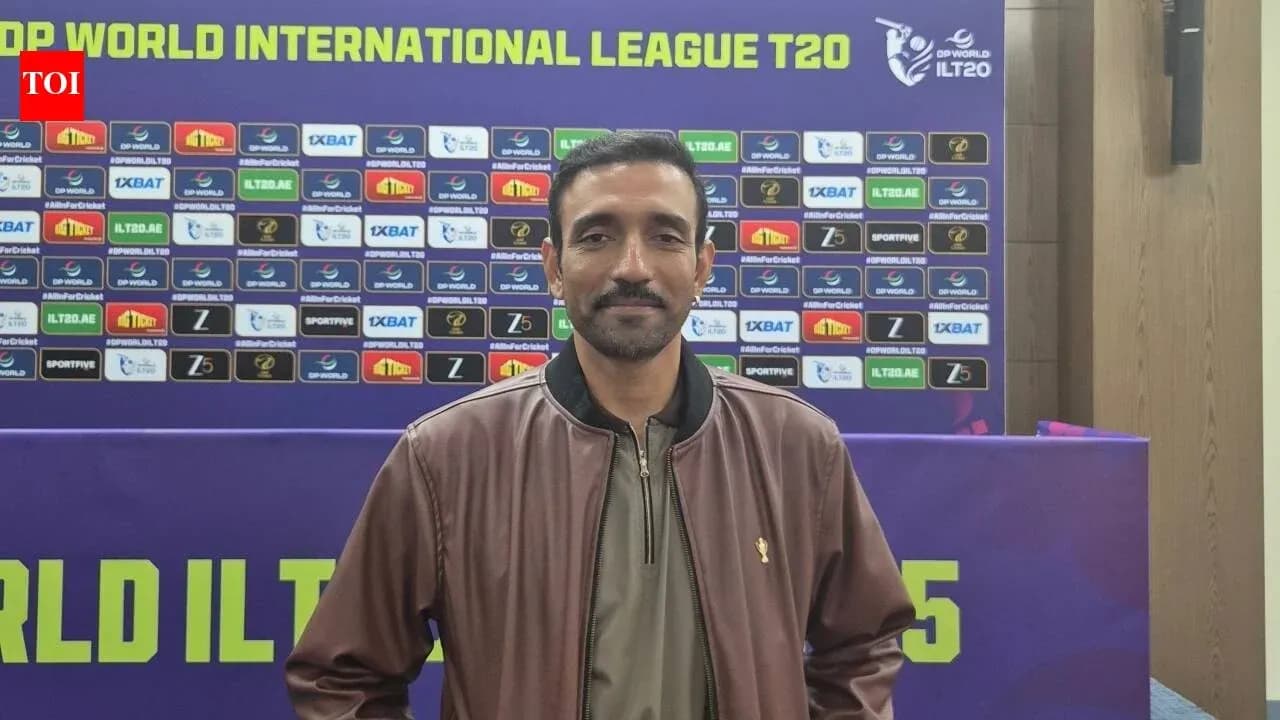
In Dubai, under the bright lights of another T20 league, Robin Uthappa is back in a familiar role — behind the microphone, talking cricket. But his real work now lies elsewhere.
Two months ago, away from the cameras and commentary boxes, Uthappa quietly stepped into one of the most scrutinised jobs in franchise cricket: batting coach of Mumbai Indians.
For a five-time IPL champion coming off a disappointing season and a churn in the backroom, this is not a cosmetic hire. It is a reset.
From “always coaching” to officially MI
Ask Uthappa when he became a coach and he laughs at the idea that this is something new.
“Officially for a franchise… for MI,” he says. Unofficially, he has been at it for three to four years in Dubai, working almost exclusively one-on-one, deliberately away from the spotlight. No academies, no group sessions, no social media campaigns. Just batters, their games, and his time.
He has quietly mentored international and domestic cricketers from India, choosing anonymity over branding.
“The intention is not to build a profile out of it, but to genuinely add value,” he explains. The results, he insists, are for the players to talk about, not him.
Now that work moves into a franchise that once defined IPL excellence and now, in his own words, feels like an “underdog”.
“As Mumbai Indians, we feel like we are underdogs. We really need to earn our straps back and earn the trust of the fans,” he says. That is not a line you normally hear from a five-time champion. It tells you exactly where MI see themselves.
A left-field call at the right time
The offer from Mumbai did not come after a long courtship or a public campaign.
“It was just completely leftfield. Completely came from the leftfield. I didn’t see it coming,” Uthappa admits.
He had been hoping for a franchise role, convinced he could add value. When MI called, the interest was instant on both sides. Conversations followed, the fit felt right, and suddenly a man who wore six different jerseys as a player in the IPL — MI, RCB, PWI, KKR, RR, CSK — was back where his journey had once begun.
He brings with him 205 IPL matches, 4952 runs, a strike rate of 130.35, and 27 fifties. But he is adamant that his new role is not about revisiting his past. It is about building an environment where others can write theirs.
Building a happy dressing room in a restless franchise
So what does a batting coach actually bring to a team already stacked with star power?
For Uthappa, the job begins long before the first ball.
“As a batting coach, you first want to add value to the group, create a good atmosphere and culture within the group. To make sure that everyone feels happy,” he says. “A happy environment is a thriving environment.”
He knows he cannot guarantee success. No one can. What he can do is give players the best chance to succeed — through preparation, clarity and, above all, a dressing room they enjoy walking into.
“The intent is to go out there and build that culture and environment. To make sure there is a happy ecosystem,” he says.
That word — ecosystem — is not an accident. Mumbai’s dominance in their peak years was built on more than just big names. It was a culture, a rhythm, a belief that big moments belonged to them. Uthappa’s challenge is to help rediscover that.
Coaching Rohit, SKY, Tilak: serving the stars, not managing egos
He will step into a batting group that includes Rohit Sharma, Suryakumar Yadav and Tilak Varma — three players at very different stages of their careers, but all central to MI’s future.
How does he see that dynamic?
“As established cricketers, having clarity is important,” he says. Then comes a line that sums up his entire philosophy: “Nobody is bigger than mother cricket.”
“You have to operate from that humility. You give yourself the best chance to do well when you navigate through the game as a student of the game, rather than the master.”
In his experience, the truly elite do not walk around thinking of themselves as “World Cup champions” or “a captain who has won this five times”.
“They are still humble about playing the sport,” he says. They want clarity — about their own game, the team’s goals, and how the two align.
His role, he believes, is to serve them. That can mean detailed preparation, specific plans, or simply being available.
“Sometimes just being available is such a big blessing for established players,” he points out. Some days it’s throwdowns. Some days it’s a technical chat. Some days it’s just a conversation.
“There is an umpteen number of things that can be done. It is exciting and challenging.”
New captain, new phase, and a quiet auction
MI are walking into a fresh era with a new captain and a squad in transition. But Uthappa is careful not to say too much while the auction looms.
“Now that the auction is actually coming up, there are obviously things that you don’t want to talk about at this point,” he says. “There are a lot of moving pieces and you have to navigate through all of those quite carefully.”
He knows the real conversations — about roles, combinations, batting orders — will start once the squad is final.
The power-hitter question: Is the answer already in the room?
The modern T20 game has a new breed of top-order destroyers — batters like Vaibhav Sooryavanshi at Rajasthan Royals or Abhishek Sharma at Sunrisers Hyderabad, striking at 250-plus and ripping up powerplays.
Mumbai, on paper, do not appear to have that exact profile at the top.
Is that a problem?
Uthappa doesn’t flinch.
“I think the talent is there in the existing side itself,” he says. “There is enough and more talent to prove that they are worth their weight in gold. And these personnel are enough to perform exceptionally well.”
Yes, the auction may offer options. Yes, they will look at possibilities. But he keeps coming back to one idea: the right atmosphere can unlock levels players did not know they had.
“It’s almost uncanny what you can actually draw out of players when you create the right atmosphere for them to go out there and play good cricket,” he says.
The message is clear: don’t be surprised if the next big MI batting story comes from someone already in blue and gold.
“Meet players where they are”: Uthappa’s brand of coaching
Strip away the jargon and Uthappa’s coaching identity is simple and direct.
“I try to meet players where they are and help them elevate themselves to where they want to be,” he says.
The drive, he insists, must come from the athlete. He is not there to impose a template. He is there to act as a mirror.
“I am only but a mirror to them to hold them accountable for the things that they want to achieve for themselves and align that to the larger goal of the team.”
He believes any good coach has one primary responsibility: make sure every athlete walks into competition feeling as ready as possible.
Beyond drills and plans, the real currency is trust.
Earning the right for a player to pick up the phone, to walk over and say, “I need to talk about my career,” is, for him, the highest-value part of the job.
“Those are the most important aspects about an athlete’s life and those are not aspects that they are willing to open up to anybody else,” he says. “Earning the trust of a player is extremely crucial for me as a coach and that is something that I put for myself of highest value.”
Biomechanics, not band-aids
Modern T20 schedules leave almost no breathing space. One game rolls into the next. There is barely time to recover, let alone rebuild a technique.
Does that make his job harder?
“It can be hard,” he admits. But he refuses to call it a “challenge” in a defeatist sense.
For him, the key is understanding that most “technical” tweaks are actually biomechanical.
“When we talk about technical fixes, it’s basically biomechanical fixes,” he explains. “It’s the biomechanics that you want to alter or adjust a little bit that helps achieve what the player wants to feel while they are batting.”
He speaks from experience. Twice in his own career, he tore down his batting and rebuilt it. Twice he “went through the ringer” to transform his game.
Those scars are now his tools.
“My learnings from all of that has been I have figured out a way to help athletes or help batters make adjustments in their biomechanics to find the shortest way, or the path, to where they want to be and about feeling good about their own batting,” he says.
He believes he has done his “rite of passage”. Players have seen him break himself down to his foundations and build back up. They know he understands what it costs.
“So I think they understand the value of what it actually takes to go through breaking yourself down to your foundations and building yourself up again,” he says. “Because I’ve done that, I’ve figured out mediums of adjusting biomechanics to serve a batter.”
An underdog giant with something to prove
For all the talk of biomechanics and culture, one line from Uthappa lingers.
“As Mumbai Indians, we feel like we are underdogs.”
It is a striking admission from a franchise that once treated playoffs as a minimum requirement. But it might be exactly the mindset MI need.
A new captain. A new batting coach. A squad about to be reshaped again at the auction. A fanbase that needs to be won back, not just entertained.
Uthappa has chosen to step into that pressure, not away from it.
Now the question is simple: can a man who reinvented his own batting twice help a wounded giant reinvent its identity?