SEC's Legal Battle with LSU Threatens Membership
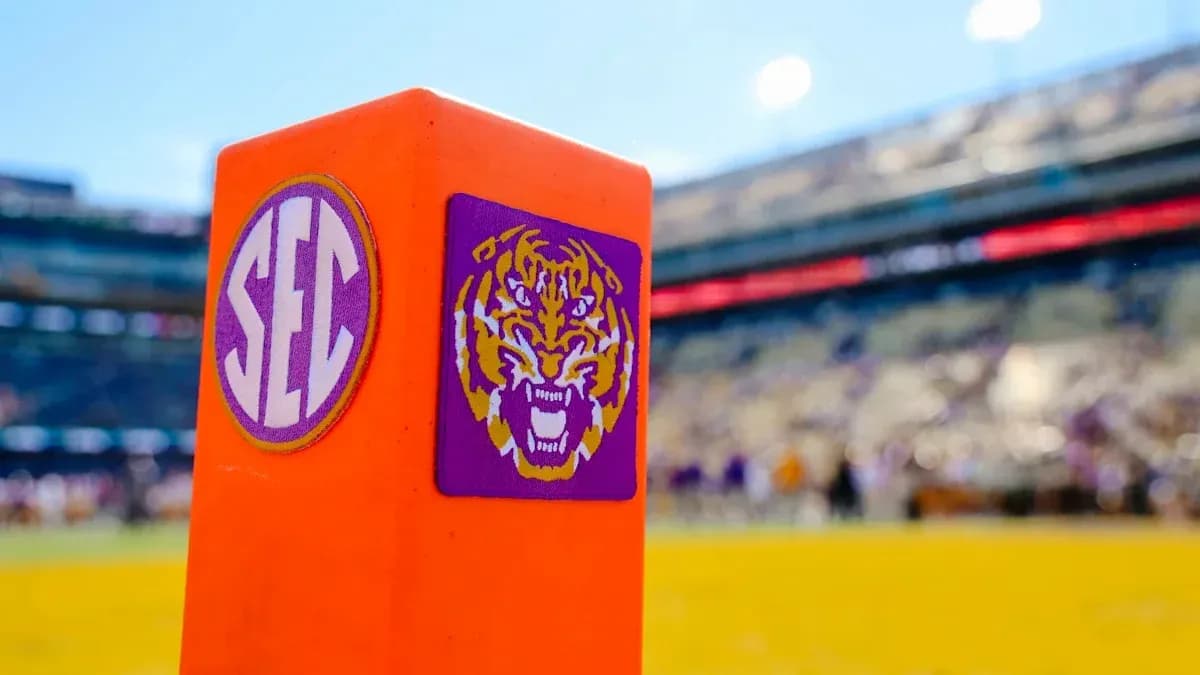
The SEC’s fight with LSU has stopped being a quiet rules dispute. It now threatens the very fabric of their relationship.
On Monday night, the conference announced it had filed an amended complaint and a motion for a temporary restraining order in its federal lawsuit against LSU. At the same time, it revealed that SEC presidents and chancellors will convene on Dec. 3 to “deliberate LSU's ongoing membership in the conference.”
That is not coded language. Expulsion is on the table, and the league wants everyone to know it.
A founding member on the brink
LSU is not some late arrival to the party. The Tigers are a founding member of the SEC, joining alongside 12 other universities back in 1933. For nearly a century, they’ve been part of the league’s identity, its history, its Saturday soundtrack.
Now, the SEC is openly preparing to consider whether LSU still belongs.
In its statement, the conference framed the lawsuit as a defense of its authority and its standards.
“The lawsuit seeks to protect the conference's ability to govern itself and to enforce the rules and policies its member universities have voluntarily adopted,” the SEC said. It stressed its right to associate only with institutions that “meet its established standards and expectations of membership and that demonstrate appropriate institutional control of their athletics programs.”
The league added that Monday’s filing “advances the conference's obligations to defend its governance framework and the shared interests of its member universities.”
Translation: this is about more than one player, or one season. The SEC is drawing a line about who sets the rules and who follows them.
How a rule change lit the fuse
The conflict has been simmering for months, fueled by a collision of new eligibility rules, old power structures and aggressive roster building.
The backdrop is the NCAA’s “five-for-five” rule, which grants athletes five seasons of eligibility moving forward. The catch: it only applies starting with the high school class of 2023. That cutoff has prompted lawsuits from players seeking an extra year the rule doesn’t automatically grant them.
At the conference level, the SEC tightened its own stance last summer, passing a rule that bans athletes who have previously signed professional contracts from competing for league teams.
LSU pushed against that boundary.
Football coach Lane Kiffin explored adding players who had already signed contracts with NFL teams to his roster earlier this fall. The three players at the center of that push never actually made the Tigers’ roster, but the message was clear: LSU was willing to test the edges of the SEC’s new restrictions.
The legal and political fight only escalated from there.
The RJ Luis Jr. flashpoint
The latest flashpoint arrived not on the football field, but on the hardwood.
RJ Luis Jr., a former St. John’s standout, signed a two-way contract with the Utah Jazz after going undrafted in 2025 and appeared in three preseason games with the Boston Celtics. Under the SEC’s rule, that professional history should have kept him off an SEC court.
Luis went to court instead.
Earlier this month, a judge in Louisiana granted him a preliminary injunction, ruling that the SEC and NCAA could not penalize LSU for playing him. It was a direct legal challenge to the conference’s authority to enforce its own pro-contract ban.
LSU then put that ruling to the test. Luis suited up for the Tigers last week and scored 11 points in a win over UL Monroe. After the game, basketball coach Will Wade kept his public stance simple: everyone who played was eligible.
For one night, it looked like LSU had its way.
Pressure from the top
The pushback came swiftly.
The very next day, LSU president Wade Rousse instructed Wade not to play Luis again. In its lawsuit, the SEC cited evidence that Wade had supported Luis in his legal efforts to get on the floor, tying the coach directly to the challenge of the league’s rule.
Luis’ attorney said LSU was once more threatened with expulsion from the conference. The stakes were no longer theoretical. The Tigers had already played a game with Luis, under a judge’s protection but against the grain of the SEC’s stance.
The conference responded by hardening its position in court and in the court of public opinion.
A power struggle with no retreat
This is no longer a quiet administrative disagreement. It is a full-blown power struggle between a flagship program and the league it helped build.
The SEC insists it must be able to “govern itself” and enforce rules its members “voluntarily adopted.” LSU, through its actions and its willingness to back athletes in court, has signaled it will not simply bow to conference edicts when they collide with individual eligibility fights and legal leverage.
Both sides have dug in. Neither shows any sign of backing down.
On Dec. 3, the presidents and chancellors of the SEC will gather to discuss LSU’s future in the league. A founding member could face the unthinkable: a vote on whether it still belongs in the conference it helped create.
If the SEC is truly willing to go that far, the question won’t just be what happens to LSU. It will be what kind of conference the SEC wants to be in the era of player empowerment, legal challenges and shifting control over college sports.