Tyson Fury: Battling Mental Health in the Ring
Tyson Fury has spent years flattening giants in the ring. In his new Netflix documentary, he turns to the opponent he couldn’t outbox, outrun or intimidate: his own mind.
The film, simply titled Tyson Fury and directed by Lucy Wilcox, strips away the bravado to revisit the period when the self-styled “Gypsy King” spiralled from the summit of heavyweight boxing into a terrifying mental health crisis. It is not a story of a bad training camp or a lost belt. It is a story of a man who genuinely feared he might never come back at all.
From Klitschko to Collapse
The timeline is brutally stark. November 2015, Düsseldorf: Fury dethrones Wladimir Klitschko, rips away the belts, and becomes unified world heavyweight champion. It should have been the launchpad for a long reign. Instead, it marked the beginning of the unravelling.
A contracted rematch with Klitschko never happened. Fury withdrew after being declared medically unfit to fight. The headlines focused on the cancelled bout. The reality, as the documentary lays out, was far darker.
He had already spoken publicly about bipolar disorder by October 2016, a subject he addressed in an interview picked up by BBC Sport. The film goes further, threading that admission into a broader, more complex picture of his mental state.
Wilcox’s feature blends fresh interviews with Fury’s father, John, and previously unseen archive footage. It tracks the fighter’s childhood, the tight-knit family environment that shaped him, and the relentless climb through the professional ranks. Running through it all is the sense that the outward swagger always hid something far more fragile.
“Words Can’t Explain the Darkness”
The most harrowing section revisits June 2016, when Fury was rushed to hospital with what was feared to be a heart attack. Paris Fury recalls being told by doctors that it was an anxiety attack. The cameras linger on that gap between physical fear and psychological reality.
Inside the hospital, Fury says he began to believe the radio was talking directly to him. He remembers hearing voices, threats aimed at him and his family. The heavyweight champion of the world suddenly felt powerless, gripped by a terror that had nothing to do with punches.
He speaks in the film of fearing long-term psychiatric hospitalization, of wondering if this was his new permanent reality. “Words can’t explain the darkness I was in,” he says in the documentary, as reported by Sky Sports. Coming from a man who has built a career on self-belief, the line lands like a body shot.
That period led him to a psychiatrist in London. Fury recalls being questioned in detail as his anxiety surged beyond anything he could manage. The assessment, he says, identified depression, anxiety and bipolar disorder. Labels that at least offered an explanation, if not an immediate solution.
Paris Fury Confronts the Stigma
The documentary also gives Paris Fury space to tell her side of the story. In excerpts carried by The Independent, she admits that the word “schizophrenia” initially left her confused and frightened, her understanding shaped by myths and stereotypes rather than medical reality.
She did not know what bipolar disorder truly meant either. Only when professionals walked her through it did she begin to recognize patterns she had already seen in her husband’s behaviour: the soaring highs, the crushing lows, the volatility that had seemed inexplicable from the outside.
Those moments on screen are quieter, but they carry weight. They show a family trying to catch up with a diagnosis, trying to understand the man at the centre of their world as much as the champion the public sees.
Halloween, Rock Bottom and the Road Back
Every comeback has a trigger. For Fury, he pins it to Halloween 2017.
In the film, quoted by ITV News, he recalls heading out in a glow-in-the-dark skeleton costume, hoping anonymity might offer some escape. Instead, the night turned into a brutal mirror. Surrounded by younger drinkers in a bar, he found himself staring at what he had become.
The belts were gone. The weight had piled on. His absence from the ring had been filled by alcohol and drugs. The man who once ran through training camps now struggled to run from himself.
That night did not fix everything. It did, though, jolt him into action. Fury began working with trainer Ben Davison and teamed up with promoter Frank Warren. The long road back to elite level started quietly, without fanfare, with hard sessions in the gym rather than grand statements at a microphone.
June 2018 brought his return to the ring against Sefer Seferi. The performance was less important than the fact he was back under the lights at all. The comeback gathered speed: a dramatic draw with Deontay Wilder in December 2018, then a statement win in the February 2020 rematch, a seventh-round stoppage that delivered him the WBC heavyweight title.
The arc is familiar now, often told as a simple redemption tale. The documentary reminds viewers how fragile and unlikely that journey truly was.
Fury–Joshua: A New Chapter in Cardiff
All of this lands with extra force because of what comes next. Tyson Fury premieres on November 27, just two weeks before Fury steps into another kind of spotlight: a long-awaited showdown with Anthony Joshua at Principality Stadium in Cardiff on December 11, streamed globally by Netflix.
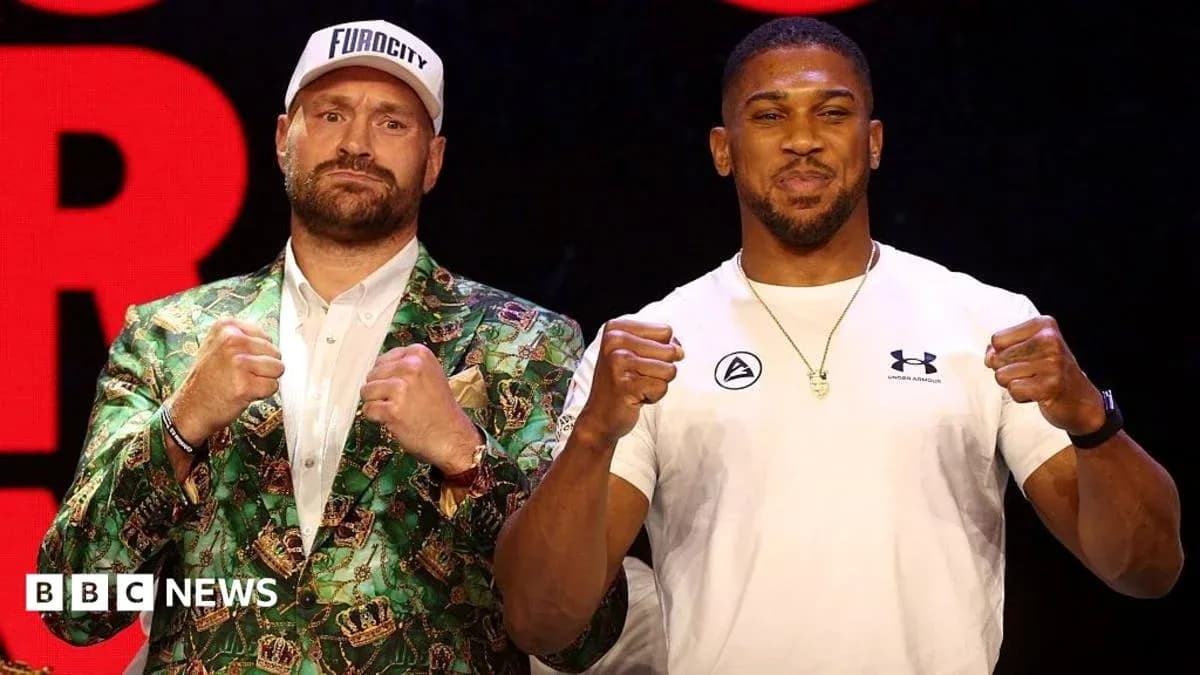
The pair shared a London press conference on September 30, finally posing for their first official face-off. For years, their rivalry has lived in negotiations, call-outs and collapsed plans. Now, at last, it moves to a ring.
They are no longer the unbeaten young champions they once were, but their names still define the era. Fury walks into Cardiff on the back of an April 2026 unanimous decision win over Arslanbek Makhmudov, a reminder that, at 38, he remains a live force at the top of the division.
The documentary shows the man behind the champion: the hospital bed, the hallucinations, the diagnoses, the near-collapse. The fight in Cardiff will show what is left of the fighter forged in all that chaos.
For Fury, it is no longer just about belts or bragging rights with Joshua. It is about proving, again, that the darkest nights did not take away the one thing he has always relied on—his ability to rise when the count seems to be against him.