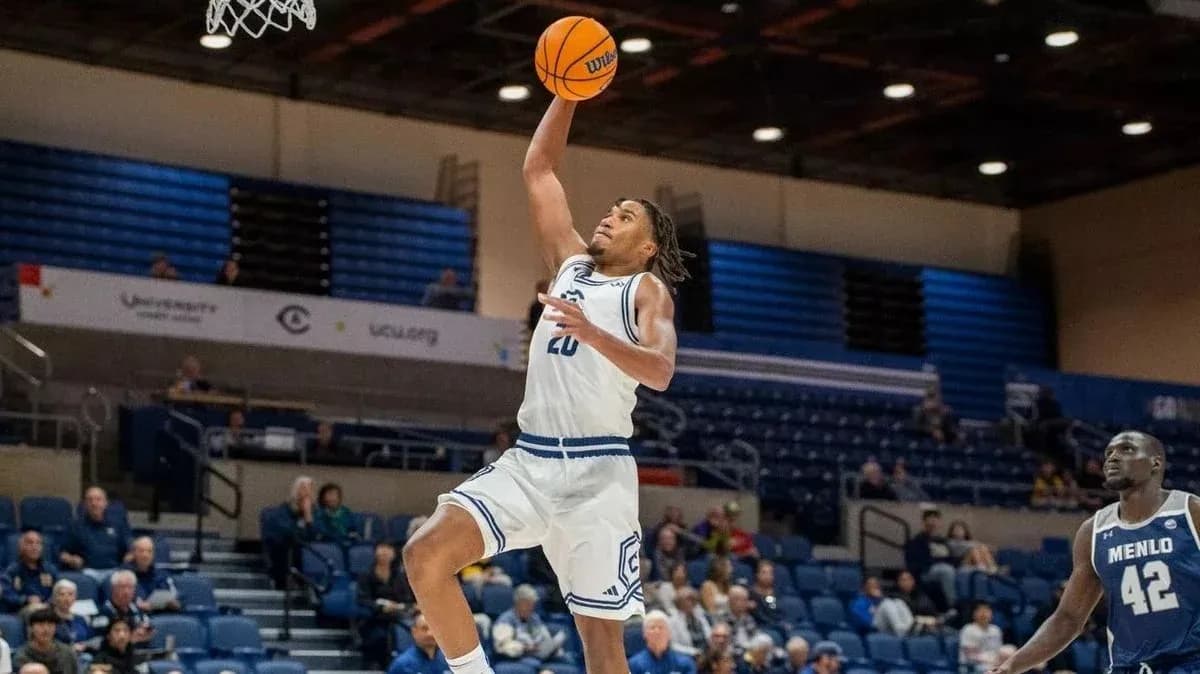
UC Davis, Pacific, Omaha and Jacksonville State Clash in Las Vegas Tournament
In the desert, four very different stories are about to collide.
UC Davis, Pacific, Omaha and Jacksonville State converge on Las Vegas from November 25–27, 2026, each carrying an identity, a flaw, and an early-season question that needs answering. It’s not a blue-blood showcase. It’s something more raw: a November lab test for teams trying to figure out exactly who they are.
UC Davis: Defense, Glass, and a Point Away From a Milestone
UC Davis arrives at 3–2 with numbers that travel. The Aggies guard. Hard.
They sit first in the Mountain West and 32nd nationally in field-goal percentage defense, holding opponents to just 37.1 percent shooting. From three, teams have fared even worse: 28.1 percent, good for 55th in the country. Nothing flashy there, just disciplined closeouts and a refusal to give up clean looks.
The backbone of that defense is the glass. UC Davis is ripping down 30.0 defensive rebounds per game, 17th in the nation, and has outrebounded all five opponents so far. Miss against the Aggies, and chances are you’re going one-and-done.
On the other end, the scoring load is spread but led by a familiar face. Connor Sevilla paces the Aggies with 14.2 points per game, followed by a trio in double figures: Brayden Fagbemi at 11.3, Jalen Stokes at 10.6, and Ben Abosi at 10.0. Abosi doubles as the team’s top rebounder at 6.8 boards per night, while Sevilla quietly posts elite efficiency at the line, hitting 32 of 35 free throws.
They’ve already taken a punch. In a 75–68 loss to Alabama State on November 17, Sevilla poured in 17 points and went a perfect 11-for-11 at the stripe. The subplot belonged to Chase Rawlins, who dished 10 assists in his first career start. The performance hinted at a different gear in the Aggies’ backcourt, even in defeat.
Now the milestones creep into view. Sevilla needs just one more point to reach 800 for his career. Fagbemi sits on 978 career points, 22 shy of 1,000. Those aren’t just numbers; they’re markers of experience in a tournament where poise in late-game possessions could decide everything.
Pacific: A Streak, a Statement Defense, and a Familiar Foe
Pacific comes in hotter than anyone in the field.
The Tigers are 5–1, riding a three-game winning streak capped by a gritty 63–62 win over Bradley. In that one, reserve guard Damarion Vann-Kelly came off the bench and led with 16 points, while CJ Jones added 14 points and five assists. Gavin Ripp cleaned up inside with 10 rebounds. It was the kind of narrow win that hardens a group early in the season.
The numbers behind Pacific’s start are blunt. Through November 22, the Tigers ranked second nationally in rebounding margin, third in field-goal percentage defense, and fourth in scoring defense. They had outrebounded all six opponents. They don’t just contest; they finish possessions, and they do it with a collective edge.
Adriel Nyorha remains the headline act, leading Pacific with 14.7 points per game. Around him, the Tigers don’t dazzle so much as suffocate, leaning on length, positioning and a refusal to give up clean second looks.
And then there’s the history.
This week renews a long-running regional rivalry with UC Davis. The two programs meet for the 101st time, a series overwhelmingly tilted Pacific’s way at 83–17. That dominance, though, belongs more to the archives than the present. Under head coach Jim Les, UC Davis has turned the tide, winning five of the last six and holding a 6–4 edge against the Tigers.
The last meeting was not subtle. On December 16, 2023, UC Davis walked into Stockton and thumped Pacific 82–61. That result will hang in the air when the teams share the floor again in Las Vegas, a quiet challenge to both sides: was that a one-off, or the new normal?
Omaha: Crashing the Glass, Living at the Line
Omaha arrives with a 3–3 record and a very clear identity. The Mavericks don’t necessarily win the first shot. They try to win the second.
They average 14.7 offensive rebounds per game, ranking 50th nationally. That’s a lot of extra possessions, a lot of tip-outs, and a lot of pressure on opposing bigs to box out on every single attempt. Pair that with 27.2 free-throw attempts per game — 49th in the country — and you get a team that leans into contact and refuses to settle.
Deke Thompson leads Omaha with 13.7 points per game and has scored in double figures in all six appearances. He’s the steady drumbeat of their offense. Around him, Cahmai Crosby chips in 12.0 points per game, while Isaac Ondekane anchors the interior with 6.8 rebounds per contest.
For opponents, the challenge is simple to describe and tough to solve: keep Omaha off the glass and off the line. Fail at either, and a game that looks under control can tilt quickly.
Jacksonville State: Let It Fly
If Omaha wants to live in the paint, Jacksonville State is perfectly happy to live beyond the arc.
Nearly 45 percent of the Gamecocks’ shots come from three-point range. They average 10.3 made threes per game and hit them at a 38.8 percent clip, ranking 36th nationally. That’s not a gimmick; that’s a system. And when those shots fall, the scoreboard moves in a hurry.
Jordan Stiemke leads the way at 15.0 points per game, stretching defenses and punishing slow rotations. Chris Lockett Jr. adds 13.5 points and 5.5 assists per contest, steering an attack that can flip a game in two or three possessions.
They’ve already lived on the edge. Four of Jacksonville State’s five games against Division I opponents before this tournament were decided by five points or fewer. Tight finishes are not a hypothetical for this group; they’re the norm.
Styles on a Collision Course
This Las Vegas swing offers more than a neutral-site bracket. It’s a clash of identities.
UC Davis brings defense and rebounding, a team built to grind games into the 60s and win the margins. Pacific arrives with a streak, a ferocious defensive profile and the weight of history in its pocket, but a recent head-to-head scar on its record. Omaha wants to turn every miss into a scrum and every drive into free throws. Jacksonville State wants to stretch the floor, fire away, and dare you to keep up from deep.
Somewhere in that mix, a team will leave with a clearer sense of its ceiling. Another might head home with uncomfortable questions.
UC Davis already knows its next steps: home to face Portland on December 1 at University Credit Union Center, then a road trip to North Dakota State on December 3. By the time the Aggies board that flight, they’ll know whether their defense and rebounding translate under the bright lights of Las Vegas — and whether this November tournament was just another date on the schedule, or the week their season truly took shape.