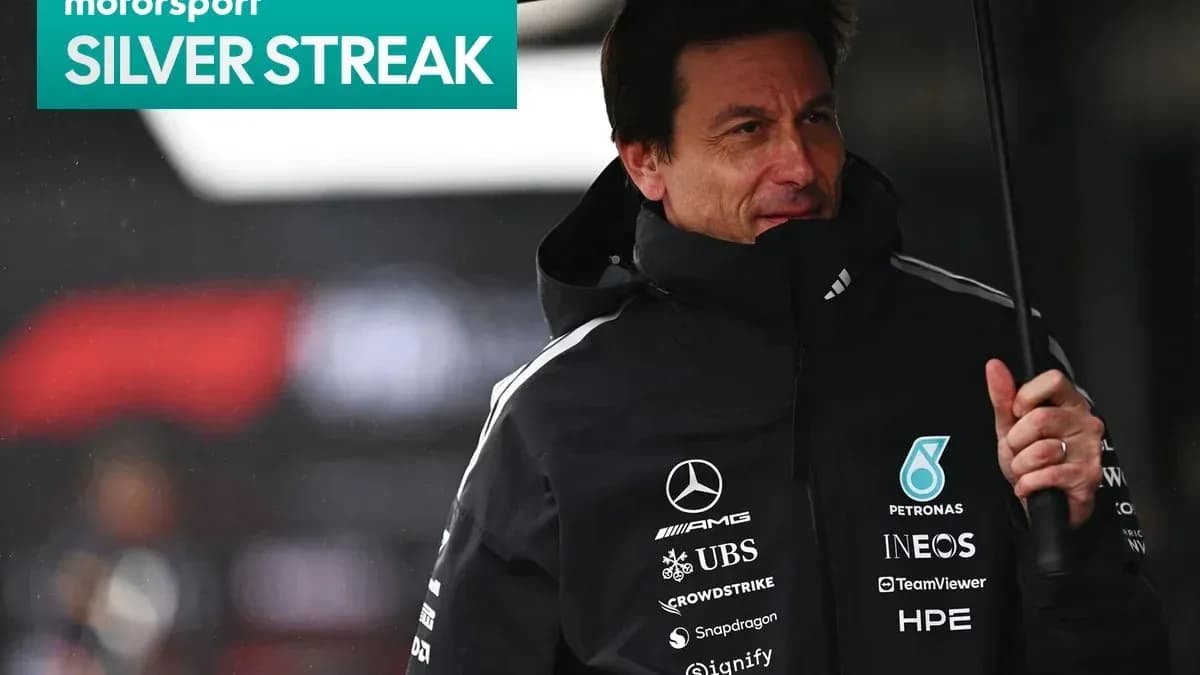
Toto Wolff's Vision for Mercedes in Formula 1
Toto Wolff has spent a decade redefining what dominance looks like in Formula 1. In 2026, he pushed Mercedes back to the summit again, tying Ron Dennis on a towering 17 world championships across drivers’ and constructors’ titles. It’s rare air – the kind of record that usually triggers a feeding frenzy in the paddock.
Yet Wolff’s phone is silent.
In an interview with German outlet BILD, the 54-year-old was asked how many offers land on his desk from rival teams or ambitious manufacturers keen to buy his winning blueprint.
“None at all! Incredible, isn't it?” he replied. “But people probably think by now that they can't get rid of me from Mercedes anyway.”
He’s not wrong. Wolff isn’t just an employee in Brackley; he’s part of the architecture. As a one-third equal shareholder in the Mercedes-AMG PETRONAS F1 Team, alongside INEOS and Mercedes-Benz, his roots run far deeper than a standard team principal contract. He is tied to the project financially, strategically, and emotionally. Walking away would mean more than changing shirts. It would mean dismantling part of what he helped build.
That perspective shapes how he thinks about the future. While many team bosses work in four- or five-year cycles, Wolff is already looking well beyond the horizon.
“I'm planning for the very long term. For me, it's 'soon' in 10 years,” he told BILD. “I need to think about decisions now, or make them already, so that the team can continue to be successful in 10 years.”
This is the mindset of a custodian rather than a caretaker. With new regulations coming, a new generation of drivers rising, and the sport stretching itself across a 24-race calendar, Wolff is trying to future-proof Mercedes not just for the next title fight, but for the next era.
Future Plans
So will he still be on the pit wall in 2036?
He didn’t close the door. In fact, he left it wide open, with one clear condition.
“If I stay healthy and it still doesn't feel like a job, then I'll stay for many years to come,” Wolff said.
That caveat – health, and the feeling that it’s still a passion rather than a grind – looms larger as Formula 1 continues to expand. The schedule is brutal. Twenty-four races, long-haul flights, relentless media duties, constant political and technical battles. Even for someone as driven as Wolff, there are limits.
He knows it.
“Maybe then I'll only do 18 races instead of 24 and fewer media appearances,” he explained. “I would like to split my role, to act more as chairman. But as I said: For that to happen, I have to stay healthy.”
It’s a glimpse of what Mercedes might look like in the next chapter: Wolff stepping slightly back from the week-to-week intensity, shifting into a more strategic, chairman-style position while others handle the front-line pressure of every race weekend.
For now, though, the picture is clear. The man who dragged Mercedes back to the top for 2026 is not browsing the market, not flirting with rivals, and not plotting an exit. He’s planning the next decade – and doing it from the same office, with the same star on the badge.