Verstappen Dominates Chaotic Las Vegas Practice
Under the neon glare of the Las Vegas Strip, third practice turned into a knife-edge rehearsal for chaos.
The track bit. The walls loomed. And even the greats looked mortal.
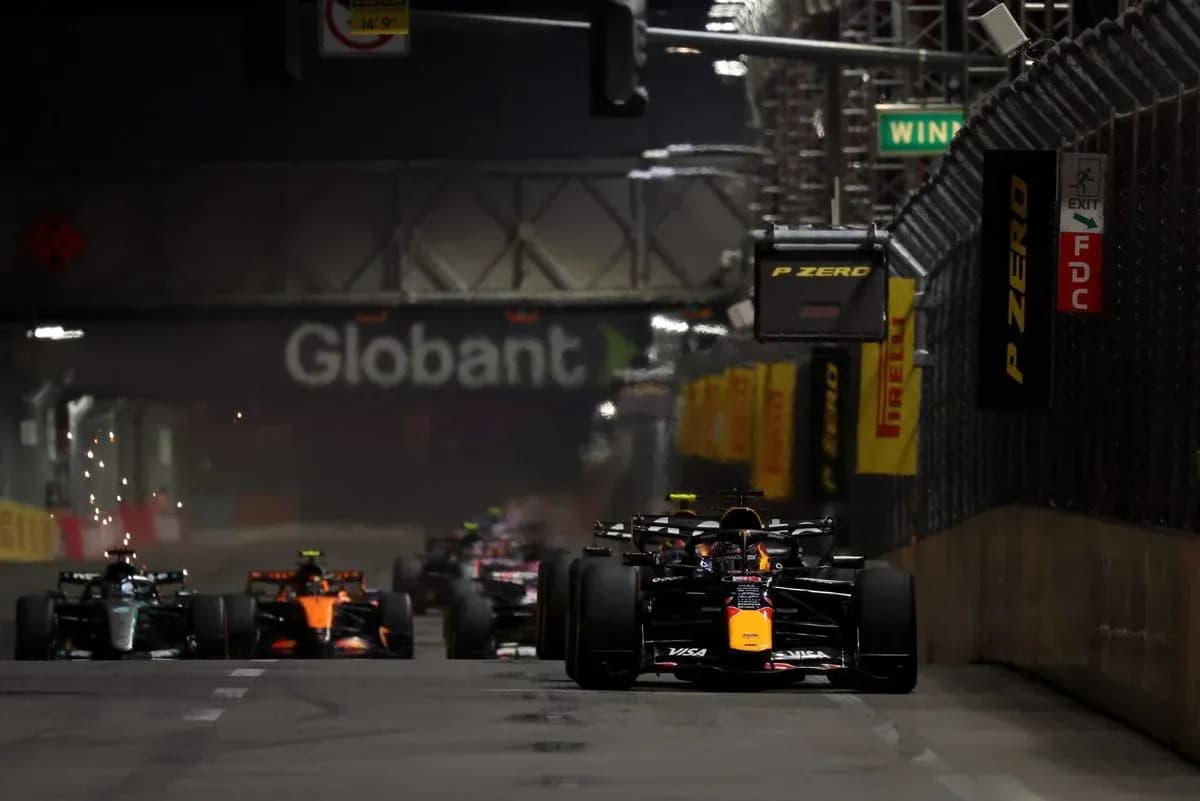
Verstappen fights a wild Red Bull
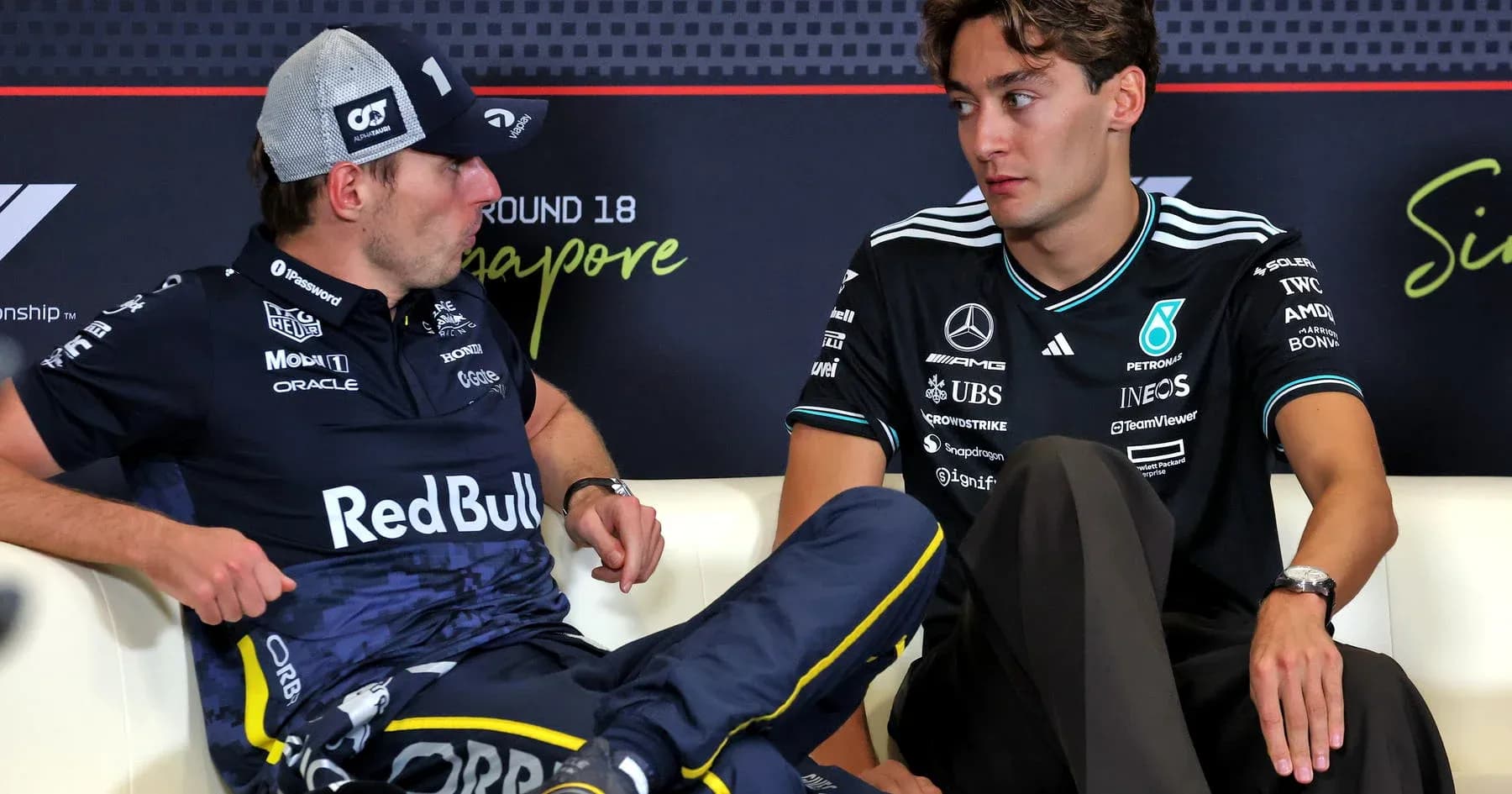
Max Verstappen topped the timesheets, but nothing about his session looked comfortable.
The four-time world champion wrestled his Red Bull from the moment he rolled out. A huge lock-up sent him charging into the run-off, just missing the wall as he bailed out of the corner. Later, at Turn 12, he needed the escape road again and told his engineer the engine had “just pushed me straight”.
Race control took notice. Verstappen was noted for driving erratically at Turn 16 after an incident with Alpine’s Franco Colapinto, which the stewards will investigate after the session.
Somehow, amid all that, he still fired in a 1:36.812 on the soft tyre to go quickest. On the radio, he was blunt: “the steering rack is just wrong”. On the stopwatch, he remained the benchmark.
Lando Norris, four tenths back on the same C5 compound, had his own moment of theatre. He’d just been overtaken by Verstappen before that big twitch and lock-up, and reported to the McLaren pit wall that it was “instant karma” for his rival. A wry chuckle over the radio, a reminder that the psychological jousting never really stops.
Isack Hadjar backed Verstappen up in third, underlining Red Bull’s grip on the session despite the Dutchman’s troubles.
Red Bull vs McLaren: two philosophies, one street fight
Abbi Pulling, watching closely for BBC Radio 5 Sports Extra, picked apart the emerging pattern. The Red Bulls owned sector one by three to four tenths. McLaren hit back in sector two. Then the final blast down the Strip swung it back towards Red Bull again.
Higher downforce on the McLaren. More straight-line punch on the Red Bull. Two different answers to the same question: how fast can you dare to be in Las Vegas?
Hadjar, fresh from a podium alongside Verstappen in São Paulo, again looked sharp. He even edged 2025 world champion Norris at one stage, lifting Red Bull’s hopes of a one-two this weekend and strengthening their push to finish ahead of McLaren in the constructors’ standings.
Mercedes split strategies and Russell strikes
Mercedes played it cooler early on. Kimi Antonelli and George Russell headed out on the C4 medium tyre, the team clearly more interested in structured running than headline-grabbing laps at first.
Antonelli, the world champion, carried an upgraded turbocharger for this weekend. Russell did not; Mercedes judged that the 15-place grid penalty attached to it wasn’t worth the risk for the Briton.
Even so, Russell eventually lit it up. A 1:35.124 on the board, pushing Verstappen down the order at that stage and staking a claim at the sharp end. Later, another run lifted him to fourth overall, still more than a second off Verstappen’s best on the softer compound but firmly in the mix.
Antonelli clocked a 1:35.407 on the softs to sit just behind his team-mate, six tenths adrift on identical rubber. Solid, controlled, and far less dramatic than the Red Bull story.
Ferrari lurking in the shadows
Ferrari stayed oddly quiet.
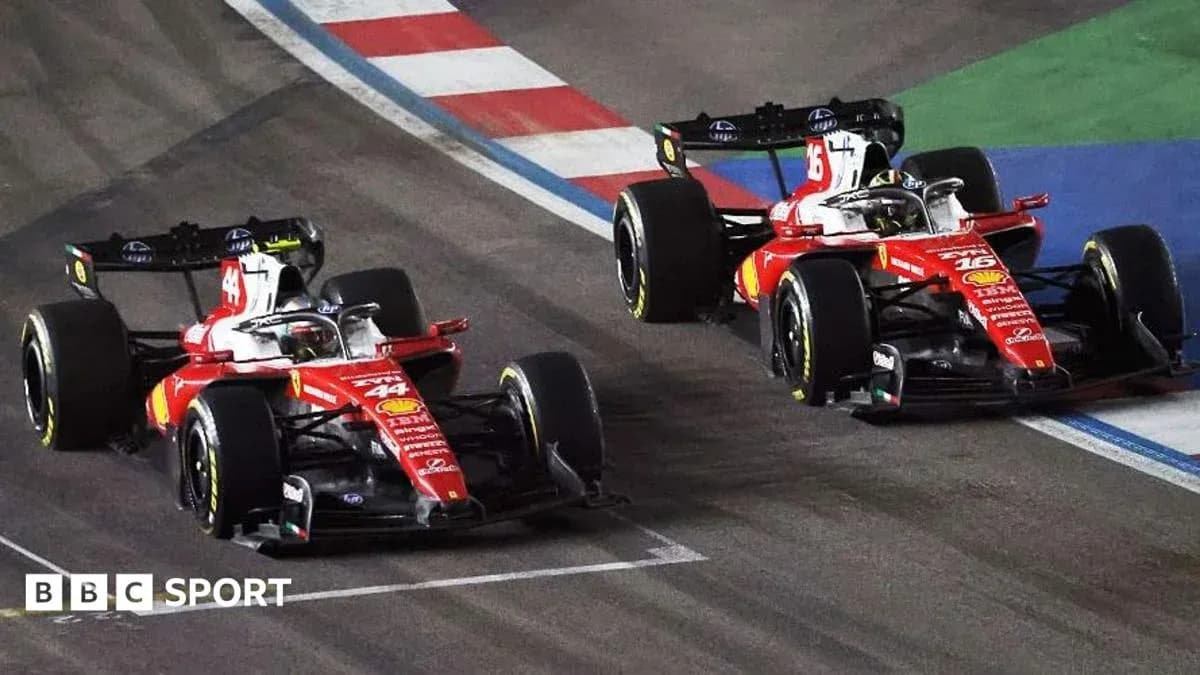
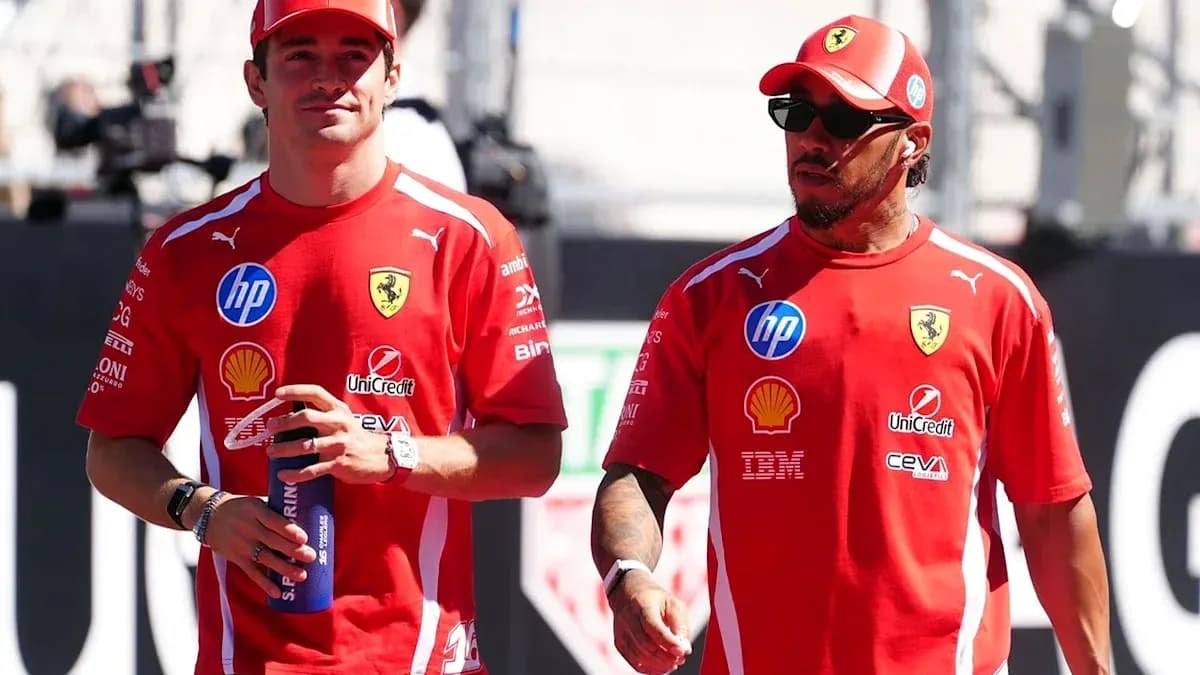
Charles Leclerc, rapid throughout Friday’s second session, sank down the order to 17th. Lewis Hamilton, the higher of the two Ferraris, could do no better than eighth after 13 laps.
Pulling suggested they were likely running heavier fuel and focusing on long runs rather than showboating on the timesheets. It looked that way: the red cars never really featured in the headline moments, just ticking through their programme while others flirted with the walls.
Carlos Sainz, on his milestone 250th grand prix weekend, faces it all with a 10-place grid penalty hanging over him for taking a fifth turbocharger. Even so, when he bolted on the soft tyres in his Williams stint of the narrative—this section clearly referring to the Williams driver on softs going for a qualifying sim and going P3—he climbed to third on the times, seven tenths off Verstappen’s early benchmark. A reminder that, penalty or not, his raw pace remains intact.
Traffic, tempers and Turn 14
Las Vegas punished any lapse in concentration.
Turn 14, in particular, turned into a menace. Hamilton’s lock-up there was described by Pulling as “quite spectacular” – both tyres, inside and out, seizing as he tried to commit before thinking better of it and bailing out. Haas rookie Rafael Camara also needed the run-off to escape trouble, the youngster once again called up by the American team after his home race in Brazil.
Traffic turned nasty in places. Isack Hadjar fumed over Alex Albon blocking him in the Williams while he was on a flying lap, insisting it deserved a penalty. The stewards noted the incident.
Pulling highlighted just how awkward it can be around Turn 12. The sweeping right-hander into the lefts of 10 and 11 forms a combined, blind braking zone. Drivers on cool-down laps and those charging for time can suddenly meet, with very little warning. On a day when there was finally more than one dry line, it still felt tight.
Gasly, Albon and the midfield intrigue
Away from the headline acts, Pierre Gasly quietly punched above his weight.
The Alpine man ran as high as fourth, ahead of both Mercedes, Oscar Piastri’s McLaren and the two Ferraris. Late in the session he went back out on the red-banded softs for more performance running, clearly eyeing a strong qualifying platform under the lights.
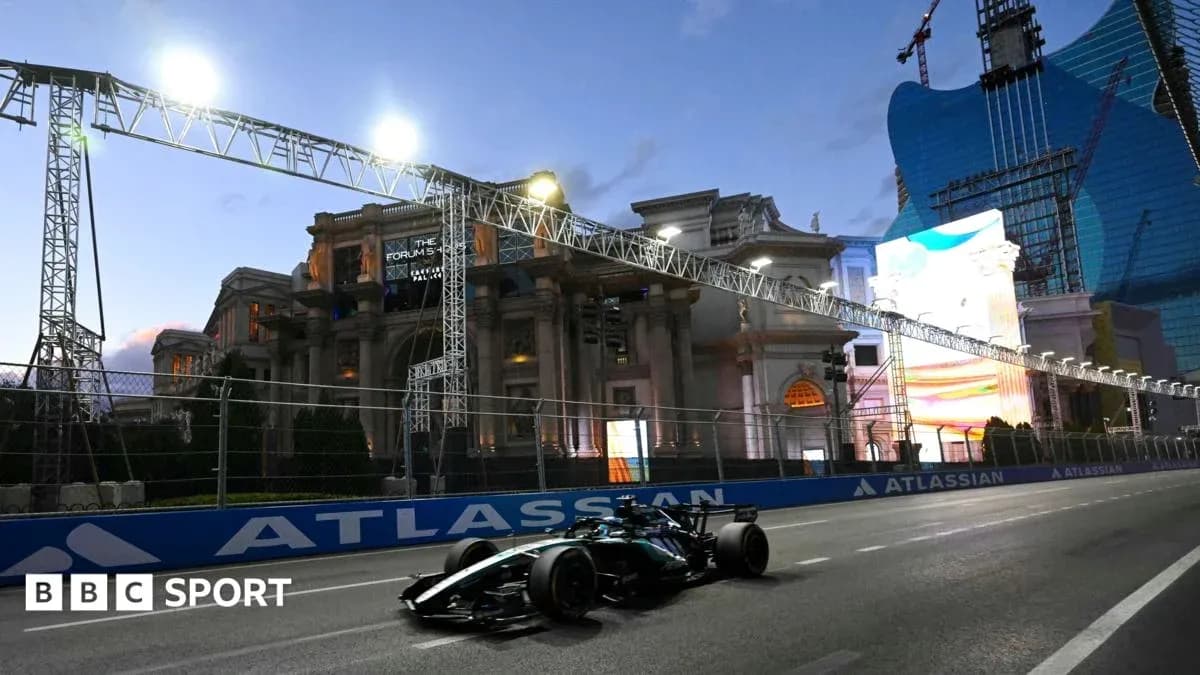
Albon, too, had a heart-in-mouth moment but saved what could have been a dicey incident for Williams as the sun slipped behind the casinos and the Strip’s artificial daylight took over.
Around them, the field churned. Arvid Lindblad and Liam Lawson put their Racing Bulls sixth and seventh, a tidy return on a day when the team also confirmed they will retain the pairing for the 2027 campaign. Stability off-track, consistency on it.
Tyres, Qatar and the bigger picture
Amid the Las Vegas drama, Pirelli dropped a significant note for next weekend.
Andrew Benson reported that the tyre supplier will cap each set at a maximum of 27 laps in Qatar, up slightly from last year’s 25-lap limit. The reason is the same: protecting tyre integrity through the long, high-speed corners at Lusail. Strategists have no wriggle room now; the Qatar Grand Prix will be a mandatory two-stop race for every car.
For teams, that’s another puzzle. For drivers, it’s another demand on already stretched concentration.
But that’s for next week.
In Las Vegas, the Strip is ready, the lights are warming up, and Verstappen arrives at qualifying as the man to beat – despite a car that keeps trying to throw him off the road.
If this is what practice looks like, what happens when someone finally decides not to back out?