Cricket Australia Launches Anonymity Forum for Sandpaper Scandal
Cricket Australia has drawn a hard line around its fresh examination of the 2018 South Africa tour, promising a rare thing in modern sport: anonymity with teeth.
The governing body on Friday released the terms of reference for its new independent forum into the infamous ball‑tampering series, setting out a process that will let players and staff speak freely about what really happened – without the board ever seeing their individual accounts.
The six‑week forum will be led by senior counsel Fiona McLeod AO SC and will run as a confidential clearing house for those who lived through the most toxic episode in recent Australian cricket history. McLeod will distil what she hears into a report of themes, issues and recommendations. Names and raw testimonies stay with her.
The board gets the conclusions, not the confessions.
Cricket Australia has committed to publishing McLeod’s report in full, along with its official response, within 30 days of receiving it. That pledge plants the process squarely in the public domain, while still ring‑fencing the players and staff whose evidence will underpin it.
This forum is not a re‑trial of Cape Town. It is a reckoning with everything around it.
Prompted by Khawaja’s book
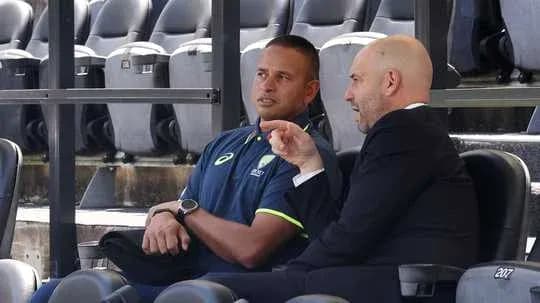
The move comes after Usman Khawaja’s autobiography, Sabr, dragged the 2018 tour back under the microscope. In it, Khawaja claimed knowledge of the sandpaper plan stretched beyond the three players punished at the time.
Those claims have not drifted into the ether. David Warner and Cameron Bancroft have backed parts of Khawaja’s account. Pat Cummins and other bowlers have just as firmly maintained they had no idea what was coming when Bancroft reached into his pocket in Cape Town.
The result is a familiar storm: old wounds reopened, reputations questioned again, a fan base wondering how much it was really told.
Scope: from “ball management” to Cape Town
McLeod’s brief is wide, but carefully fenced.
The forum will examine ball‑management practices within the Australian team across the 2017‑18 season, all four Tests of the South Africa tour, the Bancroft incident during the third Test in Cape Town on March 24, 2018, and Cricket Australia’s subsequent investigation.
What it will not do is reopen that original investigation or apportion fresh blame. The terms make that explicit. This is about culture, methods and processes – not rewriting who was officially responsible.
Every player and support staff member who toured South Africa in 2018 has been invited to take part, along with CA management and directors from that period. They can front McLeod in person or online, file written accounts, or submit documents. Participation is voluntary, and anyone giving evidence can bring a support person or lawyer.
The protections run deep. The forum cannot disclose who provided information when it seeks clarification from another participant unless the original source agrees. Everyone involved will be told exactly who can access their information and will be allowed to review their own account for accuracy.
McLeod will also have access to the 2018 Culture and Governance Review of Australian Cricket, conducted by The Ethics Centre, and any other relevant material she requests. The past, this time, will be read in full.
Voice, not verdict
CA chair David Boon framed the forum as a chance to finally let those on that tour speak without fear.
He described it as an opportunity for players and staff to give their accounts “in a safe environment” and to arm the board with “relevant information including about the events of that tour and resultant investigation.” Boon also acknowledged the “enormous toll” the renewed focus on the series has taken on those involved, stressing that their welfare “remains our main priority.”
For a group that has lived under the “Sandpapergate” tag for eight years, that matters. Careers were reshaped, leaderships overturned, legacies stained. Some moved on. Others never really could.
Now they are being asked to go back there, one more time, under stricter protections and with a guarantee their words will not be picked over in board papers or leaked into the public domain.
Cricket Australia says publishing the report in full is part of its commitment to transparency and to being open with fans about what it learns. The next step is less about what the board wants to say, and more about what those who were in the dressing room are finally prepared to put on the record – even if their names never appear.