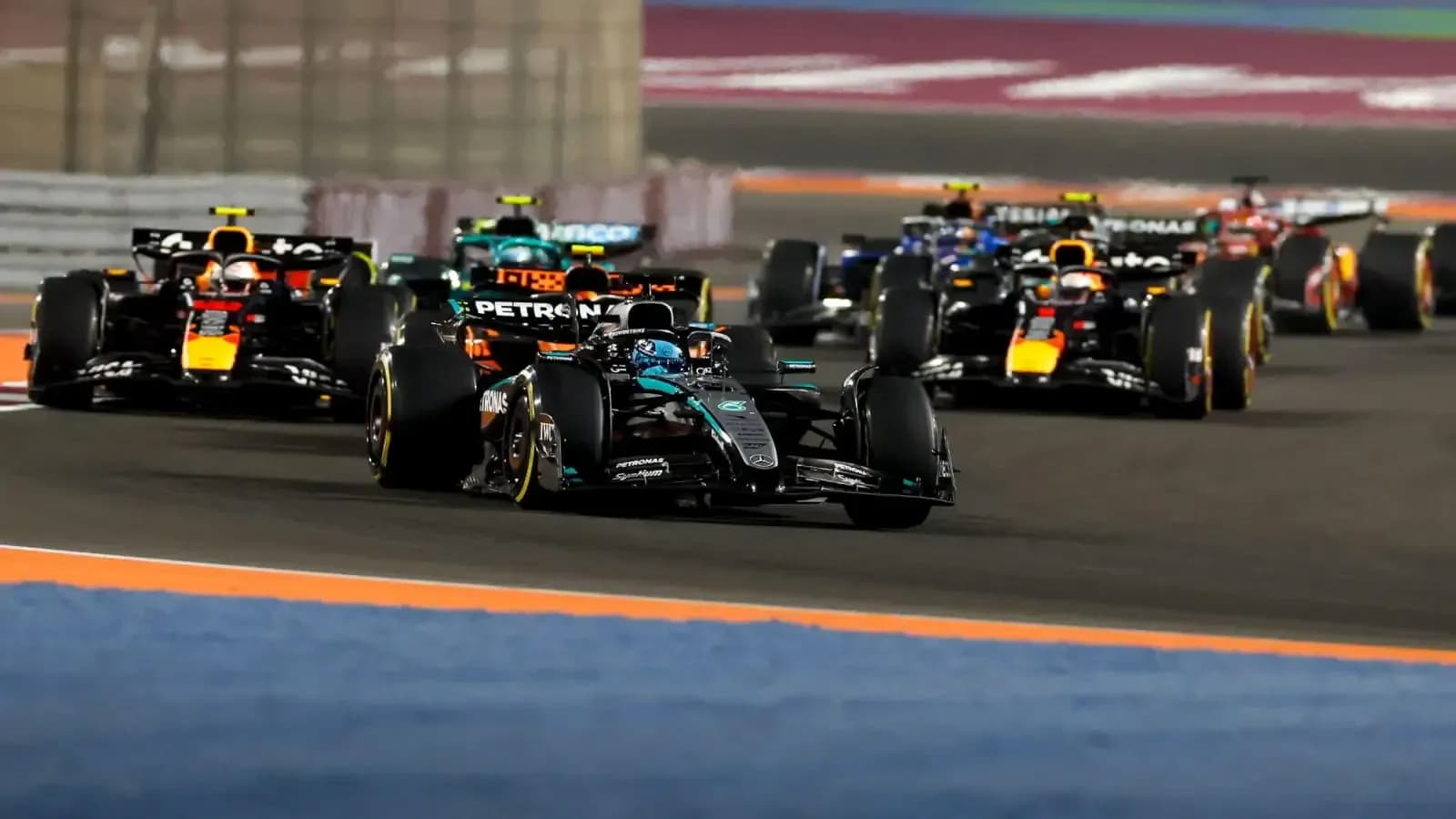
FIA Sets Record Tyre Pressure for Qatar Grand Prix 2026
The FIA has pushed Formula 1’s tyre limits to a new extreme for this weekend’s Qatar Grand Prix, mandating a record 29psi minimum front-tyre pressure for the 2026 cars at Lusail.
It is the highest starting front-tyre pressure ever enforced at the beginning of a grand prix weekend, underlining just how hard this fast, flowing circuit still punishes rubber.
Lusail’s brutal reputation drives new clampdown
Lusail has been on the calendar only since 2021, but it already carries a heavy backstory. That debut race was overshadowed by a spate of late tyre failures, exposing just how vicious the combination of high-speed corners, long lateral loads and aggressive kerbs could be.
The response since then has been systematic and increasingly firm.
In 2023, the FIA imposed a maximum tyre life of 18 laps per set after issues linked to the circuit’s pyramid kerbs. By 2025, Qatar had become a compulsory two-stop race: a mandatory stint length of 25 laps ensured no driver could stretch a set beyond what the data suggested was safe.
For 2026, the screws tighten again. The mandatory stint length now rises to 27 laps, and the minimum front-tyre pressure climbs to 29psi.
Those details appeared in the competition notes issued on Thursday by race director Rui Marques, confirming that Qatar will set the new benchmark for front-tyre pressures this season. The previous high of 28psi had been used at Suzuka, Silverstone and Spa.
The rear tyres will start the weekend at 27.5psi, slightly lower than the 28psi seen at Spa and Las Vegas, but still 4psi higher than the levels used in 2025 under the old ground‑effect regulations.
Hardest Pirelli compounds, longest stints
To cope with Lusail’s demands, Pirelli once again brings the toughest rubber in its range: C1 as Hard, C2 as Medium and C3 as Soft. There is no compromise here. The circuit’s 16 corners, many of them high-speed, keep the tyres loaded almost constantly, with the front-left taking the worst of the punishment.
Track temperatures stay high, the surface is relatively smooth, and that mix invites graining across all compounds. Graining lifts temperatures and wear, and at Lusail it can spiral quickly if not managed.
Yet Pirelli insists the tyres can take it. The company notes that, even in these extreme conditions, performance remains consistent across a stint and degradation stays relatively limited, even when wear is visibly high. That confidence underpins the new 27-lap stint cap.
There is history here, too. In 2025, Pirelli had already raised minimum front pressures to 29psi during the Qatar weekend after cuts were discovered in tyres following Friday running; the event had started at 28psi. This time, 29psi is the baseline from the outset, with the FIA leaving the door open to go higher if fresh concerns emerge as the weekend unfolds.
Lower downforce, higher limits
The 2026 regulations have changed the equation again. The new cars generate less aerodynamic load than their 2025 predecessors, a key factor behind the revised stint rules.
Pirelli explains that the combination of a reinforced tyre construction and reduced aero load has allowed the FIA and the supplier to stretch the maximum stint length from 25 to 27 laps. That, in turn, locks the race into at least a two-stop strategy for everyone on the grid.
The aim is clear: control structural fatigue not by forcing ultra-high pressures alone, but by limiting how long each set can be used. With a hard cap on stint length, drivers should be able to attack more, manage less, and avoid the extreme pace-nursing that can creep in when teams fear pushing tyres to the edge of their life.
The absence of the sprint format this year also changes the rhythm of the weekend. Without a sprint, teams regain a more traditional practice schedule, with extra time on Friday to explore set-ups and understand how the tyres behave across long runs at these unprecedented pressure levels.
Qatar’s fine line between speed and survival
The core challenge remains unchanged. Lusail is fast, relentless and unforgiving on tyres. The front-left will again be the focal point of every strategy meeting, every stint calculation, every radio message about pace.
The FIA and Pirelli have chosen a tightrope: higher minimum pressures, a reinforced construction, and a strict 27-lap limit per set. The race will be a mandatory two-stopper. No gambles on heroic one-stop runs, no wild outliers.
What remains is the question that will only be answered under the lights: with the bar raised to 29psi at the front and stint lengths locked in, who will dare lean hardest on the tyres – and who will blink first when Lusail starts to bite?