The Enduring Allure of Heavyweight Boxing
Boxing has always had a gift for self-sabotage. Bad decisions, worse politics, circus sideshows dressed up as events. Yet the sport never quite dies, because one thing keeps dragging it back from the brink: the heavyweights.
As long as the big men are throwing big punches, boxing breathes.
Larry Merchant understood that before most. He was at ringside for Ali–Frazier I in 1971, “the greatest event I ever covered,” as he still calls it. He was so bewitched by that era that he literally bought into it, purchasing a share of Joe Frazier so the Philadelphia slugger could quit the meat-packing plant and chase greatness full-time. Eighty shares at $250 apiece. Twenty thousand dollars to free a future champion. Nobody ever asked for their money back.
That was the heavyweight division at its purest: Ali, Frazier, Foreman, a rotating cast of giants who fought often and fought each other. They gave the sport its heartbeat and the public a clear story to follow. You didn’t need to understand feints, footwork or punch stats. Two huge men, one ring, one truth: someone is probably getting knocked out.
Names like Ali, Frazier, Foreman, Tyson, Holyfield, Louis, Marciano, Dempsey — even fictional Balboa — are stitched into popular culture. Ask a casual sports fan to picture a boxer and they won’t see a flyweight. They’ll see a heavyweight: broad shoulders, heavy hands, menace in motion. They understand, instinctively, what happens when two of them start throwing leather. Damage. Chaos. A finish.
“When the heavyweight division works, it all kind of works,” Merchant once said. When the big men are good and they fight each other, boxing stops being a niche obsession and becomes appointment viewing.
The trouble is, heavyweight history doesn’t run in straight lines. After Ali–Frazier–Foreman came Larry Holmes, a master with the jab but never a darling of the masses. His reign gave way not to another colossus but to a revolving door of capable, forgettable belt-holders: John Tate, Mike Weaver, Michael Dokes, Gerrie Coetzee, Tim Witherspoon, Pinklon Thomas, Greg Page, Tony Tubbs, Michael Spinks, Trevor Berbick. Too many belts. Too few stars. The division drifted.
Then a 20-year-old from Brooklyn walked through Berbick in 1986 and hit the sport like Narcan. Mike Tyson didn’t just win; he detonated people. Suddenly the heavyweight title felt dangerous again. Tyson turned his fights into global gatherings — celebrities ringside, families and friends huddled around televisions, everyone leaning in for that jolt of shared shock. Blink and you’d missed it, but you’d never forget it.
Even after Tyson fell — first to Buster Douglas, then to prison, then to the wear and tear of his own mythology — the addiction to heavyweight drama remained. Holyfield, Lewis, Bowe took their turns. Fans kept watching, hoping for another once-in-a-generation monster, or at least another night that felt like one.
That successor never really came. Instead the division split into two unsatisfying phases: parity without quality, then the iron grip of the Klitschko brothers, Vitali and Wladimir, whose cold efficiency sat at the opposite end of the spectrum from Tyson’s wild, violent magnetism.
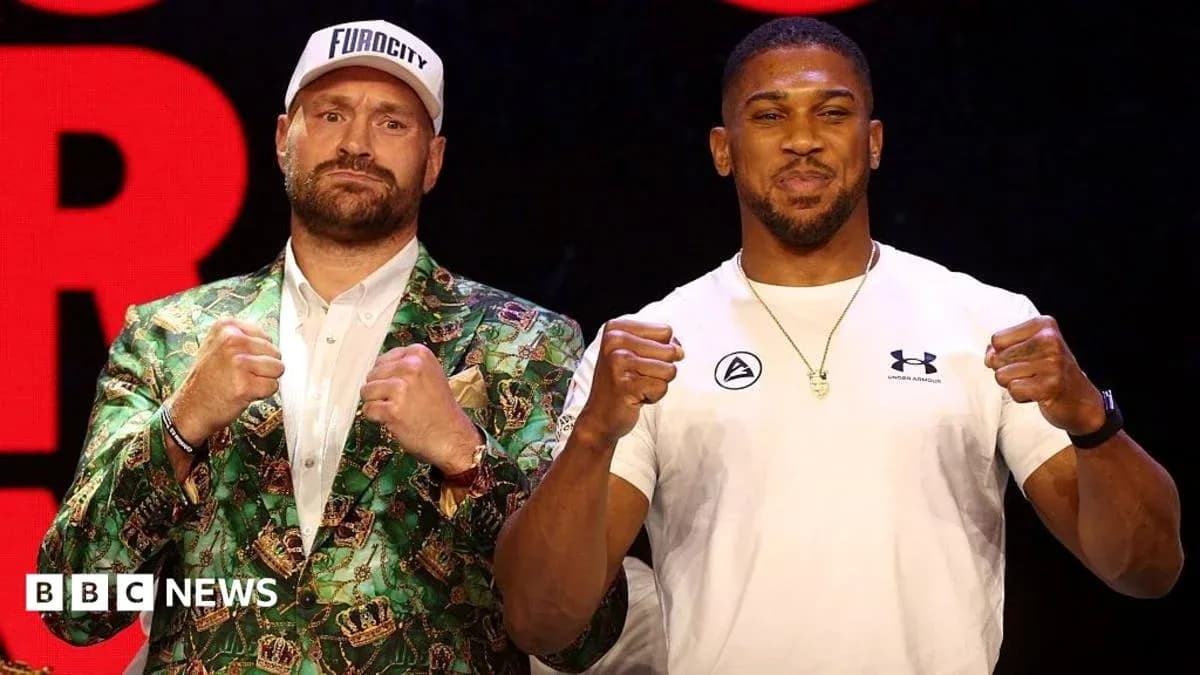
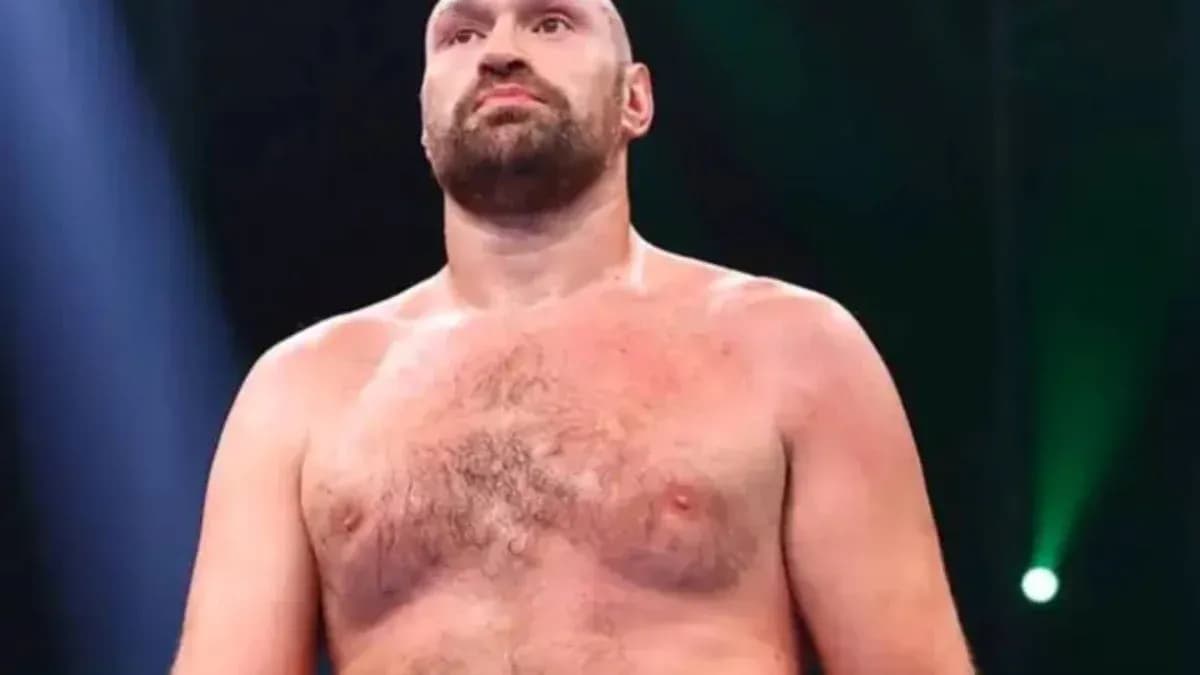
For a moment, it looked like a new golden age might be forming. Tyson Fury, Anthony Joshua and Deontay Wilder held belts at the same time, threatening to tidy up the mess and rule an era together. Threatening, but not delivering. Fights slipped away, timelines stretched, legacies blurred. Still, they made people care. Heavyweight talk returned to bar stools and office chats. Merchant, never easy to impress, compared that crop to the early ’90s, when Holyfield, Tyson and Lewis shared the stage.
Yet heavyweight time moves fast. Today, Fury, Joshua and Wilder already feel like yesterday’s men. Oleksandr Usyk, the most complete fighter of their generation, beat them to the punch in another way: he walked away from his belts in June and effectively told the division, “I’m done here.”
Usyk turns 40 in January and wants to go back to cruiserweight, where his legend began. In his wake, the four major titles — WBC, WBA, IBF and WBO — are scattered across new shoulders. Fury and Joshua, long accused of circling each other rather than colliding, are finally scheduled to meet on Dec. 11 in a fight that doubles as a long-overdue showdown and a reminder of how much time was wasted getting here. It might be the last big act of that particular era. One final roar before the curtain falls.
Yet boxing needs that fight. It needs heavyweight blockbusters the way Hollywood needs superhero franchises: to bankroll everything else, to keep casuals engaged, to remind the wider world the sport still exists. History is unambiguous on this point: when the heavyweights are healthy, boxing is, too.
And right now, in 2026, the big men are doing their part.
Take May’s savage brawl between Daniel Dubois and Fabio Wardley. If any fight deserves “Fight of the Year” chatter, it’s that one. It was raw, ugly, unforgettable. Dubois hit the canvas twice in the opening rounds — the first knockdown came after just 16 seconds — and looked ready to fold. Instead he clawed his way back, turned the tide and stopped Wardley in the 11th. The bout had everything that makes heavyweight boxing irresistible: sudden shifts, looming peril, and two men walking a tightrope without a safety net.
It was the kind of fight that shortens careers. Both could have disappeared for the rest of the year and nobody would have blamed them. They didn’t. Instead, five months later, they ran it back in London. This time Wardley hit the floor 17 seconds into Round 1, and Dubois showed no interest in prolonging the agony. By Round 2 it was over. Wardley lay crumpled. Dubois walked away with his WBO heavyweight title intact and his reputation enhanced.
That WBO belt once lived around Usyk’s waist, though he left it at home when he took on Rico Verhoeven in Egypt in May — a kickboxer with almost no boxing pedigree, sanctioned by the WBC in a decision that baffled purists. The matchup sounded like a novelty. It turned into something far stranger.
Verhoeven didn’t just survive. He won rounds. Plenty of them. For long stretches Usyk looked uncomfortable, even rattled, trying to solve a man who was supposed to be a walkover. Only a furious surge in Round 11 spared him from what would have gone down as the biggest heavyweight shock since Tyson–Douglas. That it came that close is a reminder: at heavyweight, even the scriptwriters can’t keep up.
The chaos hasn’t been confined to oddities and thrillers. The division’s next wave has also taken a beating this year. Three of the most-hyped prospects saw their unbeaten records smashed in 2026, a sharp lesson in how fragile any heavyweight “plan” really is.
First to fall was Cuban southpaw Lenier Pero, 13-0 until Jarrell Miller — a veteran whose own career is forever stained by multiple failed drug tests — roughed him up and handed him his first loss in April. Then came Richard Torrez, the American Olympic medallist billed as the next big U.S. heavyweight hope. He arrived 14-0, left flat on his back in Round 2 after Frank Sanchez, another Cuban technician, took him apart on the same Giza card where Usyk tangled with Verhoeven.
The loudest crash, though, belonged to Moses Itauma. At 21, the British heavyweight carried more hype than both Pero and Torrez combined. Comparisons to Tyson followed him into every arena. He wasn’t just a prospect; he was treated as an inevitability, the heir apparent. Some voices even called for Usyk to delay his exit from heavyweight to stage a ceremonial passing of the torch, as if Itauma strolling through a master like Usyk was the next logical step.
Filip Hrgovic had other ideas. He met Itauma in August and refused to play the role of stepping stone. He absorbed the same heavy shots that had chopped down Itauma’s first 14 opponents, felt them, adjusted, and kept coming. By Round 9, the younger man was spent. Hrgovic had outlasted him, outwilled him, and shut down the coronation. It was a harsh education for a fighter used to hearing “yes” at every turn. For everyone watching, it was one of the year’s most gripping spectacles.
Even established names haven’t been spared. In July, Anthony Joshua — former two-time heavyweight champion, global star, supposed safe pair of hands — climbed through the ropes for what was billed as a gentle tune-up against Kristian Prenga. The bout followed a deeply difficult period in Joshua’s personal life and was meant to ease him back into the ring.
Instead, Round 1 turned into a nightmare. Joshua hit the deck twice and came perilously close to being stopped. He looked fragile, hesitant, a man feeling every ounce of pressure that comes with his name. Only his power, his stubbornness, and Prenga’s limitations saved him in Round 2. The mismatch on paper almost became a disaster in reality.
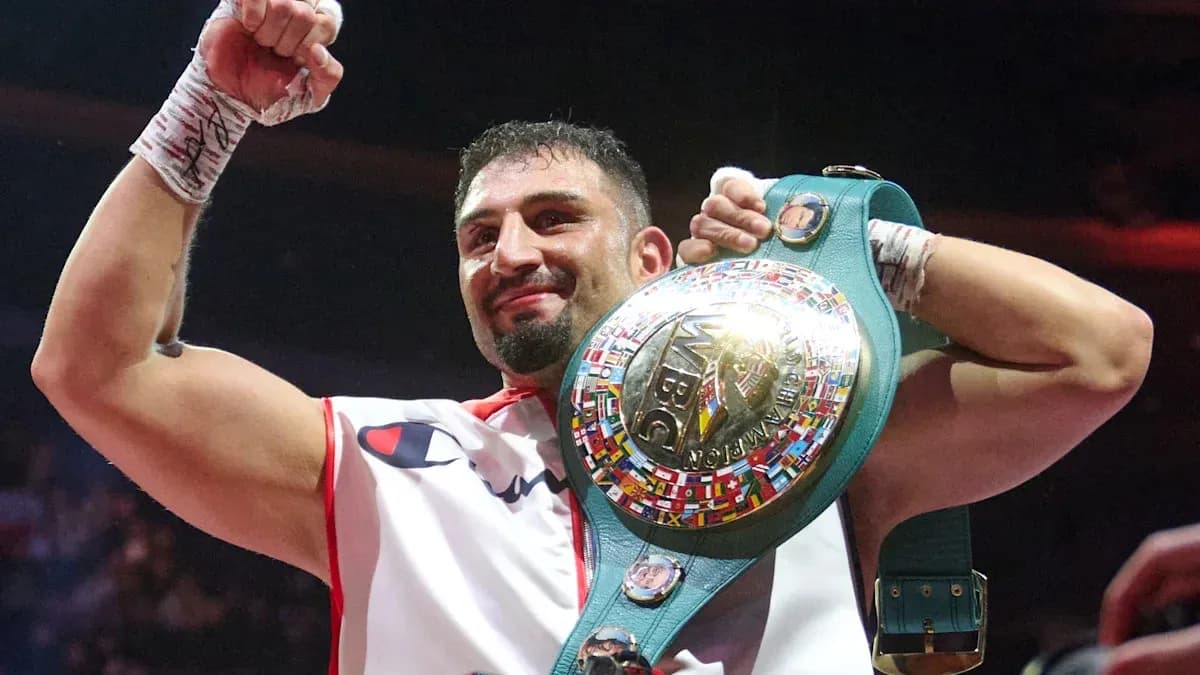
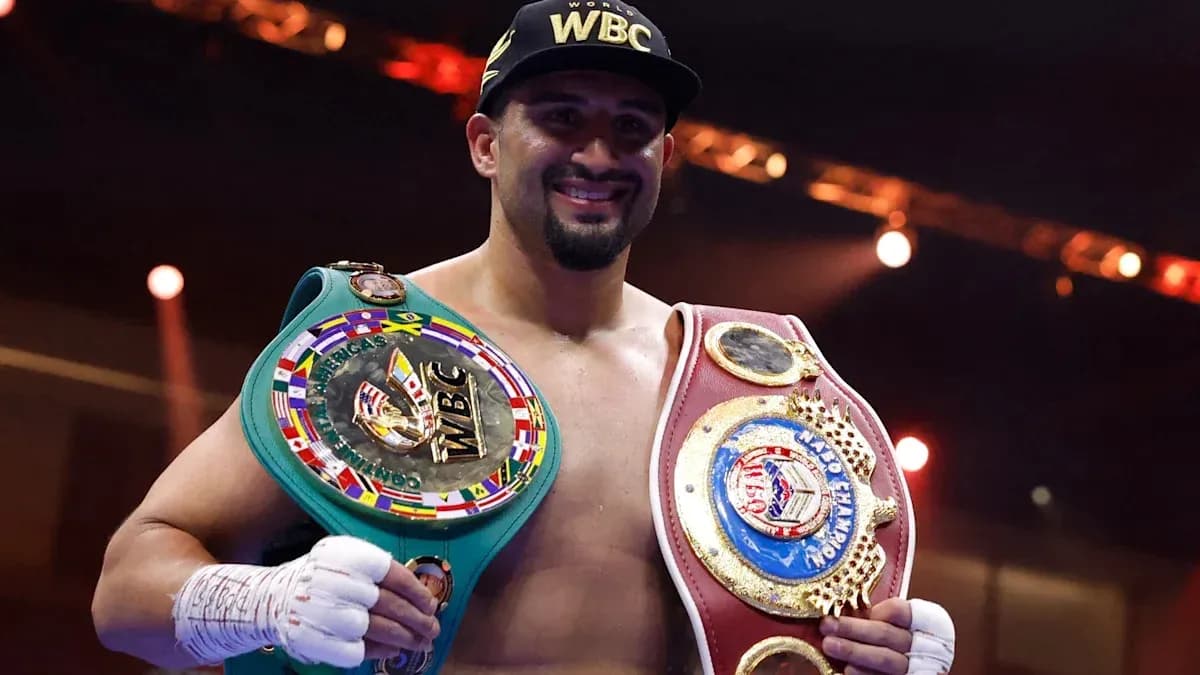
Now comes the next chapter. On Saturday, Germany’s Agit Kabayel defends the WBC title he inherited from the post-Usyk reshuffle. When the Ukrainian vacated his belts in June, Kabayel’s patience and persistence finally paid off, and he became the first German heavyweight world champion since Max Schmeling in 1932.
Kabayel, born in Germany to Kurdish parents, had already claimed the interim strap with a sixth-round stoppage of Zhilei Zhang last year. He kept winning, kept waiting, and now steps into his first full WBC title defence against unbeaten Albanian Nelson Hysa at Düsseldorf’s Merkur Spiel-Arena — the same venue where Tyson Fury dethroned Wladimir Klitschko 11 years to the day.
At home, Kabayel has turned into a genuine draw. The numbers tell the story: 25,000 tickets gone in the first 24 hours of presale for this weekend’s fight. In a country well-versed in stadium boxing nights — from the Klitschkos to the towering Nikolay Valuev — fans are pouring in again for the same simple reason. He’s a heavyweight.
“What Agit has done over the last few years has been tremendous,” said his promoter, Frank Warren. “Agit Kabayel is one of the biggest ticket-selling fighters in the world. You look at the last fight [against Knyba in January] — the first fight we did here [in Germany] — and it sold out in a day. We're going to be opening up for 40,000 [spectators on Saturday] and the atmosphere is going to be unbelievable. Nelson has taken a big tranche of tickets himself — he's got 6,000 or so — and it's going to be great. After this fight the winner is going to be involved in massive fights next year.”
Massive fights. Massive men. Massive interest. The formula hasn’t changed in a century.
Strip everything else away — the alphabet soup of belts, the crossover gimmicks, the fractured broadcast deals — and one idea still cuts through. Being heavyweight champion of the world means something. It speaks a language everyone understands.
In a sport, and a world, increasingly short on clear leaders and shared truths, you wonder how long that will last. You also suspect that when almost everything else has faded, the last light still burning might be a single man, alone under the ring lights, carrying the oldest title of them all.