George Russell Critiques Media Coverage of Verstappen Rivalry
George Russell has taken aim at the way two of Formula 1’s most recognisable broadcasters, Ted Kravitz and Will Buxton, have told the story of a behind-the-scenes exchange with him – and he’s not impressed with the version that made it out to the public.
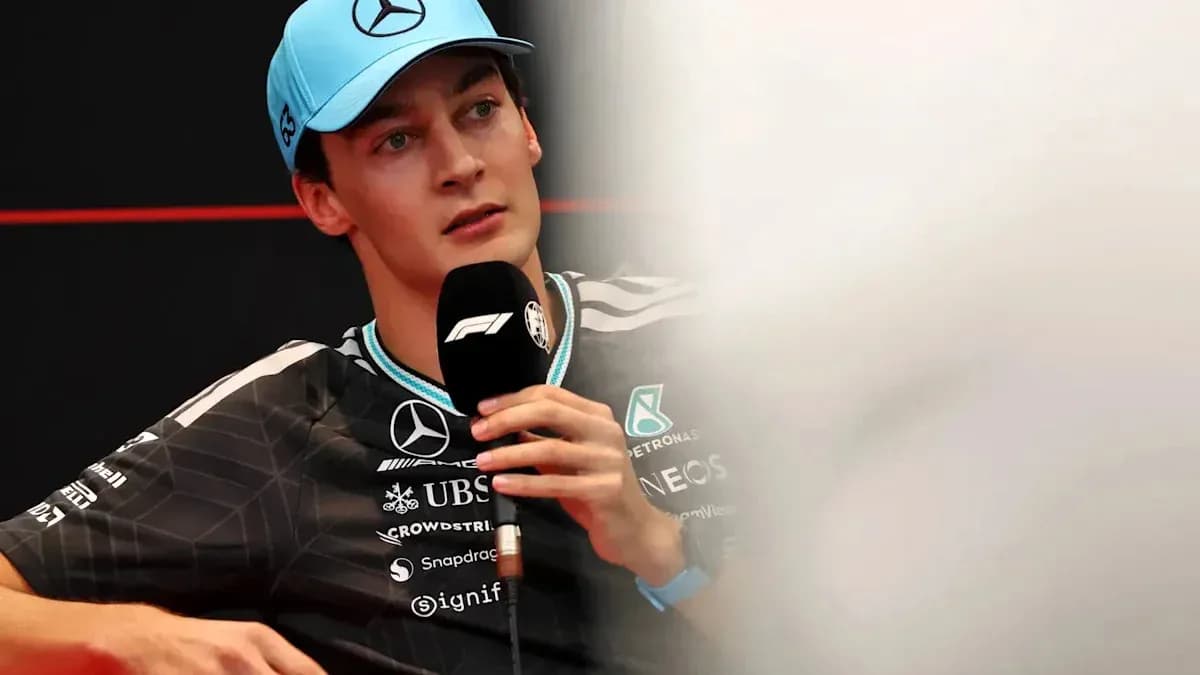
The Mercedes driver, already locked in a simmering rivalry with Max Verstappen, used this week’s FIA press conference ahead of the Qatar Grand Prix to air his frustration at how that Abu Dhabi encounter was later framed.
Russell–Verstappen tensions resurface
The backdrop is a feud that refuses to stay buried. Their rivalry flared again in Las Vegas, where a practice-session confrontation spilled into the weekend and ended with Verstappen firing verbal shots after winning on the Strip.
That spat dragged old grievances back into the light. The pair had already clashed late in the 2024 season, with a controversial qualifying incident in Qatar and a tetchy stewards’ hearing triggering a war of words that rolled on into Abu Dhabi.
Russell now concedes the whole thing has gone too far.
"It's all avoidable at the end of the day, and it's all a bit unnecessary," he said. "It's not something I'm looking to continue now. I'm not looking to have poor relationships with people. That's just not really the type of person I am."
“Too open and honest” – and burned by it
The 26‑year‑old pointed the finger not just at the rivalry itself, but at his own approach to the media. He admitted that his willingness to speak candidly has, at times, backfired.
"Maybe I am just too open and honest with the media, because I feel that I'm having more of an open conversation with you guys, as opposed to remembering there's a camera in front."
That sense of relaxed, off-the-record chat is exactly what Russell feels was betrayed in Abu Dhabi.
He recalled an exchange in the paddock with Sky Sports F1 pit lane reporter Ted Kravitz and former F1 TV presenter Will Buxton, during the height of the Verstappen controversy. In his mind, it was straightforward: if something is going to be said, say it on camera, not half-whispered behind the garages.
"I remember in Abu Dhabi a few years ago when I was having an open conversation with Ted Kravitz and Will Buxton about the whole situation, and I said, 'Just ask me the question on camera rather than having the conversation off camera.'
They did. The cameras rolled. The questions came.
“They spin the truth into something slightly different”
The problem, Russell says, came afterwards.
Kravitz later wrote about that moment in his book, Notes from the Pit Lane, describing how Russell had actively encouraged him to probe deeper on Verstappen before a television interview. From Russell’s perspective, the spirit of that exchange was lost in translation once it reached the wider audience.
"So, they asked me the question on camera, and then they go away and spin the truth into something slightly different," he said. "You kind of think that's a little bit cheeky because it is the truth, but it's not how it was in reality. As I said, that's just a learning for me personally."
It was a pointed accusation, not of outright fabrication, but of subtle distortion – of taking a real moment and bending its context just enough to change how it lands.
For a driver already trying to cool a feud with the sport’s dominant force, it adds another layer to the tightrope he walks: managing an intense on-track rivalry while navigating a media landscape ready to amplify every barb.
Russell insists he does not want bad blood, not with Verstappen and not with the journalists who cover them both. But as the season rolls into another high-stakes weekend in Qatar, his message is clear: if he’s going to keep speaking openly, he expects the story to be told straight.