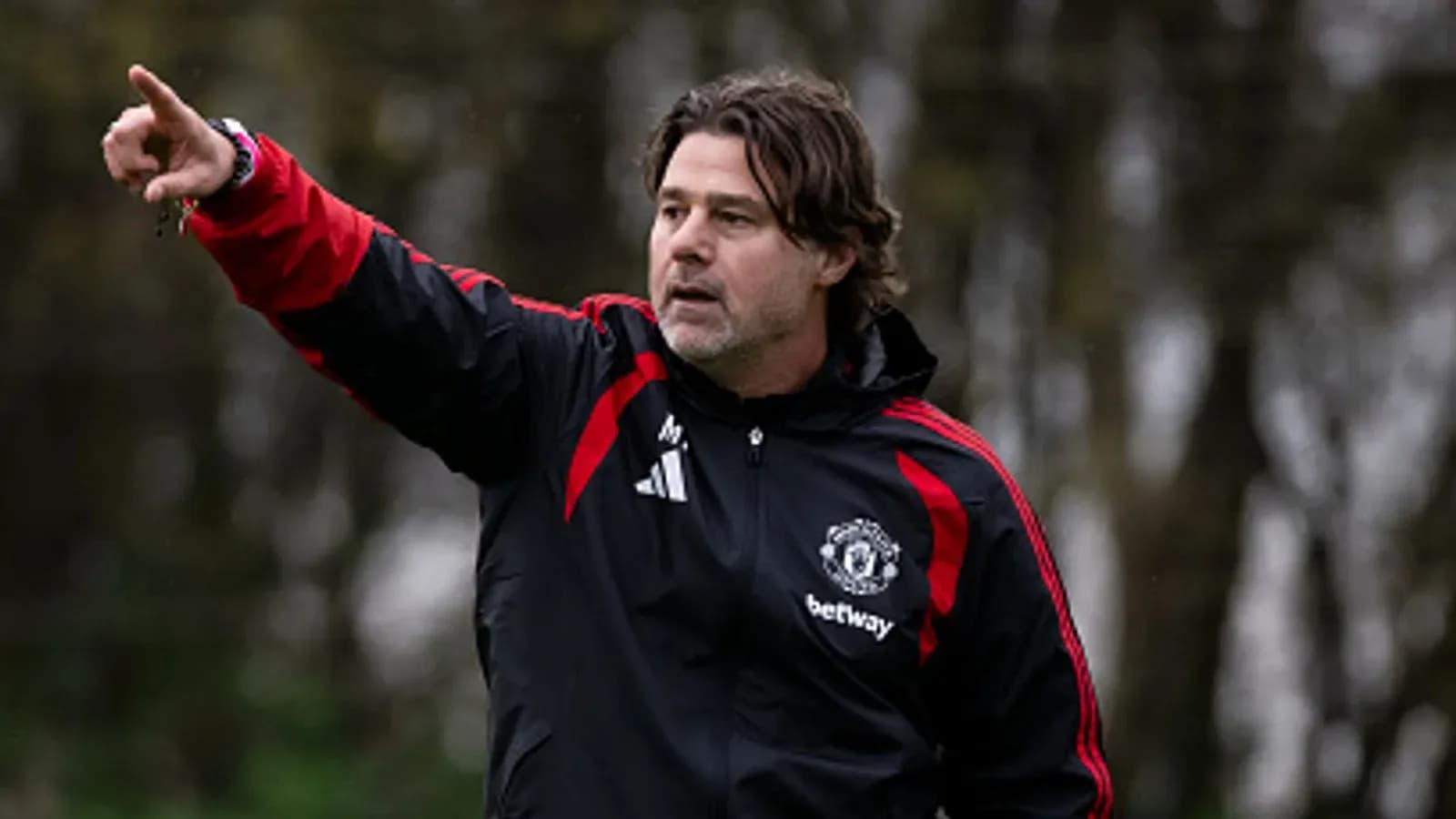
Pochettino's Challenge at Manchester United: Drones, Captaincy, and Team Dynamics
Mauricio Pochettino walked into his first Manchester United–Liverpool week expecting noise. He did not expect a drone.
Yet on the eve of his Old Trafford reign truly beginning, a 12‑minute video from above Carrington – his players laid out like pieces on a tactical board – had already been watched millions of times around the world. Training patterns, pressing triggers, shape work, personnel. All there. All before a ball has been kicked under his watch.
So when Pochettino sat down and was asked about it, the irritation was thinly veiled.
“What are you going to find?” he said. “We have young guys training with us. It’s not nice. It’s not good.”
The footage, filmed by an independent operator and then reposted across X and YouTube, has turned a private, controlled environment into a public spectacle. The original video has been removed and the operator has apologised, but the damage is done: more than eight million views and counting across multiple platforms.
United, for now, are holding their fire. The club do not currently plan legal action, but have made it clear they reserve the right to act if this becomes a pattern. Pochettino’s concern goes beyond competitive advantage.
“What do they want to show? Yes, we were working on shape. We were very organised. What is the point of doing something that can be very dangerous?
“I don't want to be upset, but I think it's a process the club is caring a lot about. For sure, something will happen.”
Iraola: ‘It shouldn’t be legal’
Across the divide, even Liverpool’s head coach Andoni Iraola – the man preparing to exploit any crumb of information before Sunday’s game at Anfield – could not dress it up as harmless curiosity.
“They sent me it yesterday, the footage. But the important part of this is it shouldn't be legal,” he said.
He pointed out that Liverpool’s own sessions are routinely filmed for broadcast, but with club control and consent. That, for him, is the line.
“Yesterday you had access to our training, the cameras recorded 15-20 minutes of our training. You know who trained with us, you know who didn't train but it's not a matter of the advantage. It's the fact someone can do this.
“There is a reason we train behind closed doors because there are some things you have to respect. I don't think it's nice for any club.”
The debate cuts to the heart of the modern game: how much privacy can elite teams realistically expect in an age of camera phones, drones and social media virality? For Pochettino, the answer is simple. There has to be a line – and this crossed it.
Head coach, manager… or simply in charge?
Step away from the drone and another, more internal question faces United: what exactly is Mauricio Pochettino at Old Trafford?
On paper, he is “head coach”. The same title given to Ruben Amorim and Michael Carrick before him. Amorim bristled at that distinction in his final days, making a point of calling himself “manager” as his authority slipped away.
Pochettino is not hung up on semantics. He is more interested in where the power actually sits.
“I know that I'm the head coach. I am the guy who is going to decide the squad for Sunday, and I'm going to pick the starting XI,” he said.
“I'm going to make the changes, and of course, in the future I would like to be involved in all the main decisions that will happen in the squad.”
He has lived both realities – the pure coach and the all‑encompassing manager – and knows the job title on the door often tells only half the story.
“Sometimes I worked much better when I was head coach or when I was coach than manager.
“It's not necessarily the case that if you are manager, you make all the decisions. Maybe you are a coach and you have more power in the decisions. It depends on the structure, depends on the communication, the relationship, with all the areas there.”
The message is clear: call him what you like. Just make sure he has a say when it matters.
Bruno’s armband, Bruno’s future
One of those key decisions will always be the captaincy. At United, that means Bruno Fernandes.
The PFA Player of the Year has laboured at times this season, his form dipping as the team staggered. His contract ticks towards its final year, with United holding an option to extend by 12 months. CEO Omar Berrada has confirmed talks are ongoing over a new deal.
Around the club, the debate over Fernandes’ long‑term role simmers. For Pochettino, there is no debate at all – not yet.
“Bruno is our captain, and I think he's a very important player, but all the players need to feel that they are important, from the top to the bottom or from the bottom to the top,” he said.
“But Bruno is our captain and he is a very important player. I think we will have time afterwards to talk about the things that you ask me.”
The emphasis is on the collective, but the armband stays where it is. At least under this new regime’s first steps.
Building a team by numbers – but with context
Ask anyone inside United what has most angered supporters this season and they’ll talk about the running. Or the lack of it.
Carrick, after a 4-1 defeat to Como in October, summed it up bluntly: “Whatever tactics you play, if you don't run back, you ain't going to win.” The numbers have backed that up. Distance covered. High‑intensity sprints. Off‑the‑ball work. United have lagged.
Pochettino is not shying away from those numbers. He is leaning into them.
“When we arrived, I think we found a group of players and we proposed the football that we feel [is the best]. That's being brave, being Man Utd. I think it is about proposing that idea, and they revise it; it is to be brave and try to bring that to the field,” he said.
“I need to be honest, sometimes data shows something that you can then see on the field. We are going to be very focused and try to improve our data, our numbers, in every single area of the field.
“We are here not to denounce things. We are here to build something with our players and with the club, and try to perform and win games.”
He will not, though, let raw statistics become a stick to beat his players with in isolation.
“I see that is a debate that I don't like to go in because I think we cannot talk about things without context, and data is about context,” he added.
“If you don't put context on the data, I think it's very dangerous to talk, and I think that it's easy to manipulate the data.”
So the plan is clear enough: raise the physical output, sharpen the tactical structure, but judge it all through the lens of game state, opposition, schedule, injuries. Numbers with nuance.
A new era starts under a spotlight
Pochettino’s first competitive step as United head coach now comes wrapped in all the usual Anfield theatre – and the unusual glare of leaked training footage.
He cannot control the drones above Carrington, or the noise around Fernandes’ contract, or the endless manager-versus-head-coach semantics. He can control the XI he sends out, the way they run, the way they press, the way they compete.
For a club desperate to feel like itself again, that is where his work truly starts.