Tottenham Hotspur 2-0 Ipswich: A Season-Defining Match
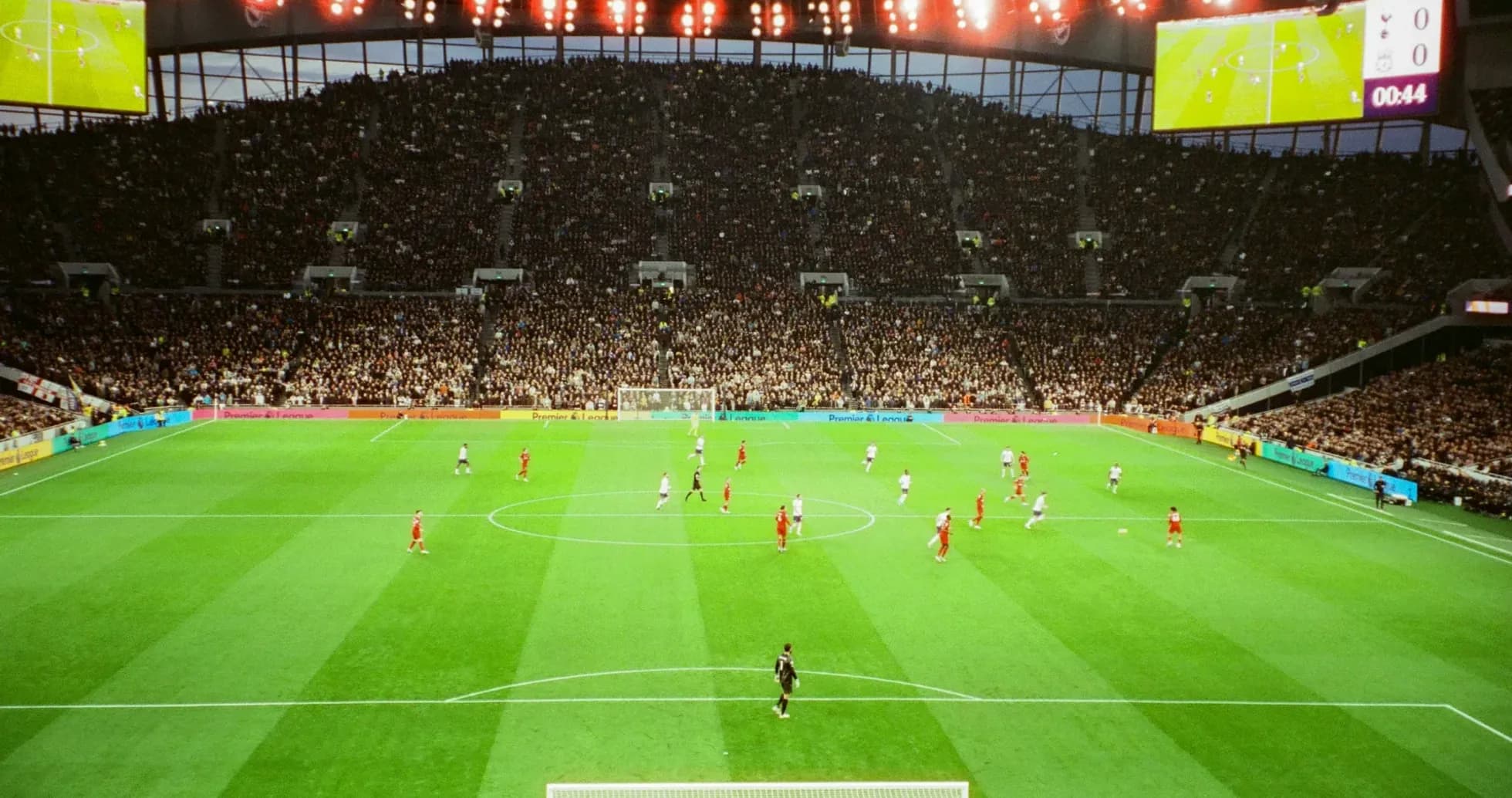
Under the grey London sky at Tottenham Hotspur Stadium, this felt less like Round 11 of a long Premier League campaign and more like a quiet inflection point. Tottenham, 9th with 15 points heading into this game, needed to prove that their recent upturn was substance, not streak. Ipswich, 16th on 11 points and sliding with a form line of LLDDL, arrived as a side still learning the cruelty of the division. By full time, the scoreboard – 2-0 to Tottenham, 1-0 at the break – mirrored the broader story the season’s numbers have been whispering for weeks.
Tottenham’s season has been defined by tension between control and cutting edge. Overall, they had scored 12 and conceded 11 in 11 matches, a goal difference of +1, with their home form the foundation: 9 goals for and 6 against at Tottenham Hotspur Stadium. The 4-2-3-1 has been their default shape – used 9 times already – and Roberto De Zerbi doubled down on that identity again here, even amid a significant injury list.
The absences read like a creative department gutted: T. Adarabioyo (calf), M. Mudryk (ankle), W. Odobert (knee), X. Simons (knee), and M. Tel (Achilles) were all ruled out. Even backup goalkeeper M. Dubravka was listed as questionable with a knee issue. That forced a kind of tactical purity: no luxury of rotating profiles, just a demand that those available execute the system flawlessly.
So A. Kinský started in goal behind a back four of Pedro Porro, J. van Hecke, M. Senesi and D. Udogie. Ahead of them, C. Gallagher and Mateus Fernandes formed the double pivot, freeing a fluid band of three – M. Kudus, J. Maddison and L. Williams-Barnett – to orbit around D. Solanke as the lone forward.
The structure told you everything about Tottenham’s intentions. Pedro Porro and Udogie are built for a game that lives in the opposition half, and with Tottenham averaging 1.5 goals at home and conceding only 1.0, there is a quiet confidence in their ability to keep the back door mostly shut while overloading the half-spaces. Gallagher’s role was pivotal: the numbers behind the season – 5 clean sheets overall and only 11 goals conceded in 11 league games – speak to a side that, when their midfield screen is intact, becomes hard to open up.
Ipswich mirrored the 4-2-3-1 on paper, but the context could not have been more different. On their travels they had scored 9 but conceded 15, an away average of 1.5 goals for and a bruising 2.5 against. They arrived in London without a single clean sheet all season, home or away, and a total defensive record of 22 conceded in 11 – a goal difference of -7 overall, built on fragility rather than misfortune.
G. O’Neil trusted continuity: C. Walton in goal, a back four of D. Furlong, I. Diop, D. O’Shea and L. Davis, with E. Palacios and S. Lukić as the double pivot. Ahead of them, A. Ouattara and D. Maeda flanked J. Enciso, with Z. Flemming leading the line. It is a side built to transition quickly, to lean on the vertical running of Maeda and the creativity of Enciso, but the numbers hint at a team that too often stretches itself beyond safe limits.
The disciplinary profiles of the two squads also framed the tactical battle. Tottenham’s season-long yellow-card pattern shows a spread of cautions, but with a notable spike between 46-60 minutes at 23.81% and a late-game edge where 19.05% of their yellows arrive in the final 15 minutes. They are a side that tends to raise the temperature after the interval. Their single red card this season has come in the 76-90 window, a reminder that their aggression can spill over late on.
Ipswich, by contrast, do much of their scrapping before the break: 31.82% of their yellows arrive between 31-45 minutes, and another 22.73% in added time at the end of the match. The red-card profile is even more telling: their only dismissal this season has come in the 61-75 period, precisely the phase when legs tire and structure frays. It is in that window that games too often tilt against them.
Here, that statistical backdrop shaped the key duels. In the “Hunter vs Shield” narrative, Tottenham’s collective attack – 1.1 goals per game overall but more potent at home – faced an Ipswich defence that has been leaking 2.0 goals per game across the season. Solanke’s movement between Diop and O’Shea forced Ipswich’s centre-backs into awkward decisions: step out and leave space in behind for Kudus and Williams-Barnett, or sit deep and allow Maddison to dictate in front of them.
Maddison’s role was the metronome and scalpel combined. With Kudus arriving as one of the league’s more productive creators – 3 assists in 10 appearances, 12 key passes and 45 dribble attempts with 28 successful – Tottenham had a clear plan: rotate the three behind Solanke to drag Lukić and Palacios out of their zones, then attack the channels around Ipswich’s full-backs. The fact that Ipswich have conceded 15 on their travels made those spaces feel like open invitations.
In the “Engine Room” clash, Gallagher and Mateus Fernandes versus Palacios and Lukić was decisive. Ipswich’s double pivot needed to protect a back line that has already experienced heavy away defeats – their worst away loss a 5-2 scoreline – but the flow of the game tilted towards Tottenham’s pair. Gallagher’s energy allowed De Zerbi to keep the full-backs high, while Mateus Fernandes’ positioning helped ensure that Ipswich’s most dangerous counters were often forced wide and slowed, rather than allowed to run straight at Kinský.
Off the bench, the profiles available to each coach underlined the different stages of their projects. De Zerbi could turn to the control and bite of R. Bentancur – whose season has already included a red card but also 18 tackles and 3 blocked shots – to lock down a lead, or inject the direct running of Sávio and the intelligence of D. Kulusevski. Ipswich, meanwhile, had the chaos factor of A. Fatawu – 33 dribble attempts, 15 successful, but also 3 yellows and a yellow-red combination – and the penalty-box instincts of C. Akpom and J. Philogene. Yet with Ipswich’s penalty record a rare bright spot (2 taken, 2 scored, 100% conversion and no misses), they never quite generated the kind of box chaos that tends to yield spot-kicks.
Statistically, the 2-0 full-time scoreline felt like the logical intersection of both teams’ seasonal arcs. Tottenham’s defensive record – 1.0 goals against per game overall and 5 clean sheets – aligned with Ipswich’s inability to keep things tight, particularly away. With Tottenham also having failed to score in 5 matches overall this season, there was always a question about their cutting edge, but Ipswich’s away concessions created the perfect platform for their 4-2-3-1 to finally look balanced in both phases.
Following this result, Tottenham’s identity sharpens: a possession-heavy side whose home numbers justify ambition, even amid injuries. Ipswich leave London as they arrived – brave, open, and statistically fragile – still searching for a way to reconcile their attacking intent with the defensive discipline the Premier League demands.