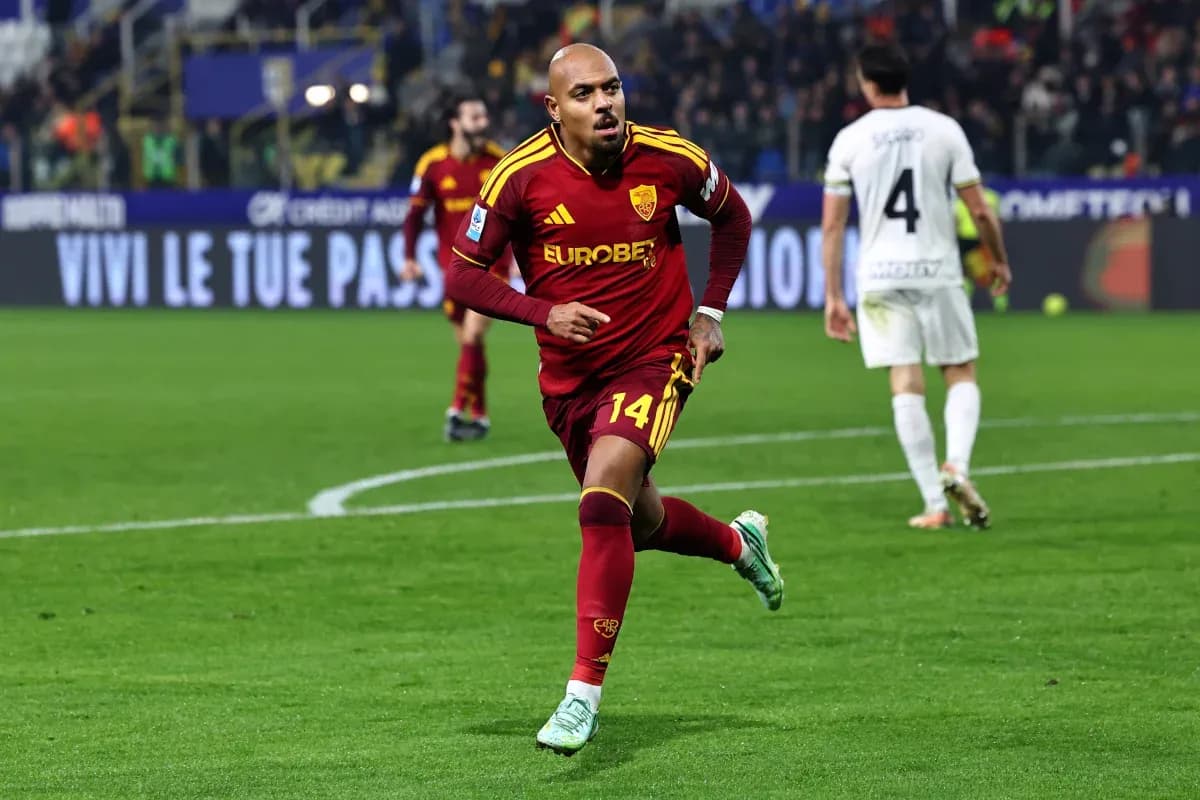
AS Roma Dominates Parma 5-1: A Structural Gap in Serie A
The Ennio Tardini under the lights offered a stark snapshot of where these two clubs stand in Serie A’s food chain. Parma, 16th with 8 points and a goal difference of -12 heading into this game, met an AS Roma side surging at the top end of the table, unbeaten, 2nd with 30 points and a towering goal difference of 25. The 5-1 full-time scoreline in favour of Roma did not just decide a single evening; it underlined the structural gap between a side fighting for survival and one quietly mounting a title challenge.
Both coaches mirrored each other on paper with a 3-4-2-1, but the similarity ended at the formations board. Alberto Gilardino’s Parma came into the night with fragile numbers: overall they had scored 10 goals and conceded 22 in 12 matches, averaging 0.8 goals for and 1.8 against per game. At home, that attacking return dropped to 0.7 goals per match, with 13 conceded in 7 outings. Gian Piero Gasperini’s Roma, by contrast, arrived as a machine: overall 36 goals scored and 11 conceded in 12 games, an attacking average of 3.0 goals per match and just 0.9 against. On their travels, Roma were even more ruthless, averaging 3.2 goals scored and conceding only 1.0.
Gilardino doubled down on his most-used structure, rolling again with the 3-4-2-1 that has started 7 league games. G. Daffara stood behind a back three of E. Del Prato, M. Troilo and F. Carboni. The wing lanes were entrusted to S. Britschgi and E. Valeri, with V. Sierro and M. Keita forming the central screen. Ahead of them, G. Fabbian and E. Touré were asked to knit transitions into supply lines for lone forward N. Elphege.
The selection was shaped as much by absence as by choice. D. Drobnic (foot injury), D. Romero (shoulder injury) and L. Valenti (coach’s decision) all sat out, but the most telling omission was A. Ndiaye, suspended after a red card. In a squad already stretched, losing a defender whose aggression can tilt duels in tight spaces forced Gilardino to lean heavily on Troilo and Del Prato, both already heavily worked this season. Troilo, who has appeared in all 12 league matches and blocked 9 shots overall, again had to anchor the line; Del Prato, also ever-present, was once more asked to defend wide spaces and step into midfield when needed.
Roma’s absences were more about fine-tuning than survival. L. Pellegrini’s thigh injury removed a key technical leader from midfield, while D. Rensch (muscle injury) and D. S. Vasquez Llach (inactive) slightly trimmed defensive depth. Yet Gasperini still fielded a side brimming with form and quality: M. Svilar behind a back three of G. Mancini, L. Balerdi and Hermoso; a dynamic four of E. Lulli, B. Cristante, M. Koné and N. Molina across midfield; and a devastating trio in advanced zones – P. Dybala and Rodrigo Mora supporting D. Malen.
The “Hunter vs Shield” duel was brutally one-sided. Malen arrived as Serie A’s leading marksman with 12 goals and 2 assists in 11 appearances, firing 41 shots with 22 on target. He faced a Parma defence that, overall, was conceding 1.8 goals per game and had already suffered heavy defeats, including a 1-5 at home and a 3-0 away. On their travels, Roma had already produced a 1-5 win – the blueprint for what unfolded in Parma.
Troilo and Del Prato, the core of Gilardino’s “shield”, are combative but overburdened. Troilo has engaged in 101 duels, winning 60, and his 19 tackles and 19 interceptions show a defender constantly in fire-fighting mode. Del Prato’s 13 tackles, 7 blocks and 17 interceptions underline similar strain. Against a forward like Malen – who not only scores but has completed 16 successful dribbles and drawn 10 fouls – that volume of emergency defending becomes a liability. The more you defend, the more often you are exposed to a finisher of his calibre. The 5 goals conceded at full-time were an almost inevitable extension of those season-long patterns.
In the “Engine Room” battle, Roma held every advantage. Cristante’s positional discipline allowed Koné to shuttle and break lines, while Molina and Lulli provided width and vertical running. Dybala, one of the league’s top assist providers with 4 so far, floated between the lines, threading passes – he has already created 27 key passes this season – into the channels that Parma’s wing-backs left behind when they tried to advance. On the other side, Parma’s midfield pair of Sierro and Keita were asked to do too much: shield a shaky back three, connect to Fabbian and Touré, and still support Elphege. Against a Roma side that overall has kept 6 clean sheets and failed to score only once, that workload was unsustainable.
The disciplinary backdrop also framed the contest’s risk profile. Parma’s season shows a worrying pattern of late yellow cards: 22.22% of their cautions arrive between 76-90 minutes, and they have already seen a red card early in games (their only red so far coming in the 0-15 minute window). Roma, meanwhile, cluster their yellows between 46-75 minutes, with 50% of their yellow cards in that 30-minute band, and have had a single red after the break (46-60). That contrast hinted at how the game might tilt: Parma tiring and rash late on, Roma ramping up intensity just after half-time. In a match where Parma were always likely to chase, that discipline profile only increased the chances of the scoreline running away from them.
Set-pieces and penalties added another layer. Parma have been awarded 2 penalties overall this season, scoring 1 and missing 1, a 50.00% conversion rate that underlines their lack of clinical edge even when given clear chances. Roma, remarkably, have yet to take a single league penalty – 0 awarded, 0 scored, 0 missed – meaning their scoring volume is entirely from open play and non-penalty situations. That is crucial context: Roma do not need spot-kicks to reach three goals per game; Parma, by contrast, cannot reliably convert even when the ball is on the spot.
On the tactical board, Gilardino’s 3-4-2-1 was meant to compress central spaces and spring Fabbian and Touré into the half-spaces behind Roma’s wing-backs. In theory, Elphege could attack the channels between Mancini and Balerdi or Hermoso and Balerdi. But that plan depends on Parma sustaining possession and winning territory. Their season averages – 0.7 goals per game at home and 5 matches overall without scoring – suggest they rarely impose themselves for long spells. Roma’s 3-4-2-1, by contrast, is the fully evolved version: aggressive wing-backs, a front three of Malen, Dybala and Rodrigo Mora who all rank among the league’s most productive attackers, and a defensive structure that concedes just 1.0 goal per game away from home.
Statistically, any xG model built on these season numbers would have heavily favoured Roma: a side averaging 3.2 goals on their travels, undefeated in 12, with 4 away wins and 2 draws, against a team with just 1 home win and 4 home defeats. Parma’s fragile defence, their inconsistent finishing, and a penalty record blemished by a miss all pointed in one direction. The 5-1 result did not feel like a freak event; it was the logical conclusion of two trajectories moving in opposite directions – Roma’s relentless rise and Parma’s anxious struggle to stay afloat.