Khawaja Proposes Collective Apology for Sandpapergate
Usman Khawaja thought he had found a way to end Australian cricket’s most poisonous argument.
One text. One collective apology. One attempt to draw a line under Sandpapergate.
It landed on Todd Greenberg’s phone last Friday. What came back told Khawaja everything about how deep the scars still run.
Khawaja’s bold draft: ‘We knew we were ball tampering’
Khawaja didn’t tiptoe around it. His proposal, sent to the Cricket Australia chief executive, was not a half-measure or a lawyered-up non-apology. It went straight to the heart of Cape Town.
“We accept knowledge as a team that we knew we were ball tampering by artificially altering the condition of the ball in South Africa in 2018,” he wrote.
No euphemisms. No hiding behind process or investigations. Just a blunt admission of collective guilt.
He then widened the frame beyond the strip of sandpaper that has become shorthand for the scandal.
“Whether it was sandpaper, or by any other means is irrelevant. We knew what we were doing and we take full responsibility as a team and squad for our actions, something we should have done eight years ago.”
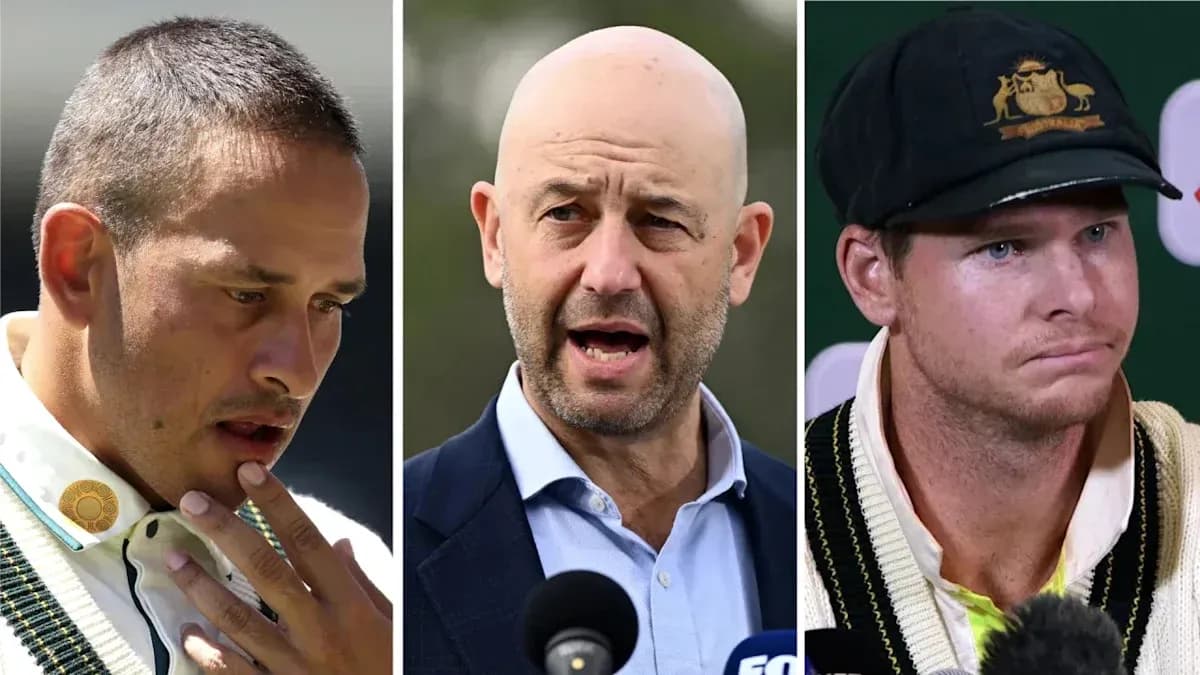
In that single paragraph, Khawaja tried to shift the narrative from three culprits to a shared responsibility. From a crime owned by Steven Smith, David Warner and Cameron Bancroft to something the entire squad carried.
The final lines of his draft turned towards those three men – the ones who copped the bans, the headlines and the stigma.
“Furthermore, we would like to acknowledge, Steven, Cameron and David paid an enormous price for the sake of the team for which we are sorry and eternally grateful.”
This was the peace proposal: a unified statement, an overdue recognition that the fallout was not borne equally, and an attempt to heal a dressing room that has been simmering ever since Khawaja’s “we all knew” claim surfaced in his book.
He was not offering to retract that claim. The apology was written with that non-negotiable in place. He still stands by “we all knew”.
What he was offering, though, was a way forward.
Greenberg’s verdict: ‘I’m not sure this is going to fly’
If Khawaja was hoping for a quick embrace of the idea, he didn’t get it.
Greenberg, who along with interim Cricket Australia chair David Boon had already floated the idea of a private players’ forum to cool the temperature, responded with caution. He could see the political storm this document would unleash inside the 2018 group.
“I’m not sure. I’ll get in touch with the other parties and I’ll let you know, but I’m not sure this is going to fly,” he told Khawaja.
The subtext was clear. The bowlers, in particular, have pushed back hard on any suggestion of wider knowledge. Some members of that Cape Town squad simply do not accept Khawaja’s version of events. Asking them to sign a statement admitting they “knew” would not be a formality; it would be a confession they fundamentally reject.
Yet Greenberg did not slam the door. He added a line that Khawaja clearly appreciated.
“No matter what Uzz, at least we can look each other in the eye and say that we are trying everything possible, even now, to try to move Australian cricket forward and past this and come together.”
That’s the crux of it. One player pushing for collective responsibility. A governing body trying to steer the game out of a never-ending controversy. And a group of former teammates who don’t agree on what the truth actually is.
The Cummins flashpoint: ‘It did really hurt me’
If the text to Greenberg was an attempt to calm things down, Pat Cummins’ press conference earlier this month did the opposite.
For 68 minutes in Sydney on November 13, 2026, the Australia captain went hard. He labelled Khawaja’s claims “100% wrong” and “complete and utter nonsense”. It was a full-throated defence of his integrity and that of the bowling unit.
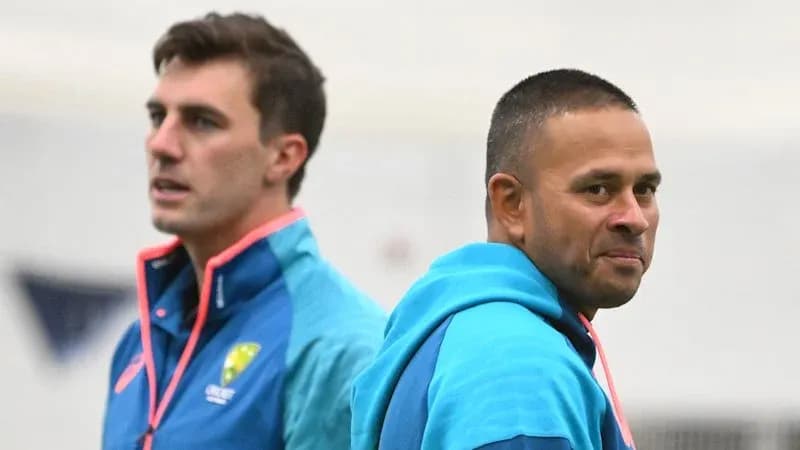
Khawaja watched a friend and long-time teammate push back with force. The impact was personal.
He admitted he was “really surprised” and “really disappointed” by the version of Cummins who appeared that day.
“It did really hurt me,” he said.
This wasn’t a relationship conducted through the media alone. Khawaja revealed he had texted Cummins a couple of days before the press conference, hoping the captain might seek a middle ground rather than dig trenches.
“I will always love Pat,” Khawaja said. “As much as that did hurt me, and it did really hurt me, I’m not going to judge him on 15, 20 minutes of a presser, however long he had a go at me for.
“That’s not what I’m going to judge Pat on, I’m not a hateful guy. But it was surprising. I won’t say the context but I did text Pat a couple of days out (before the presser) hoping he would find a middle ground, which brings everyone together in this, rather than putting the walls up and creating a bigger division.”
He believed compromise was possible. Not total surrender from either side, but a shared space where both versions of events could be aired without open warfare.
“I thought if we met in the middle we could squash this. You don’t have to concede everything, just meet me in the middle and this could have been all over. Pat was 24 years old at the time. This wasn’t a Patrick Cummins issue.”
That last line matters. Khawaja is not painting Cummins as the architect of Cape Town, nor as the villain of this saga. He’s framing the captain as a younger player caught in a system, not the system itself.
Yet the hurt remains. And the divide has only widened.
Can one apology fix Sandpapergate?
Khawaja’s draft is as audacious as it is simple. One team-wide admission. One acknowledgement that Smith, Warner and Bancroft “paid an enormous price for the sake of the team”. One attempt to spread the burden of guilt that has weighed on three men for eight years.
There is something undeniably admirable about a player who, instead of doubling down to win an argument, tries to pull everyone into the same room – metaphorically and literally.
A shared apology might finally take some heat out of a scandal that refuses to die. It would also do what Khawaja has been pushing for: place responsibility on the entire group, not just the trio who wore the bans.
Yet the problems are obvious.
Greenberg’s hesitation reflects the reality that several members of that 2018 squad reject Khawaja’s account outright. Cummins has been emphatic in his denial. For them to sign a statement saying “we knew we were ball tampering” would not be reconciliation; it would be capitulation to a story they say is false.
Force that kind of confession and the fracture only deepens.
There is also the question of what such an apology would mean to Smith, Warner and Bancroft. They did the time. They lived the public shame. They became the faces of Sandpapergate while others carried on. They absolutely deserve acknowledgement, and Khawaja’s wording is a serious step in that direction. But if the signatures underneath it come from players who feel coerced, how much would that apology really be worth?
Which leaves the quieter option.
Greenberg and Boon’s proposal for a private forum – no cameras, no microphones, no public grandstanding – suddenly looks like the only workable path. A room where every player from that tour can speak freely, challenge each other, and finally say what they have been saying in whispers for years.
Khawaja’s insistence that he is “not a hateful guy” suggests he would walk through that door. The question is who else would join him, and whether anyone in that room is truly ready to own the past in a way the whole country can live with.
Australian cricket has already paid once for Cape Town. The real issue now is whether it has the appetite to pay the emotional cost of finally telling one shared story.