Khawaja's Truth: A Journey of Loyalty and Burden
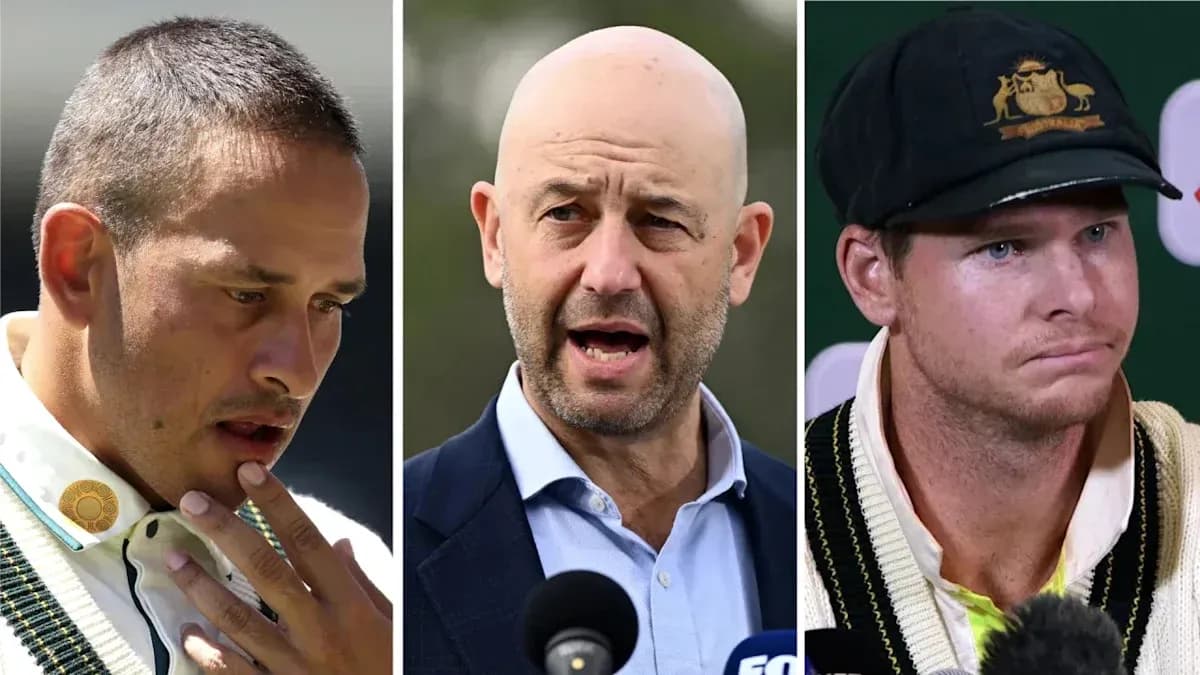
Usman Khawaja sat alone in a Sydney hotel room and closed the curtains on the outside world. Pat Cummins had just spoken for more than an hour, dismissed his claims as “100% wrong” and “complete and utter nonsense”, and the public tide had turned hard against him.
He didn’t leave the room that first day. Couldn’t. Not when it felt like the country thought he had invented the whole thing.
Then his phone lit up.
“Uzzie, you’ve done the right thing, and I appreciate it more than you can ever imagine.”
The message was from Cameron Bancroft – the man whose career had been scorched by Sandpapergate, and the man Khawaja had quietly been trying to protect.
In that moment, the storm outside eased just enough for him to breathe.
‘Relief I haven’t felt in eight years’
Khawaja’s long conversation on The Grade Cricketer podcast is his first deep dive since Cummins’ marathon press conference in Sydney and Bancroft’s own written confession. It is raw, personal and, at times, bruising.
His memoir, Sabr, had already dragged the 2018 ball-tampering scandal back into the light. His central claim – that the whole team knew – sliced through the Australian dressing room and split opinion sharply.
Khawaja knew exactly what he was walking into.
“I went in there with eyes wide open. I knew the first guy that was going to talk about this, and that was me, was always going to get nailed,” he said.
On the day the claims broke, Bancroft reached out. Gratitude, not anger.
That first message steadied him. The phone call that followed the next day went deeper.
“I remember I talked to him on the phone,” Khawaja recalled. “I asked, ‘Are you all right, mate? How are you going?’ And he said, ‘The only way I can describe what I feel right now is relief, and I haven’t experienced this in eight years; relief that the truth is finally out there.’”
For Bancroft, who had worn the “villain” tag of Sandpapergate almost alone, the book had cracked open a door he’d kept bolted for years.
Cummins speaks, the mood turns
Then came November 13, 2026.
Cummins fronted the media for 68 minutes and forcefully rejected Khawaja’s version. The captain’s words landed with authority, and the narrative swung sharply against the veteran batter.
“Then the Pat presser happened, and that was a really difficult time for me too because it kind of felt like everyone thought I had just made this up and was lying about this,” Khawaja said.
“It was a really difficult couple of days. I didn’t leave the room the first day; my hotel room in Sydney. I just couldn’t walk outside; I couldn’t look anyone in the face.”
The pressure crushed him. Bancroft felt it as well.
A day or two later, another message arrived from the opener, this time shaped by Cummins’ comments and by what Khawaja’s book had unlocked.
“Look, Uzzie, what you’ve given to me is an absolute blessing, and you’ve paved the way for me to be able to talk about this openly and honestly. I’m forever grateful for what you’ve done.”
Those words didn’t erase the backlash. But they gave it meaning.
‘I’ll be the bad guy for now’
Khawaja’s account reveals a pact that almost happened long before Sabr hit the shelves.
He had urged Bancroft to come out together, to tell the truth side by side.
“Before I released my book, I asked him, ‘Man, why don’t you just come out and tell the truth? I’ll back you up with the truth,’” Khawaja said. “‘Whenever you want, now, five years, 10 years, 15 years, I will come with you.’”
Bancroft couldn’t do it.
“He just said, ‘I can’t, Uzzie. If I come out now, I’ll never play for Australia again, and everyone’s just going to think, “He’s coming out as this bitter old guy who never played for Australia again.” I was already the villain of Sandpaper for so long, and I just don’t think I can take it.’”
There was more. Bancroft had lied in the original 2018 inquiry to protect teammates. To now step forward alone and say that account was incomplete felt, to him, like a second self-inflicted wound – one that would shred what little trust remained.
For Khawaja, that cut deep. He described Bancroft’s confession as “like a dagger to my heart”.
The turning point came in a 90-minute phone call shortly before publication. Khawaja laid out exactly what he planned to say in the book. Midway through, he sensed a shift in Bancroft’s voice.
“I talked on the phone with him for an hour and a half, and in the middle of it I told him what I was saying in the book, and his energy in the second half of that call totally changed,” Khawaja said.
He then made an extraordinary offer.
“I remember saying to him, ‘Bangers, look at what you’ve done for us over the last eight years and what you sacrificed. You don’t need to be the bad guy. I’m not a hero whatsoever, but I’ll be the bad guy for now.
“‘People will nail me, and you can tell your story however you want; you can show people that you’re actually a martyr in a lot of ways, that you were the one who sacrificed yourself for you, Smudge, and Bull. They can take it out on me.’”
That is not the language of a man trying to torch a dressing room. It is the language of someone prepared to walk into the fire so another doesn’t have to.
The choice to stay vague
One of the most contested aspects of Sabr is what it doesn’t say. Khawaja never names names. That, he insists, was deliberate.
“You have Bancroft’s statement, which I’ve read, and all of it is true,” he said. “You had what I said. I left mine vague on purpose because I was trying to protect the identity of people, and I was hoping that this push could get other people to come along with us.”
He knew that if he pointed the finger directly, any chance of a collective reckoning would vanish.
“If I had named individuals,” he added, “I would have cooked it.”
The aim, in his mind, was not to blow up careers but to create enough space – and pressure – for others to step forward on their own terms.
Loyalty, burden and a fracture that won’t heal
Strip away the noise, and one thing stands out from Khawaja’s interview: his loyalty to Cameron Bancroft.
He watched a younger teammate take the full force of Sandpapergate in 2018 and decided, years later, that he would carry the backlash this time. He offered himself up as the lightning rod so Bancroft didn’t have to relive the role of villain.
He paid for that choice with isolation in a Sydney hotel room and a wave of public doubt that questioned his integrity.
The messages from Bancroft – full of relief, gratitude and a sense that a long-held truth had finally been aired – hint at just how heavy that secret had become for those closest to it.
Yet the core problem remains. Cummins and others flatly reject Khawaja’s account. Each side holds its own truth, its own scars, and its own emotional investment in what happened and who knew.
This is not a dispute that a press conference or a podcast will tidy up.
What Khawaja has done, though, is offer a path that doesn’t rely on blame. By refusing to name individuals and by insisting on sharing the burden, he has left the door ajar for others to walk through without losing face.
If players like David Warner and others continue to step forward, the pressure on the remaining voices from that dressing room will only tighten.
The question now is simple, and brutal: will conscience speak louder than reputation?