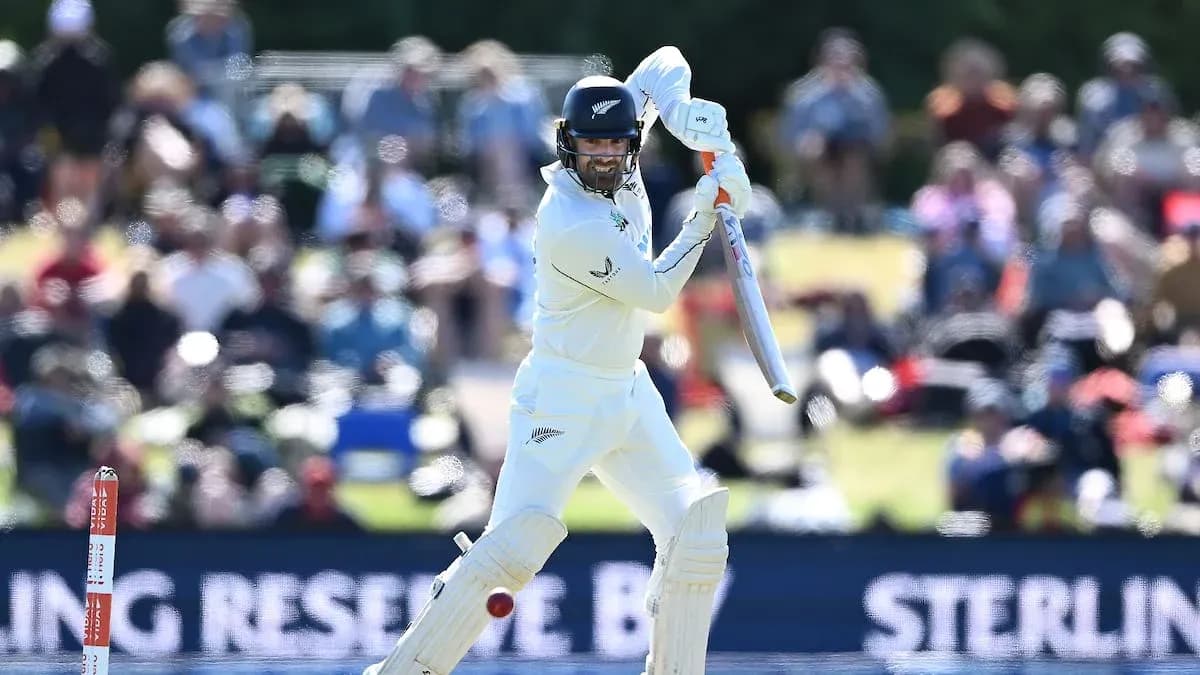
Matt Henry Defends Jacob Duffy's Bowling Performance
Matt Henry has seen enough cricket – and enough harsh figures – to know the numbers don’t always tell the story.
Jacob Duffy’s 1 for 201 at the Basin Reserve would make brutal reading on any scorecard, yet as New Zealand turned their focus to the second Test against India at Hagley Oval, Henry was adamant those figures said more about the surface and the plan than the bowler.
Henry stands up for Duffy
On a lifeless Wellington pitch where the ball barely carried to the slips, Duffy became the man asked to wear the bruises for the team. Short balls, heavy workloads, fields set for mistakes rather than edges. It was ugly, necessary work.
"He's shown over the years that he's a classy bowler, and he's all about the team," Henry said, making it clear the dressing room had no interest in judging Duffy by the column marked ‘runs conceded’.
New Zealand wanted a different option, a bouncer plan on a docile wicket, and Duffy accepted it without complaint. His figures suffered. The team’s chances didn’t.
"When we suggest maybe we do a bumper plan here, he's not worried about his personal figures. He's trying to have an impact on the game," Henry said. Those “moments” he referred to – when someone has to change the pace of a session, to shake a flat contest – fell to Duffy. He didn’t flinch.
For Henry, that is the point. Not the 1 for 201, but the willingness to bowl the hard overs, to attack when conditions scream for self-preservation.
"There’s no question about the skill," he added. "There were moments that we needed someone to try a different plan, and he was open to do that." In Henry’s mind, that mindset has already delivered match-winning spells in previous Tests. One bad set of numbers doesn’t shift that view. "We’re not too worried really whatsoever about that."
A draw with teeth
New Zealand’s ability to bat out the final day in Wellington and deny India what had looked, for long stretches, like a looming victory, has altered the mood heading into Christchurch.
The hosts didn’t just survive. They dug in. They absorbed. They walked off with a draw that felt like a statement about their resilience as much as the result itself.
"The way we stayed patient with the ball in areas, there's some great signs for us from a control point of view," Henry said, taking as much satisfaction from the discipline with the ball as from the defiance with the bat.
By the end, it was all about tired bodies and tired minds. That’s when Test cricket usually exposes you. New Zealand refused to crack.
"The way that the guys were able to navigate the pressures early on and see out a really, really good draw for us was really impressive," Henry said. For a side that has built much of its modern identity on grit and stubbornness, it felt like another notch on the belt.
"It was just another tick in the box with the grittiness of our batting line-up," he added. Test cricket rarely follows the script. Some days you dominate, some days you hang on. In Wellington, New Zealand chose the latter and did it well enough to walk away with something tangible: belief.
They soaked up pressure, then chose their moments to hit back, even if only in small bursts. It was survival with intent, not a passive retreat.
Handshakes and hard yards
When the captains shook hands before the final mandatory overs had been bowled, the decision sparked debate outside the ground. Inside the New Zealand camp, Henry wasn’t interested in any drama.
"I think the way that Daryl [Mitchell] and GP [Glenn Phillips] batted was pretty defiant," he said. Those two had already made the point New Zealand needed to make. India’s bowlers had put in huge shifts. So had New Zealand’s. The series still has a long way to run.
"It's a big series coming up and still a lot of cricket to play," Henry noted. For him, the early handshake was simply part of the unwritten rhythms of the format. "That's the game we play, isn't it? The decision out there was to shake hands, and I probably wasn't reading into it too much."
Home ground, unknown script
Now the caravan moves to Christchurch, to Hagley Oval, Henry’s home patch with Canterbury. If there is any ground in the country where he should feel comfortable predicting what comes next, it is this one. He refused.
"I think every game's different, every surface you play on is slightly different as well, and there's been a lot of runs scored here of late as well," he said. Hagley’s reputation as a green, seaming paradise has been tempered by recent high-scoring matches. The stereotype no longer fits every week.
New Zealand’s challenge, Henry insisted, is to resist the temptation to assume. To prepare for both versions of Hagley: the traditional seamer and the truer, flatter pitch that punishes any lack of discipline.
"Trying to read pitches, it's a pretty fine art to do that," he said. "For us, it's actually being prepared for both, prepared for what is traditional here, but also, if things aren't like that, then what does it look like?"
He knows the pattern of New Zealand wickets as well as anyone. Grass on day one, improvement as the game wears on, and a shrinking margin for error for the quicks once the surface flattens.
"Traditionally here in New Zealand, the wickets, when there's grass on them, tend to get better and better, and it's been the same here," Henry explained. Early bounce keeps bowlers interested; later, every mistake gets punished. "When it flattens out, your margins become pretty small as a bowler."
There is no crystal ball, no guarantee of sideways movement, no promise of seam-friendly skies. So Henry leans on the controllables: method, discipline, adaptability.
"For us, it's trusting our processes, how we're going to go about it, adapting as we can and finding those winning moments."
New Zealand have already proved they can survive India’s best punches. The question at Hagley is sharper: can they seize those moments Henry talks about and turn defiance into dominance on his own turf?