2026 WTA Season: Champions, Breakthroughs, and New Talent
The numbers say 40 different champions, 54 tournaments, 26 countries. The reality felt even bigger.
The 2026 WTA season was a year of empire-building at the top and quiet revolutions underneath, where teenagers, qualifiers and players outside the Top 100 kept tearing up the script.
At the centre of it all, two names kept colliding with history: Elena Rybakina and Mirra Andreeva.
Rybakina and Andreeva: Dual Empresses of 2026
World No.1 Elena Rybakina and World No.2 Mirra Andreeva didn’t just lead the tour. They shaped it.
Each finished with four titles, the joint-best haul of the year. Rybakina’s four came via two Grand Slams and two WTA 500 trophies, a résumé that screamed authority. Andreeva matched the count with a different mix: one Grand Slam, the WTA Finals in Indian Wells, and two WTA 500s. Different routes, same destination – the top of the sport.
They also shared another stat: six finals apiece, the most of any player. Their 4-2 records in those finals underlined a simple truth. When the biggest trophies came into view, these two usually grabbed them.
Aryna Sabalenka, never far from the biggest stages, sat just behind them with three titles (two WTA 1000s and a WTA 500), while Linda Noskova quietly built a Grand Slam–WTA 500 double. Karolina Muchova and Jessica Pegula stitched together seasons of consistency with a WTA 1000 and a WTA 500 each. Marta Kostyuk and Elina Svitolina also took home two titles apiece, while Marie Bouzkova swept a pair of WTA 250s.
At the sharp end of finals records, Sabalenka went 3–2 in title matches. Jessica Pegula found herself on the wrong side of the margins at 2–3. Victoria Mboko endured a harsh education with an 0–3 record in finals, Emma Raducanu went 0–2, and a long list of players – from Maja Chwalinska to Lilli Tagger – took their first steps into title matches with mixed success.
The top of the game felt stable. The cast beneath it did not.
A Wave of First-Time Champions
Thirteen women lifted their first tour-level trophies in 2026. That’s more than double the number from 2025, a surge that hints at a tour in transition.
Sara Bejlek struck first in Abu Dhabi. Cristina Bucsa followed in Merida. Petra Marcinko’s breakthrough came in Rabat. Robin Montgomery lit up the grass in 's-Hertogenbosch. Lilli Tagger’s moment arrived in Prague.
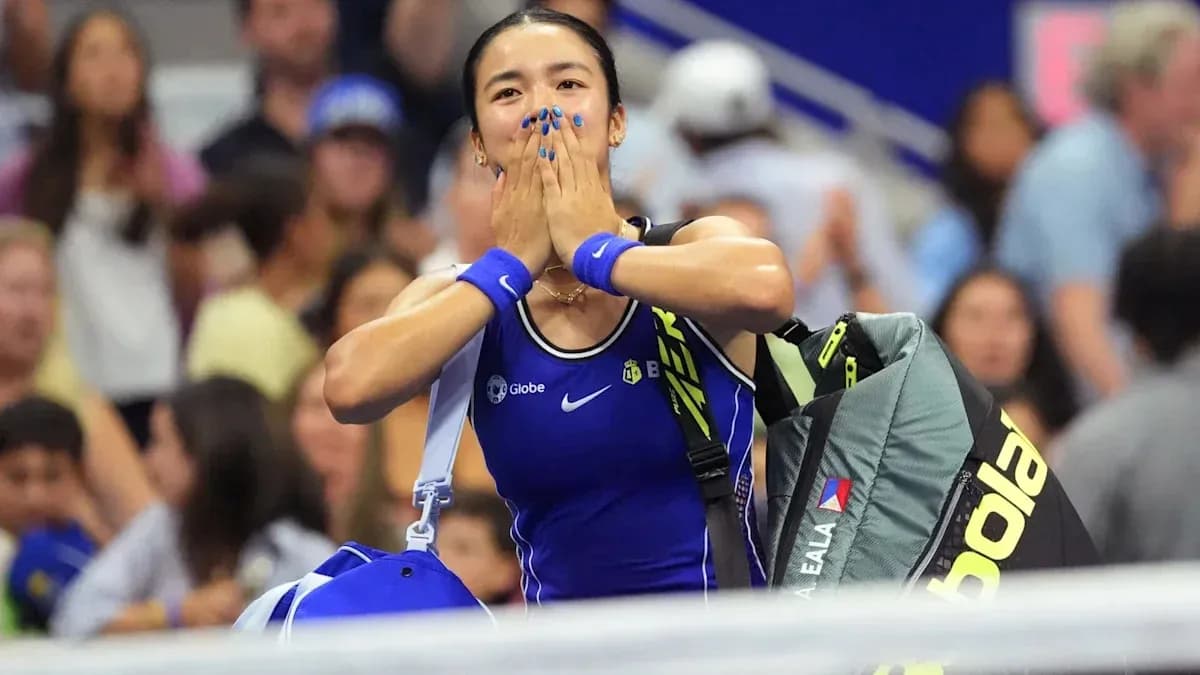
Alexandra Eala owned Washington. Kristina Liutova stunned Memphis. Diane Parry triumphed in Monterrey. Kaitlin Quevedo delivered in Sao Paulo. Kimberly Birrell claimed Seoul. Maja Chwalinska took Wuhan. Harriet Dart broke through in Guangzhou. Claire Liu closed her own circle in Hong Kong.
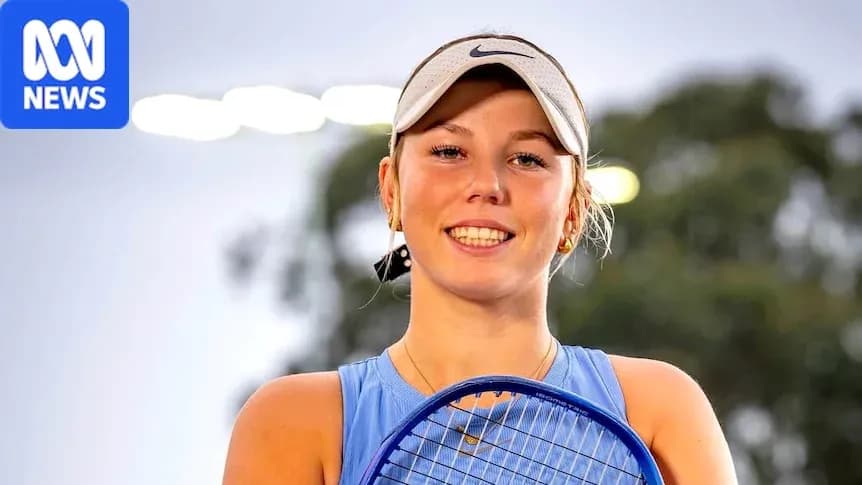
Liutova’s story stood out even in that crowded field. Playing her first-ever tour-level main draw in Memphis, she became just the 10th player in WTA history to win a title on her main-draw debut. Quevedo needed eight main draws to get her hands on a trophy, Tagger 10, Marcinko 12. Different timelines, same destination.
Sixteen players reached their first tour-level final. Bejlek, Marcinko, Montgomery, Liutova, Parry, Quevedo and Dart all went one step further and won them. Others, like Taylor Townsend in Austin, Veronika Podrez in Rouen and Talia Gibson in Singapore, got a glimpse of the stage they’ll now chase.
Chwalinska’s first final came at Roland Garros – as a qualifier. That run alone rewrote a slice of history.
Teenagers at Full Throttle
The youth movement wasn’t subtle. It was loud.
The youngest champion of the year was 16-year-old Kristina Liutova in Memphis. At the other end of the spectrum, 35-year-old Sorana Cirstea lifted the trophy in Cluj-Napoca, proof that veteran craft still has its place in a tour obsessed with the future.
Harriet Dart, 30, became the oldest first-time titlist of the year in Guangzhou, the oldest since Arantxa Rus in 2023. She didn’t just win; she survived, grinding through three-setters in every main-draw round.
In total, teenagers produced seven title runs:
- Liutova in Memphis at 16.
- Tagger in Prague at 18.
- Andreeva, still 18, in Adelaide and Linz; then at 19, she added Roland Garros and the WTA Finals Indian Wells.
- Iva Jovic in Guadalajara at 18.
The message was clear: the next decade is already here.
Outsiders, Qualifiers and Wild Cards Crash the Party
The tour didn’t belong only to the seeded and the established.
Donna Vekic came through Queen’s as a lucky loser – the seventh in WTA history to win a title and the first above WTA 250 level. She had lost to Anna Blinkova in the final qualifying round, then re-entered the draw and left with her fifth career trophy and first WTA 500.
Five qualifiers went all the way: Elisabetta Cocciaretto (Hobart), Bejlek (Abu Dhabi), Montgomery ('s-Hertogenbosch), Liutova (Memphis) and Dart (Guangzhou). Two more – Podrez in Rouen and Chwalinska at Roland Garros – reached finals from qualifying. Chwalinska became just the second qualifier in the Open Era to reach a Grand Slam final, following Emma Raducanu’s 2021 US Open run, and the first to do it at Roland Garros.
One wild card turned her opportunity into a title: Zheng Qinwen in Beijing. Two others – Townsend in Austin and Mboko in Strasbourg – pushed all the way to the final. Mboko did it as the No.1 seed in Strasbourg, a rare combination of privilege and pressure.
Below the Top 100, the breakthroughs came thick and fast. Seven players ranked outside the Top 100 won titles:
- No.484 Robin Montgomery in 's-Hertogenbosch
- No.229 Liutova in Memphis
- No.120 Katie Boulter in Ostrava
- No.115 Dart in Guangzhou
- No.105 Quevedo in Sao Paulo
- No.102 Liu in Hong Kong
- No.101 Bejlek in Abu Dhabi
Montgomery’s run was historic: the third-lowest ranked WTA champion ever among ranked players, behind only Angelique Widjaja (No.579 at Bali 2001) and Elina Svitolina (No.508 at Strasbourg 2023). Only two unranked players have ever done better: Mirjana Lucic-Baroni at Bol 1997 and Kim Clijsters at the 2009 US Open.
Nine more players outside the Top 100 reached finals, from Nadia Podoroska at No.317 in Sao Paulo to Tatjana Maria at No.112 in Eastbourne. The middle tier of the rankings, often overlooked, refused to stay quiet.
Defending Champions and Home Heroes
Title defenses are rare currency in a tour this deep. In 2026, only five players managed it.
Aryna Sabalenka defended Brisbane and Miami, taking her career tally of successful defenses to six. Pegula held firm in Charleston. Iva Jovic protected her Guadalajara crown. Rybakina locked down Ningbo, the first title she has ever defended.
Elsewhere, defending champions fell early, skipped events, or watched their tournaments return after gaps. Madison Keys, the reigning Australian Open champion, went out in the fourth round to Pegula. Coco Gauff, defending Roland Garros champion, fell in the third round to Anastasia Potapova. Iga Swiatek lost her Wimbledon title in the third round to Alexandra Eala and her Cincinnati crown in the semifinals to Pegula.
The calendar also produced a set of cherished home triumphs. Six players won titles on home soil:
- Cirstea in Cluj-Napoca for Romania
- Peyton Stearns in Austin
- Pegula in Charleston
- Tamara Korpatsch in Hamburg
- Gauff in Cincinnati
- Zheng in Beijing
Korpatsch’s win was especially symbolic: the first German title on German soil since Angelique Kerber at Bad Homburg 2021. Zheng became the first Chinese champion in Beijing in the tournament’s history, a landmark moment for Chinese tennis.
Finals That Redefined National Rivalries
Some Sundays felt like national championships.
There were three all-American finals: Stearns beat Townsend in Austin, Gauff edged Pegula in Cincinnati, and Jovic defeated Stearns in Guadalajara. Marta Kostyuk beat Podrez in Rouen in the first all-Ukrainian final in WTA history. Wimbledon delivered the first all-Czech Grand Slam final of the Open Era, with Noskova defeating Muchova. Seoul staged the first all-Australian final since Strasbourg 2017, as Birrell beat Maya Joint.
These weren’t just finals. They were statements about the depth of certain nations and the shifting balance of power in women’s tennis.
Smooth Cruises and Brutal Marathons
Some champions sliced through draws like a hot knife. Others crawled over glass.
Seven players won titles without losing a set:
- Sabalenka in Brisbane, dropping just 27 games in five matches.
- Andreeva in Adelaide, conceding only 15 games in four matches – an astonishing 3.75 games per match, the most dominant title run of the year.
- Cirstea in Cluj-Napoca.
- Keys in Eastbourne.
- Jovic in Guadalajara.
- Liu in Hong Kong.
- Andreeva again at the WTA Finals Indian Wells.
At the other extreme, Zheng’s Beijing title run was a test of endurance. She dropped 78 games in her main-draw matches, the second-highest total ever en route to a WTA title in the Open Era, behind only Keys’ 87 at the 2025 Australian Open.
Three weeks later, Dart went even deeper into the grind. She conceded 80 games in Guangzhou, 63 of them in the main draw, and became just the third player this century to win a WTA title while playing a three-setter in every main-draw round, after Anastasia Pavlyuchenkova (Paris 2014) and Christina McHale (Tokyo 2016).
Title runs by Stearns in Austin, Pegula in Charleston, Svitolina in Rome, Emma Navarro in Strasbourg, Vekic at Queen’s, Noskova at Wimbledon, Korpatsch in Hamburg, Liutova in Memphis, Rybakina at the US Open, Zheng in Beijing, Chwalinska in Wuhan, Diana Shnaider in Tokyo, Dart in Guangzhou and Magda Linette in Chennai all came with multiple three-set battles. Some trophies were sprinted to. Others were dragged home.
Champions Who Stared Down Match Point
The line between a deep run and a defining season often comes down to a single point. Four champions in 2026 lived that truth.
Sabalenka saved match point against Rybakina in the Indian Wells final and still found a way to lift the trophy. Rybakina returned the theme in Stuttgart, saving two match points against Leylah Fernandez in the quarterfinals before taking the title. Noskova’s Wimbledon win almost died in the third round, where she saved match point against Cirstea. Dart’s Guangzhou miracle hinged on two match points saved against Sun Xinran in the semifinals.
Those four points – scattered across three continents – helped shape the season’s narrative.
The numbers from 2026 tell a story of dominance at the summit and chaos just beneath it. Rybakina and Andreeva sit on top of the mountain, but they’re surrounded by teenagers breaking through, qualifiers refusing to stay in their lane, and veterans squeezing every last drop from their careers.
The question now is not whether the landscape will change. It already has. The real question is who dares to reshape it again in 2027.