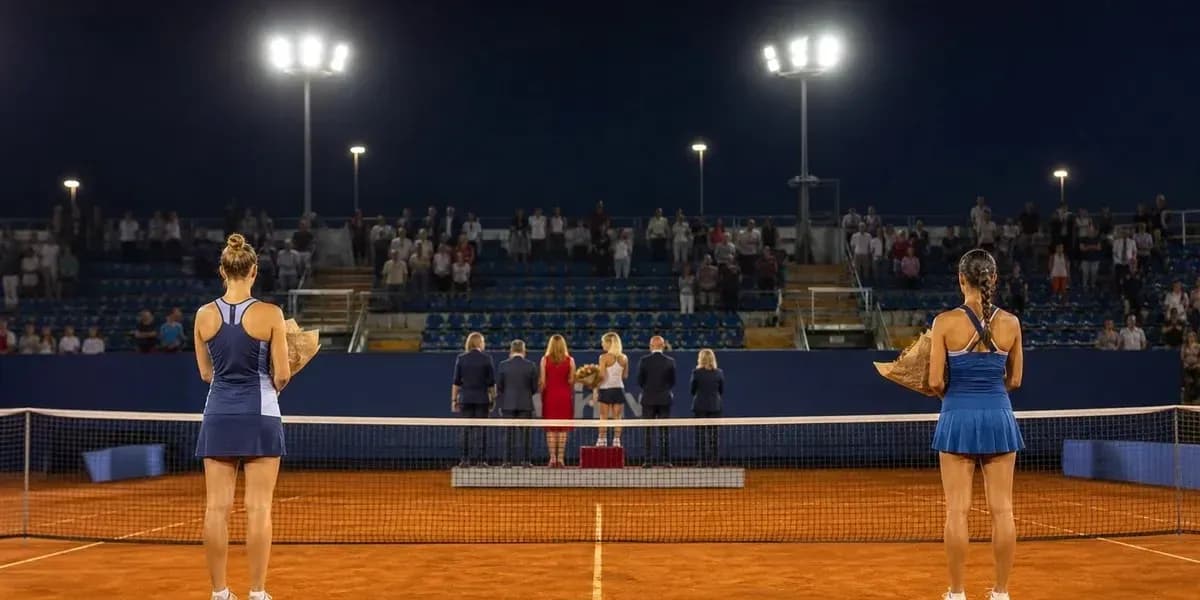
Elina Svitolina's Painful WTA Finals Defeat to Mirra Andreeva
Elina Svitolina left the WTA Finals court beaten on the scoreboard – and burning inside.
The Ukrainian lost the title match to 19-year-old Mirra Andreeva, 7:5, 6:3, a result that hurt on its own. What followed on the podium stung even more.
A final that did not end at match point
Speaking to Suspilne Sport, as relayed by Interia Sport, Svitolina admitted the defeat in the final cut deeper than most. This was a stage she knows well. She has reached the WTA Finals championship match three times, lifting the trophy in 2018 and falling short in 2019 and again this year.
This time, though, the pain was layered. She described feeling uncomfortable during the ceremony, waiting for the familiar ritual – a few words of congratulations from the winner, a moment of shared respect at the end of a long week.
That moment never came in the way she expected.
“A provocation”
According to Svitolina, Andreeva’s words on the podium did not feel like the standard nod to a beaten opponent. They felt like something else.
She told Suspilne Sport she viewed the young Russian’s remarks as a provocation and said she did not consider Andreeva’s behavior appropriate. Svitolina made a point of thanking the organizers and the fans in her own speech, but she did not congratulate Andreeva on her victory.
The tension was visible. It had been building long before this final.
Andreeva’s message – and a line that will not be crossed
As reported, Andreeva used her winner’s speech to acknowledge Svitolina’s season and her run at the tournament. She also referenced Svitolina’s motherhood, a detail that under normal circumstances might have sounded like a warm, respectful touch from a teenager to an established star.
These are not normal circumstances.
Svitolina has long refused to shake hands with or pose for photos alongside players from Russia and Belarus, a stance she has explained repeatedly as a direct response to the war in Ukraine, which has now dragged on for nearly five years. For her, every interaction on court carries a political and moral weight that goes far beyond sport.
So when Andreeva spoke about her, Svitolina did not hear a simple compliment. She heard a challenge to a line she has drawn and refuses to cross.
A familiar stage, a different kind of pressure
The WTA Finals have been a defining arena in Svitolina’s career. She conquered the field in 2018, then watched the trophy slip away in 2019. This year’s campaign brought another run to the title match, but also two defeats to the same opponent: Andreeva beat her in the group stage and again when everything was on the line.
Losing twice to a teenager in the same week would test any veteran. Losing twice to a teenager from a country she openly opposes because of war, then feeling provoked by that opponent’s words on the biggest stage of the tournament, turned a sporting setback into something far more raw.
For Svitolina, this final will not be remembered only for the scoreline. It will be remembered for a ceremony where the fault lines of a fractured world cut straight across the podium.