Taylah Lessue Faces Abuse After Tennis Match Loss
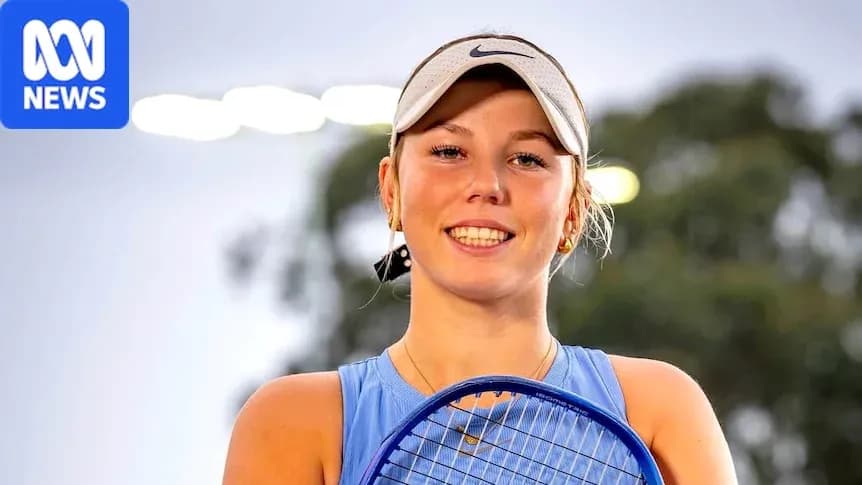
An 18-year-old local hopeful walked onto court in Playford on Sunday fighting more than just an opponent. By the time she walked off, she was facing something far uglier than a three-set defeat.
Adelaide teenager Taylah Lessue, ranked 647 in the ITF World Tennis Junior Girls Singles, had dragged herself into the City of Playford Tennis International after three weeks bedridden with glandular fever. She took the first set 6-4 before her body gave way, losing 6-4, 0-6, 0-6 as illness and exhaustion closed in.
The real damage came 15 minutes later.
As she stood courtside, still processing the loss and the physical toll, her phone lit up. A flood of violent, sexually explicit death threats poured into her social media accounts, abuse so graphic City of Playford Mayor Glenn Docherty refused to repeat it publicly.
“I know that she's a pretty resilient young lady, but she should not be putting up with this type of abuse,” Docherty told 891 ABC Adelaide. “It's just absolutely scary.”
For Taylah’s mother, Rachelle, the abuse cut deeper than the result.
Only eight days earlier, she said, her daughter had been in hospital on a drip, having lost 6 kilograms in a week, unable to eat or swallow. Yet she still chose to compete, desperate to honour her commitment and test herself again.
“Only eight days ago she was in hospital on a drip and lost 6 kilograms in a week unable to eat or swallow anything,” Ms Lessue wrote on social media. “But what breaks my heart is, 15 minutes after walking off court, the disgusting, hurtful and sick messages she received on social media.”
The match had been streamed live and, crucially, had attracted betting interest. When Lessue’s level dropped under the weight of “fatigue, chest tightness and muscle spasms”, as her mother described it, anonymous gamblers turned their anger into a barrage of threats.
“These people have no idea what Tay has battled the last few weeks, and the huge amount of courage and fight she showed to play today,” Ms Lessue said.
The abuse began while Taylah was still at the venue, standing alongside Docherty. From there, it escalated quickly into a case for police.
“Northern District Police are investigating and will determine if there is evidence to sustain any criminal charges,” a spokesperson confirmed, saying officers were examining messages of an inappropriate and offensive nature sent via social media.
For tennis authorities, the episode is grimly familiar.
Tennis Australia’s head of integrity, Dan Stuk, condemned the targeting of players over results as “disgraceful”, calling out those who hide behind screens and betting slips to attack athletes they do not know.
He stressed that social media remains, in broad terms, an “overwhelmingly positive space” for athletes, a place where support and encouragement often outweigh the hate. But the minority still leaves deep scars.
“What we're finding is that it has, as you would imagine, very deeply personal impacts and it can have a real effect on the athletes,” Stuk said.
The targets range from established professionals to teenagers at the very start of their careers. Abuse, he noted, is often tied to specific circumstances — a surprise loss, a swing in a live-bet market, a perceived underperformance.
“Our job at Tennis Australia is to be ready to respond to that, regardless of the abuse,” Stuk said.
That response now stretches well beyond simple advice to “ignore it”. Players are educated about privacy settings and how to manage and report online abuse. They are offered third-party monitoring tools so that, where possible, they never have to see the worst of what is written about them.
Support extends to families as well, recognising that parents and loved ones often see the messages first and carry their own emotional burden.
Tournament doctors examined Lessue after her match and ruled her out of competition for the next 7 to 10 days. Her body needs rest. Her mind, and that of her family, will need something more lasting: reassurance that this is not the price of daring to compete.
“But the way she conducted herself and fought until the end, when most other people would be bedridden or retired mid-match, fills me with immense pride,” her mother said.
“While it's a loss on the scoreboard, it's another step in her journey and she learned many valuable lessons. Above all else, she can hold her head high knowing she fought her heart out and gave the match everything she had.”
The question now is whether the sport, and the law, can show the same courage in confronting those who think a lost bet is a licence to threaten a teenager’s life.