Tennis Australia Supports Taylah Lessue Amid Online Abuse
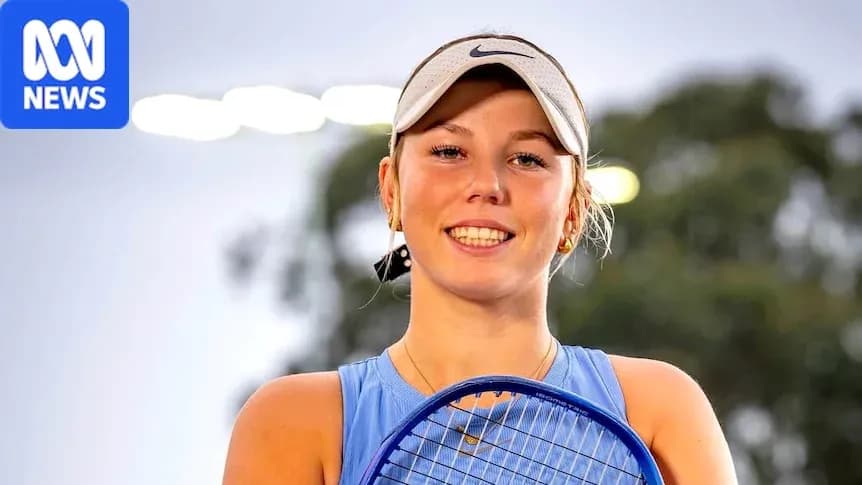
Taylah Lessue walked off court in Adelaide exhausted, hurting and, in her family’s eyes, proud just to have finished. Within minutes, her phone turned that effort into a nightmare.
The 18-year-old had just lost a three-set qualifying match at the City of Playford Tennis International, fading after a bright start against Ashleigh Simes. She took the opening set 6-4, then her body gave way. Fatigue, chest tightness and muscle spasms saw her lose the next two sets to love.
This was not a collapse born of poor preparation. Lessue has been battling glandular fever and, according to her mother Rachelle, had barely picked up a racquet over the previous three weeks. Only two practice sessions. Eight days earlier, she was in hospital on a drip, six kilograms lighter in a week, unable to eat or swallow.
For her family, just getting through the match felt like a small victory.
The internet saw something else.
Because the event is livestreamed and open to live betting markets, Lessue’s performance instantly intersected with the darker edge of online gambling culture. Within minutes of the match finishing, her social media accounts were hit with a barrage of messages: graphic threats of sexual violence, explicit death threats, abuse aimed squarely at an 18-year-old who had just dragged herself through a qualifying round while still recovering from illness.
Rachelle described it as “an ugly and sad side of professional sport” and said the messages began landing barely a quarter of an hour after her daughter had left the court. What should have been a quiet moment of recovery instead became a confrontation with some of the most toxic behaviour the sport has to offer.
Tennis Australia moved quickly to stand behind the teenager.
Head of integrity Dan Stuk called the abuse “abhorrent” and “disgraceful” in an interview with 891 ABC Adelaide, making clear the governing body’s position that such behaviour has no place in the game. He underlined what athletes and their families already know: this is not just noise on a screen. It cuts deep, and it lingers.
“The safety and wellbeing of our players is the highest priority,” a Tennis Australia spokesperson said, confirming that a member of the organisation’s integrity team is on site in Playford to support Lessue and her family.
Tennis Australia outlined its response plan for cases like this. Staff are working with Lessue to report the abuse to social media platforms and push for the removal of the most offensive content. They are also prepared to help escalate the matter to local law enforcement. Northern district police in Adelaide have already confirmed an investigation into messages of an “inappropriate and offensive nature”.
Stuk made it clear the organisation intends to go further than simply flagging posts. The aim is to unmask the people hiding behind anonymous accounts and, where possible, pursue disciplinary action. It is a direct challenge to a culture in which abusers often feel untouchable.
The scale and speed of the abuse shocked those who saw it unfold in real time. Playford mayor Glenn Docherty was with Lessue and her family as the first comments appeared on her phone. At first, they were ugly. Then they got worse.
Within 15 to 20 minutes, Docherty said, the messages had descended into “real vile and sickening abuse” – language so graphic he would not repeat it publicly. He called it “really appalling” and “absolutely scary”, insisting that no athlete, at any level, should be subjected to that kind of threat.
Yet amid the anger, there was also a note of defiance. Docherty spoke of Lessue as “an incredibly talented” and “strong” young player, backed by a tight-knit family and a supportive tennis community. Those around her believe she has the resilience to absorb this and continue her career, but none of them think she should ever have to face it in the first place.
For now, tennis is on hold. After assessing her condition, the tournament doctor has ruled Lessue out of all competition for the next seven to 10 days. It is an enforced break her body clearly needs, and one her mind may welcome just as much.
An 18-year-old who should be worrying about her next serve and her next tournament now finds herself at the centre of a broader fight over how sport deals with online hate tied to betting. The question is no longer whether this kind of abuse exists. It is how hard tennis is willing to hit back.