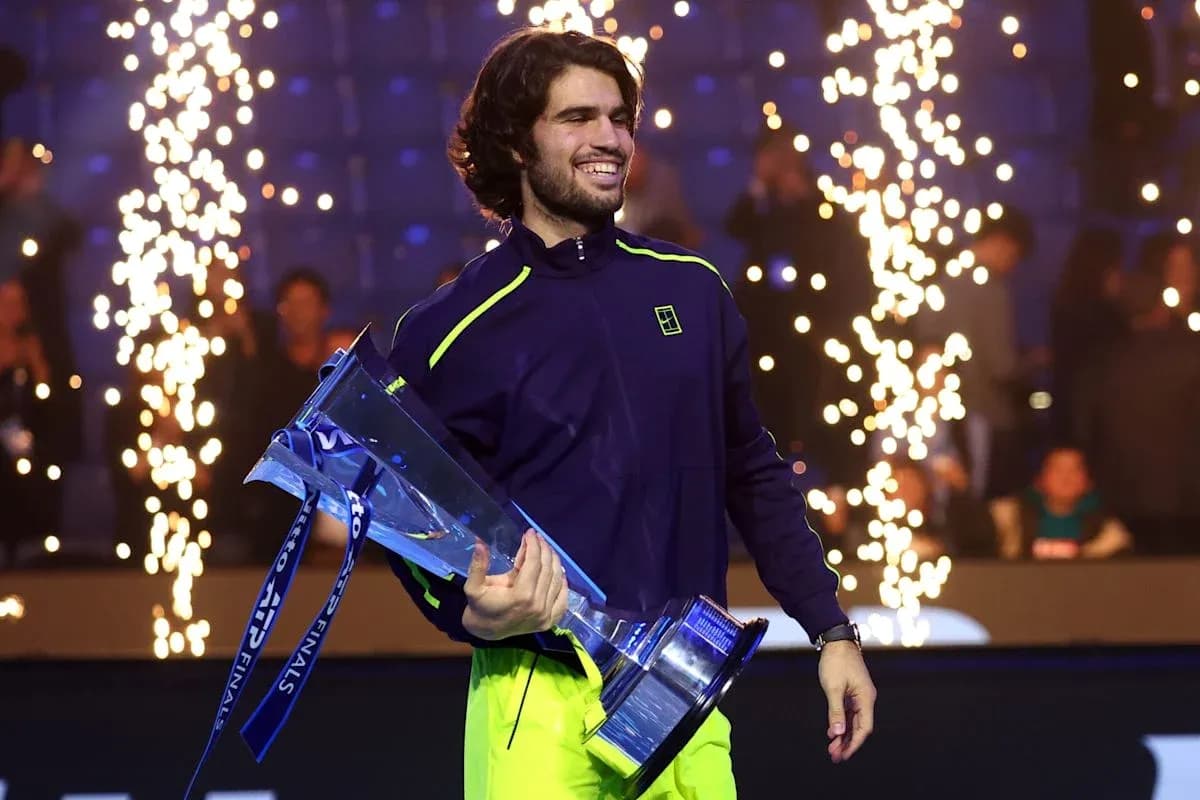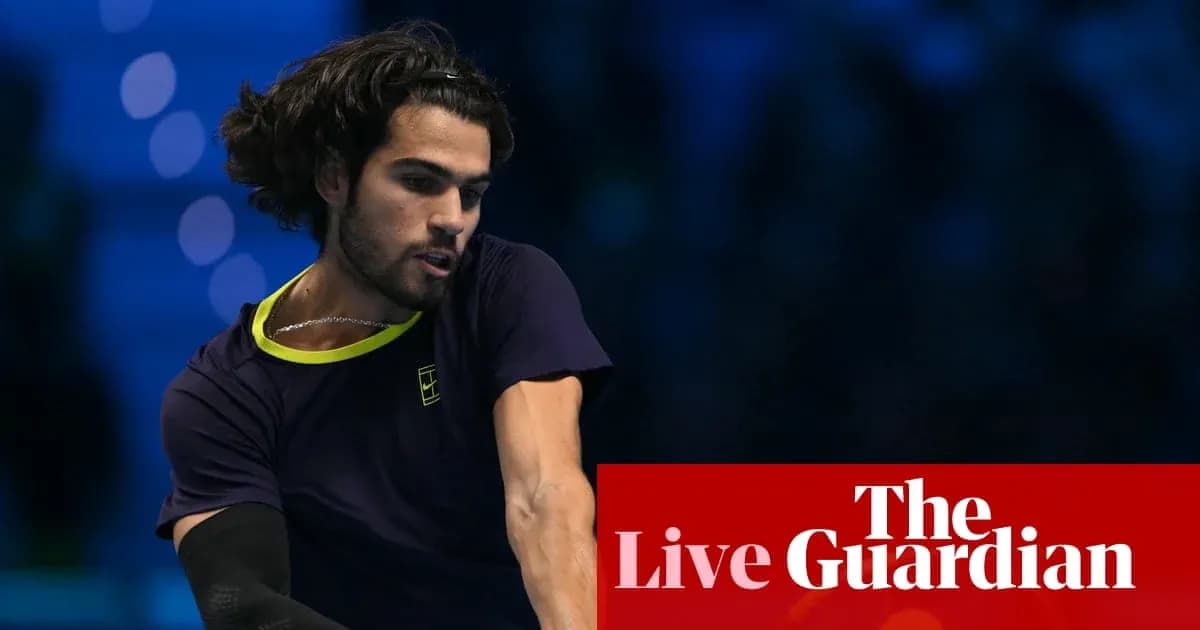
Carlos Alcaraz vs Alexander Zverev: A Final Showdown
Carlos Alcaraz has barely broken sweat, yet already he looks like the man who will decide exactly what kind of match this becomes.
Early in the opening set, Alexander Zverev edges to 0-15 on the Alcaraz serve, a small foothold that usually matters against the very best. It doesn’t here. Alcaraz shrugs it off, leans less on the first serve than most of his peers, and quickly moves to 30-15. A netted backhand drags him back into trouble and invites Zverev into the contest.
What follows is a bruising baseline exchange, both men unloading from deep, both forced to scramble. The rally ends with a backhand from Alcaraz that falls fractionally long. Break-back point. A chance for Zverev to make a statement.
Alcaraz answers the way champions do: with a huge first serve, then a clean, ruthless +1 forehand into the corner. Deuce. Zverev is handed another look when an Alcaraz error gifts him advantage, but the Spaniard rips it away with a step-in backhand, taken early and driven flat to the corner, a shot that fizzes over the net like a line of electricity.
Another big serve out wide, another forehand swung towards the same corner. It’s not his most precise strike, but it’s enough – until another mistake drags them back to deuce again. Zverev digs in, sends a deep return that Alcaraz can’t handle. Once more, the German stands a point from the break.
Again, Alcaraz slams the door. He steps in on the next rally and threads a backhand down the line that’s simply too good. From there, he locks in. The consolidation comes quickly, Zverev leaking consecutive errors to surrender the game. The pattern is already clear: whatever this match demands, Alcaraz looks ready to provide it.
Zverev’s Opening Service Game
Zverev’s own opening service game had set the tone for this final: tense, jagged, high quality and heavy with subtext.
Alcaraz, returning, isn’t hunting haymakers. He just wants the ball back in play, but an early error hands Zverev 0-15. At 0-30, after Alcaraz overhits a clean-up forehand, the German appears in control. Then the scoreboard lurches again. Alcaraz finds his range, drags it back to 30-15, and Zverev throws in a double fault. Suddenly, the pressure flips.
A fierce Alcaraz return that kisses the baseline forces Zverev into a framed response. Break point. The German bails himself out with a service winner, then outlasts Alcaraz in a rally, coming forward as the Spaniard’s lob drifts long. Still, the first serve keeps misfiring. Zverev drives the second serve with pace, but it’s not enough. Alcaraz hooks a return past him for a clean winner.
A blocked return on the next point is enough to raise another break chance. The tension tells: Zverev is warned for taking too long before serving. His reply is emphatic – an ace down the T, a defiant answer to the umpire and his opponent. Yet the nerves remain close to the surface. In the next rally he’s outhit from the back, bullied off the baseline and dragged back to deuce, then down advantage again.
He escapes with a classic one-two combination: serve out wide, forehand driven into the corner. When Alcaraz misses with a second lob and Zverev finally lands a heavy first serve, the hold is his. One game on the board, but a lot already revealed. If the rest of the contest matches the opening exchanges, this final will be a serious test of nerve as much as talent.
This Season in Men's Tennis
This season has not belonged to men’s tennis in the way recent years have. Jannik Sinner has missed almost half of it, including the US Open. Carlos Alcaraz sat out Wimbledon and only really felt his way back into form in New York. A run of injuries to leading names has hollowed out event after event, leaving draws that looked light and titles that felt there for the taking.
Alexander Zverev has seized that opportunity with ruthless efficiency. Two majors in the space of a year, a finish at No 1 in the rankings, and a résumé that, on paper, now looks like the work of a dominant force rather than an almost man. The caveats, though, haven’t disappeared. They simply don’t show up on trophies, rankings lists or cheques.
They live instead in the conversations around him – and, crucially, in his own mind. Zverev does not enjoy having the value of his achievements questioned. He is also repeatedly confronted with the domestic abuse allegations he settled out of court. His comments earlier this year – that “it has been proven that the accusations were false” and “my innocence has been proven” – have already led to another lawsuit, accusing him of violating the terms of that agreement.
He cannot resolve that tonight. What he can do is attack the other doubt that shadows his career: whether his game truly stands up against the sport’s most gifted player.
No one, not even Zverev, can credibly argue that he is a better pure tennis player than Alcaraz. The Spaniard’s creativity once a rally begins, his variety, his willingness to improvise, all tilt the court in his favour. Zverev’s forehand and volley have improved, but at this altitude of the sport they remain the weaker links in his armour.
Yet this is a sprint, not a marathon. In a race to two sets, there is less time for class to assert itself, less room for a slow start, more scope for a red-hot serving day to tilt the whole affair. Zverev arrives in spectacular form, into the final without dropping a set or even a service game. For perhaps the first time in this rivalry, he will walk onto court absolutely convinced he can win.
If he does, the psychological balance between these two changes. The next time they meet over five sets, perhaps in Melbourne, the memory of this night will sit between them. With the Australian Open less than two months away, this final is more than a season-ending showpiece.
It feels like the opening move in the next one.