Jannik Sinner's Injury Concerns: A Wimbledon Champion's Silent Struggle
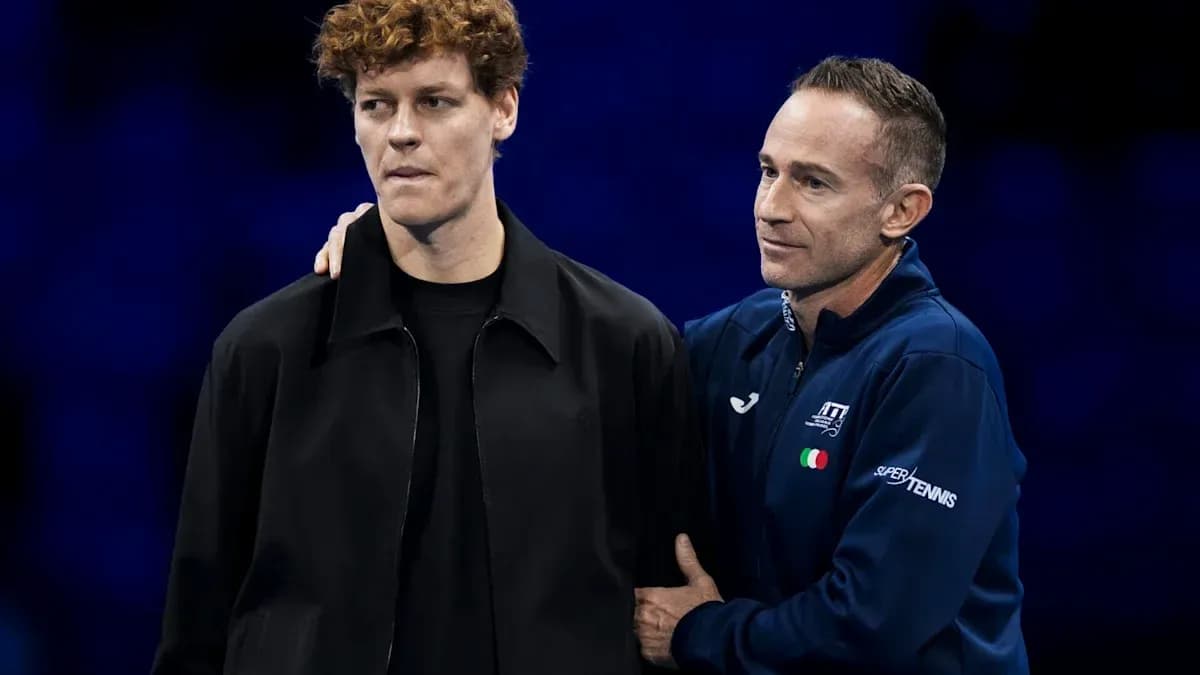
Jannik Sinner’s season ended with a trophy in his hands and a grimace hidden behind the celebrations. Months later, the smile has gone – and the silence around his right knee is starting to alarm some of the sharpest judges in the game.
The Wimbledon champion has not struck a ball in competition since lifting the title on Centre Court. That absence has already cost him the world No. 1 ranking, with Alexander Zverev stepping into the top spot. Now, with reports that surgery is looming, the real concern is no longer about points or positions. It is about how badly that knee is damaged, and how long it will keep one of tennis’ defining forces off the stage.
Silence, travel, and a growing sense of unease
For Greg Rusedski, the worry starts with what we are not seeing – and not hearing.
Sinner has offered almost nothing publicly about the state of his knee. No detailed updates, no training clips, no glimpses of a slow build back on the practice courts. For a reigning Wimbledon champion in his prime, that kind of vacuum is unusual.
“Well, I heard this past week that he's been travelling to America to see a specialist,” Rusedski said on his podcast, recorded when surgery was still only being discussed as an option rather than a certainty.
That detail matters. A trip across the Atlantic suggests the Italian and his team have already exhausted their options closer to home.
“So if you're travelling to America that means you haven't found the solution in Europe for the right doctor, the right surgeon or the right person,” Rusedski explained. “So he's going to be going to the best American doctors to see because he said, ‘Look, I practice and for one or two days it's fine and then I get a relapse and it's stop, start all the time and he can't get over the hump.’”
The pattern is familiar to any athlete: brief hope in training, then another setback. Start. Stop. Repeat. That cycle rarely ends without a decisive medical intervention.
“So it looks most likely that there's going to be a surgery there and then we'll see when he gets back,” Rusedski added. “So, the Australian Open has come into the question, will he make it in time? We'll get an announcement or something will come up if he's had surgery, because the less you hear from a player about an injury, especially the long period that Sinner's been away, and you haven't seen him on the practice court, that is a worrying thing.”
Reports now suggest Sinner may not be fully fit until around Wimbledon next year. Melbourne, at this stage, looks a long shot.
A fall on grass that changed everything
Rusedski traces the whole saga back to one moment that, at the time, looked like a brief scare in the middle of a championship run.
“I think this knee problem all stems from that slide in his opening match at Wimbledon,” he said. He remembers the incident vividly – and not fondly.
“I'd love to see if he would honestly tell us because when I saw that knee go back in the direction it did, I don't know how he got up and won that match. I thought for sure he was done.”
Sinner not only finished. He went on to win the tournament.
“He managed to win Wimbledon and since then he hasn't been back. So I guess he took a risk with a slight injury there by what I'm seeing. This could be completely false, completely wrong, but when I saw him go down I thought ‘Oh no, how is he going to finish this match?’ It was a terrible fall, terrible. I wouldn't have got up, I would have been in A&E in about two seconds after taking me off the court.”
That is the paradox at the heart of elite sport. The same toughness that drags a player through a major final can, in hindsight, look like the first step on a longer, more dangerous path.
“But these guys are super human,” Rusedski said. And Sinner has been playing like it for the past two seasons.
Alcaraz as the blueprint for a comeback
Sinner is not alone in navigating a brutal injury lay-off. Carlos Alcaraz spent nearly five months out with a wrist problem this year, missing Roland Garros and Wimbledon. His response since returning has set the standard.
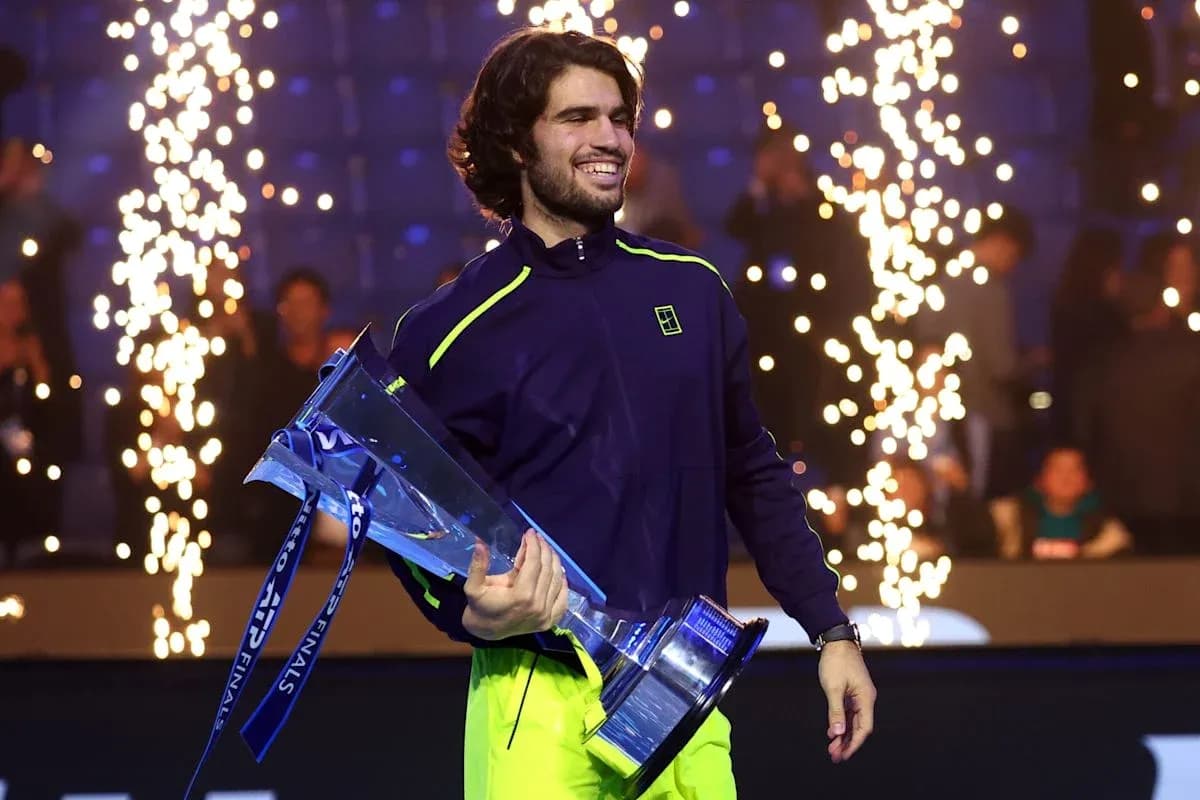
Less than three months after coming back at the US Open, Alcaraz has caught fire again. A 14-match winning streak, titles in Vienna, Paris, and the ATP Finals – a reminder that true generational talents do not ease themselves gently into form.
Rusedski believes Sinner belongs in that same bracket, and that once the knee is fixed, the reset will be swift.
“I think once Sinner's healthy, because he's not going to come back until he's healthy. I think he's like 2.0 Djokovic I describe, I think his mentality is second to none,” he said.
“I don't think he's going to have a problem once he's healthy and he gets the knee sorted, I think he's going to be just as quick back as Alcaraz was, because it's not as flashy, it's not as stylish and yes, sometimes it looks like it's manufactured, but he is a complete player. The volleys are better, he's using the drop shot, his movement.”
That evolution in his all-court game is exactly what made his Wimbledon run feel like a coronation, not a one-off. It is also why his absence now feels so heavy for the sport.
“Jannik to me and Carlos are huge for our sport and he's going to be back…When he comes back he's going to be on a tear and the only guy who's going to stop him is maybe Zverev or Alcaraz, but he'll be semis, finals and winning. Greatness never goes away, as long as he's healthy and the knee's good.”
A long wait for answers
For now, the calendar is working against him. The Australian Open is already in doubt, and any surgery in the coming weeks would make an early-season return extremely ambitious. The talk around his timeline increasingly circles back to the lawns of the All England Club, the scene of both his greatest triumph and, it seems, the moment his knee first betrayed him.
Sinner “currently appears to be a long way off coming back to the match court,” as the latest reports put it, with more concrete news on the operation expected soon.
Until then, the men’s game moves on without one of its central figures. Zverev has the No. 1 ranking. Alcaraz is tearing through draws again. The tour is thriving, but something is missing.
How long it stays that way now depends on a knee, a surgeon, and whether one of tennis’ modern standard-bearers can turn a worrying silence into the roar of a comeback.