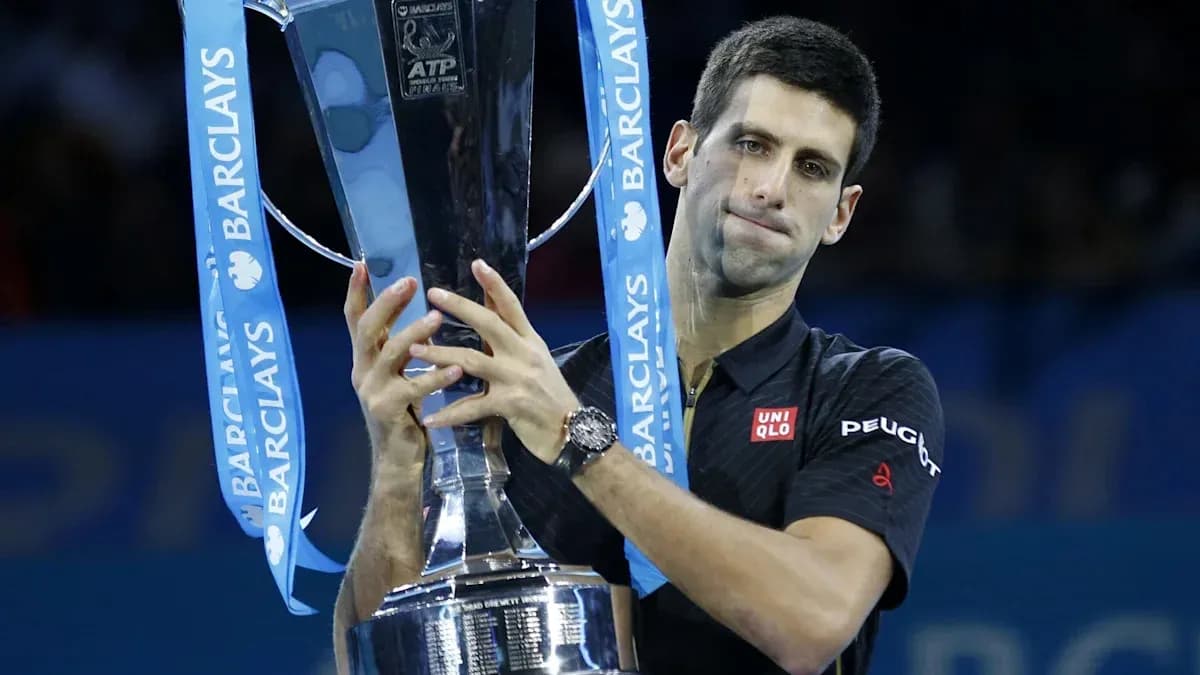
Novak Djokovic's 2014 ATP Finals: A Dominant Performance
At the ATP Finals, nobody has built a kingdom quite like Novak Djokovic. The year-end stage has crowned many champions, but only one man has turned it into a personal fiefdom. Seven titles, a stack of records, and a level of dominance that at times has felt almost unfair.
And at the heart of it all sits one week in London in 2014, when Djokovic didn’t just win the ATP Finals. He smothered it.
A champion at full throttle
By 2014, Djokovic was already a multiple Grand Slam winner and a familiar face in the season’s final act. Yet even by his standards, what unfolded at the O2 Arena that November was something else.
He opened against Marin Cilic, the newly crowned US Open champion and supposedly a dangerous floater in the draw. Dangerous in theory. On court, it was a mismatch. Djokovic tore through him 6-1, 6-1 in just 57 minutes, reading serve, dictating rallies, and giving Cilic barely a foothold in the match.
The tone was set. The message, too.
Stan Wawrinka came next, another major winner that season and one of the few men who had recently managed to rattle Djokovic on the biggest stages. This time there was no drama. Djokovic rolled past him 6-3, 6-0, needing just over an hour. The scoreline didn’t flatter him; if anything, it underlined how ruthlessly he punished even the slightest drop in level.
By the time Tomas Berdych walked onto court for the final group match, the pattern was clear. Djokovic was not simply winning; he was stripping opponents of belief. Berdych, a permanent fixture in the top 10 and a proven indoor threat, met the same fate: 6-2, 6-2. Clinical, cold, inevitable.
Across three round-robin matches, Djokovic conceded only nine games. Nine. In a field featuring Grand Slam champions and top-10 regulars, that became a record for the fewest games dropped in the group stage at the ATP Finals. It felt less like a round-robin and more like an exhibition of control.
A brief wobble, then another gear
Only in the semifinals did the tournament offer a hint of resistance. Kei Nishikori, one of the sport’s rising stars and fresh off a breakthrough season, stepped up and finally nicked a set off the Serb.
Djokovic started as he had all week, taking the first set 6-1. Then, for the first time, the match loosened. Nishikori swung freely, found his range, and snatched the second set 6-3. For a moment, the contest felt alive. Djokovic had been touched.
The response was brutal.
In the deciding set, he shut the door with a bagel, 6-0. Every rally tightened, every return dug in deep. Nishikori’s brief surge vanished under a wave of relentless depth and precision. One lost set, no loss of control. Djokovic was back in the final, and he had still conceded only 16 games all tournament.
The final that never was
The stage was set for a heavyweight finish: Djokovic vs Roger Federer, a rivalry that had shaped the decade and tilted back and forth across surfaces and continents. They had met five times already in 2014, with Federer edging the head-to-head that season.
London wanted one more chapter. The tennis gods said no.
Federer had emptied the tank in a near three-hour semifinal against his compatriot Stan Wawrinka, a bruising, emotional contest that left him physically compromised. A back injury forced him to withdraw before the final, delivering the first walkover in an ATP Finals title match in the tournament’s 45-year history.
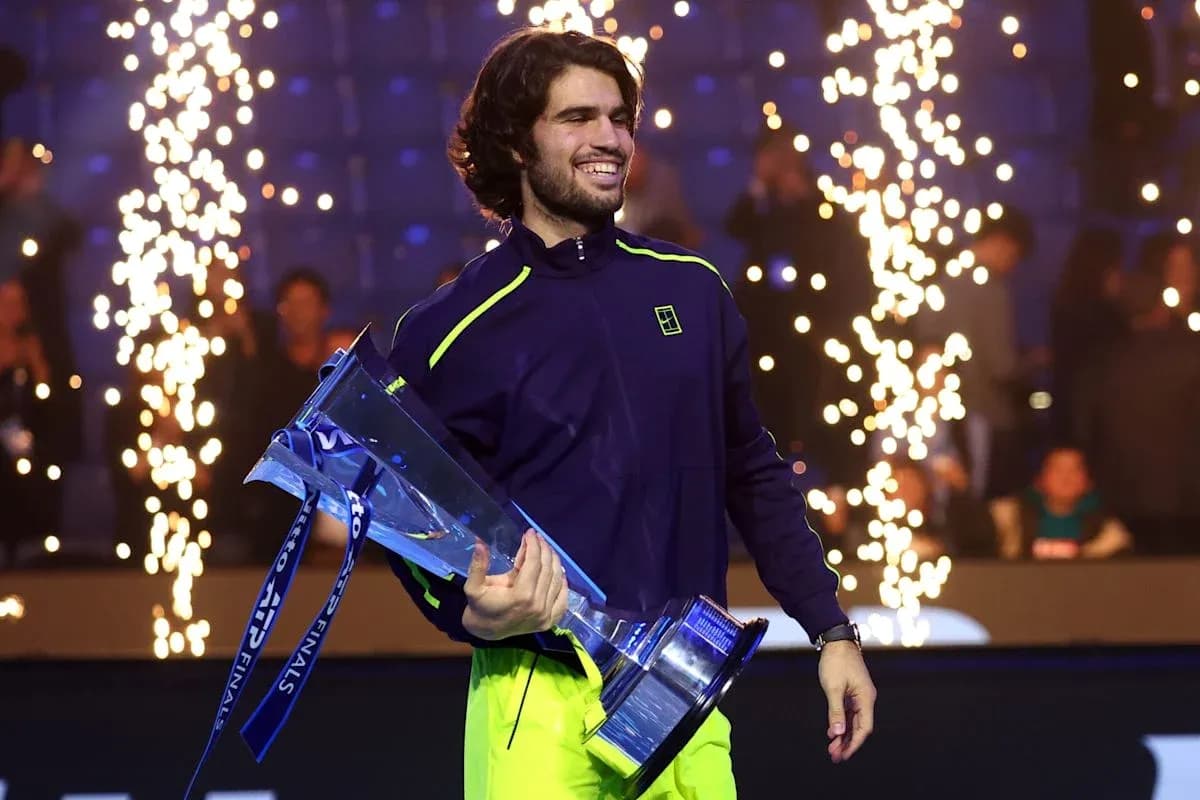
Djokovic walked out, accepted the trophy, and addressed the moment with the awkwardness it demanded. He acknowledged that Federer would have played if he could, that nobody wants to win a match of that magnitude by default, especially against a rival of that stature. But the record books do not carry asterisks for circumstance. The title counted. So did the numbers behind it.
With Federer’s withdrawal, Djokovic clinched his fourth ATP Finals crown, having given up just 16 games across the week. That figure smashed the previous benchmark, jointly held by John McEnroe and Ivan Lendl from their dominant runs in the early 1980s. McEnroe. Lendl. Names synonymous with indoor supremacy, now pushed into second place by a new master of the format.
A standard nobody else has matched
Since 2014, the ATP Finals has seen new champions, new contenders, and a changing of the guard. Djokovic has added more titles. Others have taken their turns at the top. Yet that particular record – 16 games conceded en route to the trophy – has stood untouched.
Jannik Sinner has come closest in terms of pure authority at the event. The Italian has claimed two year-end crowns, in 2024 and 2025, without dropping a single set in either campaign. His 2025 run, featuring straight-set wins over Alexander Zverev and Carlos Alcaraz, announced him as the new indoor standard-bearer of his generation.
But even Sinner, with all his composure and shot-making, has not matched the raw statistical brutality of Djokovic’s 2014 performance. Thirty-three games dropped was his best title-winning tally. Impressive. Commanding. Still a long way from 16.
That’s what makes that London week so striking, even now. Not just that Djokovic won. Champions win. It was the way he squeezed the oxygen out of a tournament designed to bring together the very best and pit them against each other in tight, nervy contests.
For one year, at least, there was no tension. Only domination. And the question that lingers over every new star who lights up the ATP Finals is simple: can anyone ever make that kind of perfection look possible again?