Tyson Fury: Battling Inner Demons in the Ring
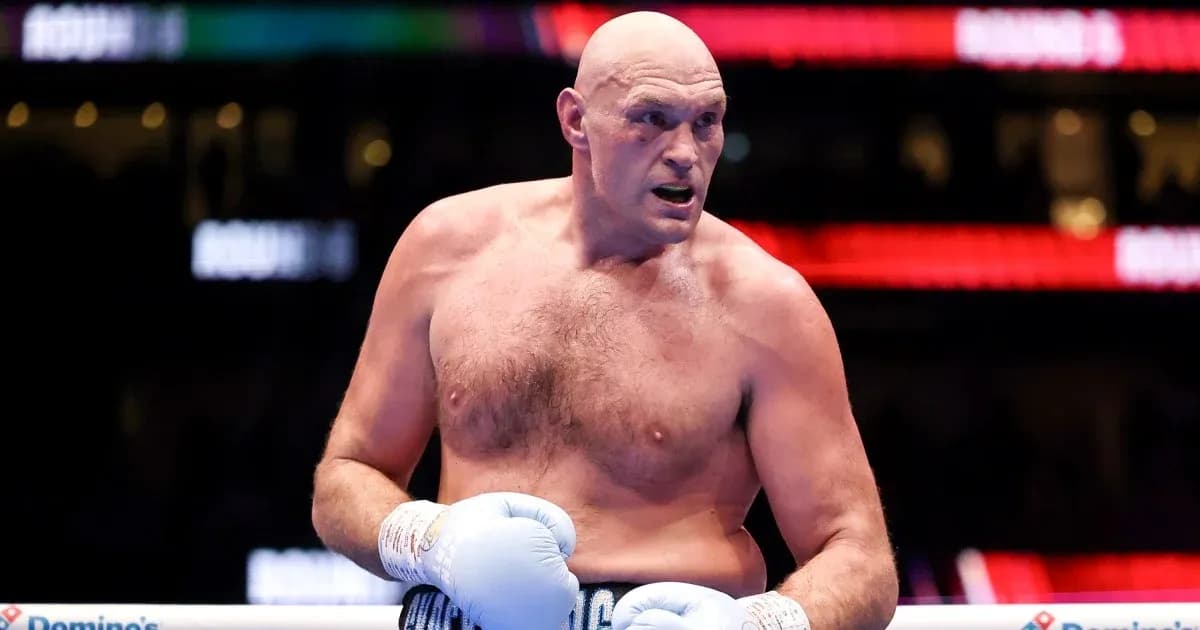
Tyson Fury has built a career on walking into hostile arenas and silencing the noise. The new Netflix documentary shows there was a far louder battle raging when the crowds went home.
Behind the belts, the bravado and the 2015 dethroning of Wladimir Klitschko, Fury describes a mind that turned on him. The former heavyweight champion recalls hearing threatening voices in the dead of night, feeling his heart race to the point he thought it would explode, and living with a constant fear that he would be sectioned and locked away in a psychiatric hospital.
“Words can't explain the darkness I was in,” he says in the film. It is not a throwaway line. It is the spine of the story.
A champion with a diagnosis
The documentary revisits the period immediately after Fury’s seismic win over Klitschko, the night that should have been the gateway to a decade of dominance. Instead, it became the trigger point.
In an earlier account, Fury revealed that he was told he had schizophrenia following that victory in 2015. In the Netflix series, titled simply "Tyson Fury", he lays out the full weight of the labels that followed him into every room: depression, anxiety, bipolar disorder. His wife, Paris, recalls doctors also describing him as having schizophrenia, a word that hung over the family as heavily as any title belt.
The film tracks how the euphoria of becoming world champion quickly gave way to a suffocating inner chaos. Fury speaks of waking up at night to voices threatening him and his family, a terror that no opponent across the ring had ever managed to produce.
Panic, paranoia and a hospital bed
By June 2016, the situation had spiralled. Fury was rushed to hospital, convinced he was suffering a heart attack. The tests told a different story. Doctors determined he was in the grip of a severe anxiety attack, his mind flooding his body with alarm signals it could no longer process.
The anxiety bled into paranoia. During that hospital stay, Fury became convinced the radio was speaking directly to him. He feared shadowy forces — the Illuminati — were plotting to harm him. Paris remembers walking into the ward to find not the 6ft 9in showman who toys with opponents and taunts press conferences, but a frightened husband pleading to leave.
That image lingers: the most intimidating heavyweight of his generation, reduced to begging for a way out that had nothing to do with a referee’s count.
Facing the diagnosis
Fury later sought help from a psychiatrist in London. The assessment, he explains, ran through the full spectrum of his mental health: “depression, anxiety, bipolar disorder.” Paris adds that schizophrenia was also mentioned by doctors, a diagnosis that carried its own stigma and fear.
Those sessions did not immediately fix him. They did something subtler but just as important: they put names to the demons. For a man used to gameplans and opponents, that at least offered a target.
Outside the consulting room, though, his life was disintegrating. After the Klitschko win, Fury sank into alcohol and drug use. The weight piled on, his body changing as dramatically as his mood. The champion’s frame that had bullied Klitschko began to disappear under layers of excess, a physical manifestation of a life veering off course.
Halloween in the mirror
The documentary circles one night as a turning point: Halloween 2017. Fury, far removed from the chiselled athlete who shocked the heavyweight division, found himself in a glow-in-the-dark skeleton costume.
It should have been a throwaway fancy dress moment. Instead, it hit like a jab he never saw coming.
Staring at himself, Fury realised just how far he had drifted from the man who had climbed through the ropes in Düsseldorf two years earlier. The costume, ridiculous and luminous, threw the darkness of his recent past into sharper focus. That reflection became a reckoning.
From there, the tone shifts. The training camp replaces the nightclub. The gym becomes the arena for his next fight, this time not against Klitschko or any other rival, but against the chaos that had nearly swallowed him.
Back to the top
That Halloween jolt dragged Fury back towards discipline. He returned to serious training, reshaped his body and, crucially, began to manage his mind with the same intensity he once reserved for title preparations.
The journey did not erase the diagnoses. It did not tidy up the past. What it did do was carry him, step by step, to another defining night: February 2020, when he dismantled Deontay Wilder to reclaim a version of the world heavyweight title.
For most fighters, that victory would be the headline. In this documentary, it feels more like a closing chapter of a different story — the night the man who once feared the walls of a psychiatric hospital instead walked through the ropes and proved he could still own the biggest stage in his sport.
The belts can change hands again. The real question now is how long Tyson Fury can keep winning the fight that no judge will ever score and no camera can fully capture.